Palachinki: Bulgaria's Thin Pancakes for Sweet or Savoury Fillings
Discover palachinki, Bulgaria's delicate crêpe-style pancakes. Learn how to make the batter, cook them to perfection, and enjoy traditional fillings from jam to white cheese.
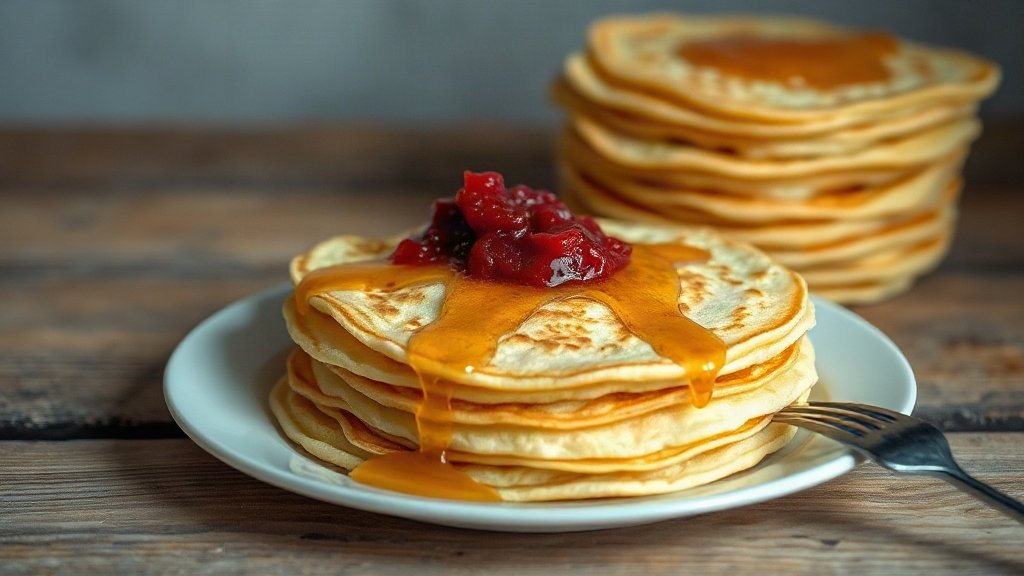
Illustration: AI-generated image
If you have wandered through a Bulgarian town on a weekend morning, you may have caught the inviting aroma of palachinki wafting from a small window or street stall. These thin, delicate pancakes are the country's answer to French crêpes, and they are beloved as a quick breakfast, an afternoon snack, or a simple dessert. Unlike fluffy American pancakes, palachinki are almost paper-thin, with lightly crisp edges and a tender centre that wraps beautifully around both sweet and savoury fillings.
What are palachinki?
Palachinki (singular: palachinka) are made from a pourable batter of flour, eggs, milk, and a little water, with just a pinch of salt and sometimes a spoonful of sugar. The batter is fried in a lightly oiled or buttered pan, tilted to spread it into a large, thin round. The result is a flexible pancake that can be rolled, folded, or stacked. In Bulgaria, palachinki are a staple of home cooking and are also commonly found at snack bars, bakeries, and seasonal fairgrounds.
Making the perfect batter
The key to good palachinki is a smooth, runny batter that coats the back of a spoon but still pours easily. Start with two large eggs, whisked with about 250 millilitres of milk and 125 millilitres of water. Gradually add 150 grams of plain flour, a pinch of salt, and—if you plan sweet fillings—a teaspoon of sugar. Whisk until no lumps remain, then let the batter rest for at least 15 minutes. This rest allows the flour to absorb the liquid fully, resulting in more tender pancakes. If the batter thickens on standing, thin it with a splash of milk or water.
Cooking technique
Use a non-stick frying pan or a well-seasoned crêpe pan, about 20–24 centimetres in diameter. Heat the pan over medium-high heat and brush it lightly with sunflower oil or melted butter. Pour in just enough batter to cover the bottom when you swirl the pan—usually around 60 millilitres per pancake. Cook for 45–60 seconds until the edges lift and the underside is golden, then flip with a thin spatula or, if you are confident, a quick toss. Cook the second side for another 30 seconds. Stack the finished palachinki on a plate and cover with a clean tea towel to keep them soft and warm.
Sweet and savoury fillings
The simplest and most traditional way to enjoy palachinki is with a smear of rosehip jam or blueberry jam, rolled up and dusted with icing sugar. Honey and crushed walnuts are another classic pairing, as is a spread of thick chocolate hazelnut cream. For a distinctly Bulgarian twist, try crumbling a little white brined cheese (sirene) over the pancake and drizzling it with honey—the salty-sweet contrast is irresistible.
Savoury palachinki are equally popular. Fill them with grated yellow cheese (kashkaval) and a slice of ham, then warm briefly in the pan until the cheese melts. Or spread a thin layer of lutenitsa—Bulgaria's roasted pepper and tomato relish—before rolling. Some cooks fold the pancakes into triangles and fill them with a mixture of sautéed mushrooms and herbs.
When and how to serve
Palachinki are best enjoyed warm, straight from the pan. At home, they are often served as a weekend treat, with the table laid with bowls of jam, honey, sugar, and chocolate spread so everyone can choose their own filling. For a more substantial meal, serve two or three savoury palachinki with a fresh salad on the side. Leftover batter keeps well in the fridge for up to a day; just whisk it again before cooking.
A simple recipe to try
Ingredients:
- 2 large eggs
- 250 ml milk
- 125 ml water
- 150 g plain flour
- Pinch of salt
- 1 tsp sugar (optional)
- Sunflower oil or butter for frying
Method:
- Whisk the eggs, milk, and water in a bowl. Add the flour, salt, and sugar (if using), and whisk until smooth.
- Let the batter rest for 15 minutes.
- Heat a lightly oiled non-stick pan over medium-high heat.
- Pour a small ladleful of batter, swirl to coat the pan thinly, and cook until golden underneath. Flip and cook the other side.
- Repeat with the remaining batter, stacking the pancakes as you go.
- Fill with your choice of sweet or savoury fillings, roll or fold, and serve warm.
Palachinki may be simple, but they capture the essence of Bulgarian home cooking: unpretentious, flexible, and made to be shared. Once you master the thin batter, you will find yourself reaching for this recipe again and again.