Pastarma: Bulgaria's Air-Dried Beef Delicacy You Should Try
Pastarma is Bulgaria's answer to cured meats: a spiced, air-dried beef that's perfect for slicing, snacking, or adding to traditional dishes. Learn how it's made and how to enjoy it.
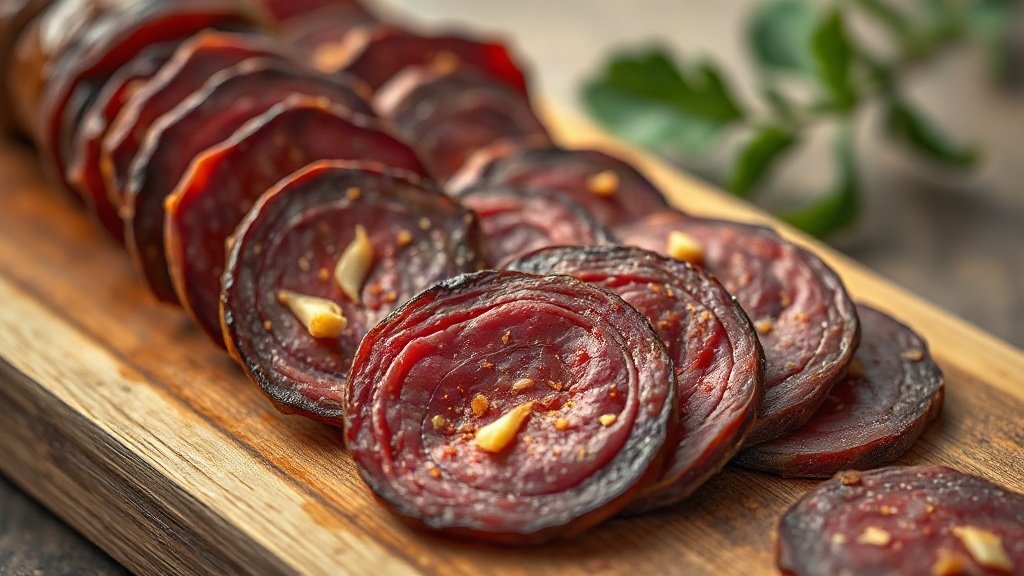
Illustration: AI-generated image
Walk into any Bulgarian deli or market stall, and among the sausages and cheeses you'll likely spot flat, dark-red slabs of meat with a distinctive crust of spices. That's pastarma, one of the country's most beloved cured meats. Often compared to Italian bresaola or Middle Eastern basturma, Bulgarian pastarma has its own character, shaped by local traditions and a climate ideal for air-drying.
What Exactly Is Pastarma?
Pastarma is made from whole cuts of beef, usually from the round or sirloin. The meat is trimmed of excess fat, salted generously, and left to cure for several days. After curing, it is pressed to remove moisture, coated with a thick paste of spices—typically garlic, paprika, black pepper, and sometimes fenugreek—and then hung to air-dry for weeks or even months. The result is a dense, intensely flavoured meat with a chewy texture and a spicy, garlicky aroma.
A Tradition of Preservation
Before refrigeration, air-drying was an essential method for preserving meat through the winter. Bulgarian pastarma likely has roots in the ancient practice of salting and drying meat, similar to other Balkan and Anatolian cured meats. The name itself shares an origin with the Turkish "pastırma," which comes from the word for "pressed." In Bulgaria, pastarma is often associated with the region of Gorna Oryahovitsa in the north, which has a long-standing reputation for producing high-quality cured meats, though it is made throughout the country.
How Pastarma Is Made
The traditional process is straightforward but requires patience. Fresh beef is cut into large pieces, then rubbed with coarse salt and left in a cool place. After several days, the excess salt is rinsed off, and the meat is pressed between wooden boards with heavy weights to remove excess moisture and give it a flat, uniform shape. Next comes the spice coating: a mixture of crushed garlic, sweet or hot paprika, black pepper, and sometimes ground fenugreek or cumin, moistened with a little water to form a paste. The coated meat is then hung in a dry, ventilated area or a special drying room. Over the course of several weeks, it loses moisture and develops its characteristic firmness and concentrated flavour.
What Does It Taste Like?
Pastarma has a bold, savoury profile. The beef itself is lean and slightly gamey, while the spice crust adds layers of garlic, warmth from paprika, and a subtle bitterness from fenugreek (if used). The texture is firm but not hard; if dried for a long time, it can be quite chewy, which is part of its appeal. Some producers make a softer version that is less dried, while others prefer a longer aging for an even more intense flavour.
How to Enjoy Pastarma
Pastarma is incredibly versatile in Bulgarian cuisine. The most common way to enjoy it is thinly sliced, served as part of a meze platter alongside cheeses, pickles, and rakia. It also makes an excellent addition to breakfast or a quick snack with bread. For something heartier, try it as described: pastarma with eggs. Fry thin slices until they just start to crisp, then scramble or fry eggs in the same pan; the salty, spicy meat flavours the eggs beautifully. Another popular use is in bob chorba (bean soup) or stews, where a few pieces of pastarma add depth and smokiness. You can also chop it finely and use it as a filling for savoury pastries or omelettes.
Whether you buy it from a market, a specialty butcher, or make your own, pastarma is a taste of Bulgarian tradition that pairs well with both simple and elaborate meals. Next time you're looking for a distinctive cured meat, give pastarma a try.