Lukanka: Bulgaria's Traditional Dried Sausage You Should Know
Discover lukanka, Bulgaria’s flat, air-dried sausage with a distinctive white bloom and rich, spiced flavour. Learn how it’s made and how to enjoy it.
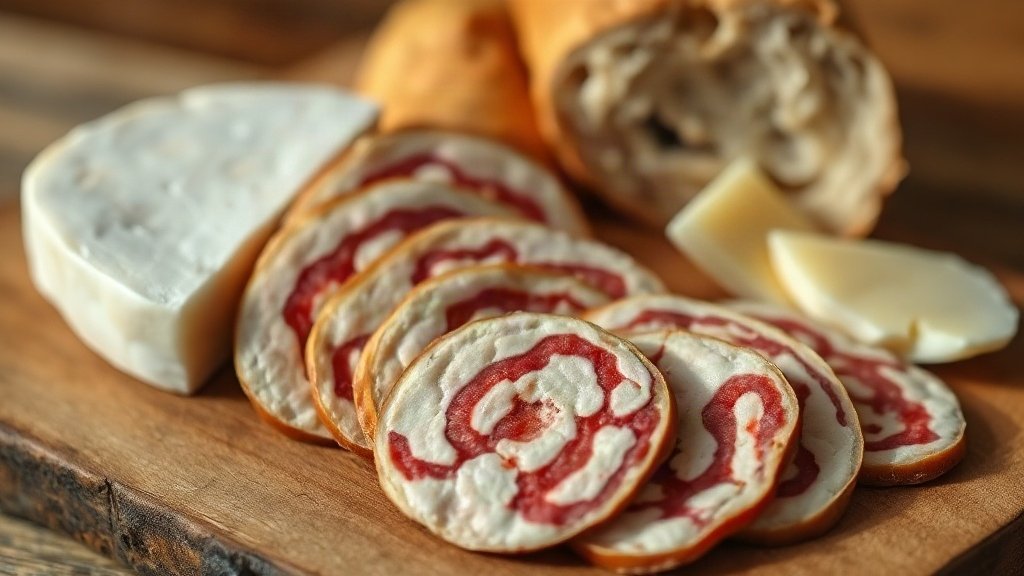
Illustration: AI-generated image
Among Bulgaria’s many cured meats, lukanka stands out for its unusual flattened shape and deep, savoury flavour. Often compared to Italian salami or Hungarian winter salami, lukanka has a character all its own, born from a centuries-old tradition of air-drying and fermenting meat. If you’re exploring Bulgarian food, this is one delicacy worth seeking out.
What is Lukanka?
Lukanka is a type of dried, fermented sausage made from a mixture of minced beef and pork, sometimes with a little veal. The meat is seasoned with cumin, black pepper, salt, and occasionally paprika or garlic, then stuffed into a natural casing. What sets lukanka apart is its shape: the sausages are pressed between wooden boards to become distinctly flat, sometimes almost rectangular in cross-section. This pressing helps the sausage dry evenly and gives it a firm, dense texture.
How is Lukanka Made?
Traditional production begins with finely minced meat that is mixed with spices and left to cure briefly. The mixture is stuffed into casings, then placed under pressure—often between wooden planks—for several days. After pressing, the sausages are hung in cool, well-ventilated rooms to dry and ferment slowly. Over weeks or even months, beneficial moulds develop on the surface, forming a thin, white, powdery bloom. This bloom is completely natural and plays an important role in protecting the sausage and deepening its flavour, much like the mould on certain salamis and saucissons.
Modern producers may use temperature- and humidity-controlled chambers to replicate these conditions, but the basic principles remain the same: patience and quality ingredients.
Regional Varieties
Lukanka is made across Bulgaria, but several regional versions have earned particular fame. Perhaps the best known is Karlovska lukanka, from the town of Karlovo in central Bulgaria, which holds a protected designation of origin (PDO) within the European Union. Its recipe and production method are tightly regulated to preserve tradition. Other notable varieties include Panagyurska lukanka from Panagyurishte and Smiadovska lukanka from Smyadovo. Each has subtle differences in spice blend, meat ratio, and pressing technique, but all share the signature flat shape and rich, tangy flavour.
How to Enjoy Lukanka
Lukanka is a staple of the Bulgarian meze table. Serve it thinly sliced, ideally at room temperature, alongside cubes of white cheese (sirene), yellow cheese (kashkaval), olives, pickles, and fresh bread. It pairs beautifully with a glass of red wine or a small rakia. For a simple snack, wrap a slice around a piece of cheese or a pickled pepper. Lukanka can also be added to cooked dishes—try chopping it into stews, bean soups, or scrambled eggs for an extra layer of savoury depth.
When slicing, aim for very thin pieces; the dense texture and intense flavour mean a little goes a long way. Store whole lukanka in a cool, dry place. Once cut, wrap the exposed end in kitchen paper or a clean cloth and keep it in the refrigerator, allowing it to breathe so the mould stays healthy.
Where to Find It
Lukanka is widely available throughout Bulgaria, from open-air markets and butcher shops to supermarkets. Look for sausages that feel firm but not rock-hard, with an even white bloom and a pleasant, slightly tangy aroma. Labels will usually say “lukanka” rather than the more generic “salam,” so check carefully to get the authentic product. For visitors, lukanka makes an excellent edible souvenir, though do check your home country’s regulations on importing meat products before buying.
Whether you enjoy it as part of a leisurely meze or tucked into a sandwich on a mountain hike, lukanka is a true taste of Bulgarian tradition—simple, honest, and deeply satisfying.