Pulneni Chushki: Bulgaria's Stuffed Peppers with Rice and Meat You Should Try
Discover Bulgaria's beloved dish of roasted peppers filled with a savoury mixture of rice, minced meat and herbs. Learn how it is made and why it is a summer favourite.
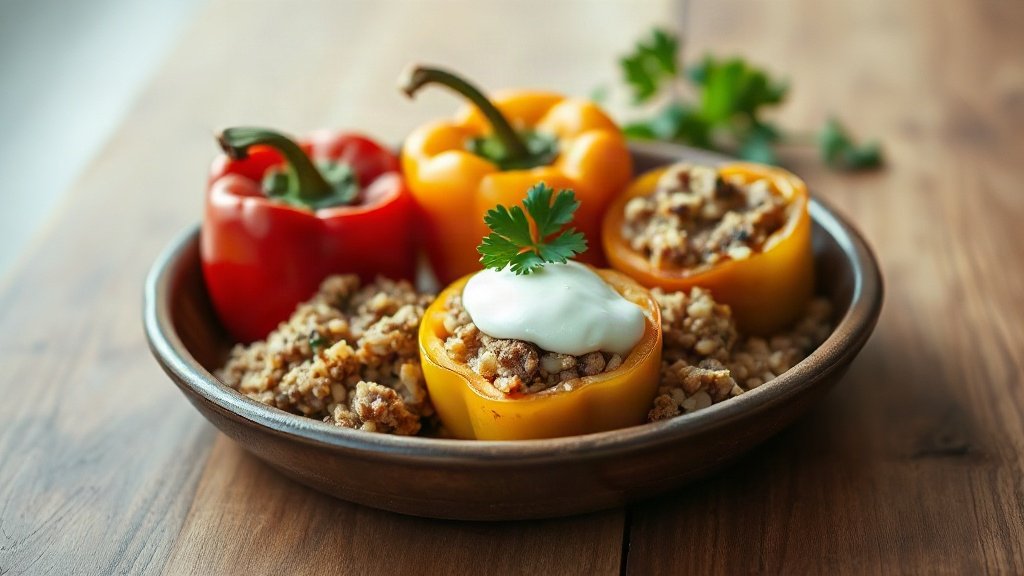
Illustration: AI-generated image
When summer peppers ripen in Bulgaria, home cooks turn to one of the country's most comforting dishes: pulneni chushki (stuffed peppers). These glossy red, orange or yellow peppers are hollowed out, filled with a savoury mixture and gently baked until tender. The result is a dish that balances sweetness, richness and bright herbal notes, often finished with a cool spoonful of yoghurt.
Unlike sarmi, which wrap fillings in cabbage or vine leaves, stuffed peppers celebrate the pepper itself as an edible vessel. The dish is a staple of Bulgarian home cooking, especially from late summer through early autumn, when field peppers are at their best. It is a meal that brings families together, often made in large batches and enjoyed warm or at room temperature.
What Goes Inside
The filling for pulneni chushki is built around a simple base of rice and minced meat, usually a mix of pork and beef, though some cooks use only pork or even chicken. The rice is often sautéed first with finely chopped onion, grated carrot and sometimes tomato, which adds moisture and a subtle sweetness. Fresh herbs such as parsley and dill are essential, along with savoury (chubritsa), a herb that is close to thyme and gives Bulgarian dishes their characteristic aroma.
For a vegetarian version, the meat is omitted and the rice is enriched with more vegetables, mushrooms or crumbled white cheese (sirene). Some households also add a spoonful of tomato paste or a pinch of paprika to deepen the flavour. The filling is not cooked completely before stuffing, as it finishes cooking inside the peppers in the oven.
How They Are Prepared
The peppers are first washed, with the tops cut off and seeds removed, creating neat cups. The filling is spooned in loosely, leaving room for the rice to expand. The stuffed peppers are then arranged upright in a baking dish, sometimes with a little water, tomato juice or a light broth poured around them. A drizzle of oil and a sprinkle of paprika over the tops add colour and richness.
The dish is baked at a moderate temperature until the peppers soften and the filling is cooked through, usually 40 to 60 minutes. Some cooks cover the dish with foil for the first half of baking to prevent the tops from drying out. The peppers are done when their skins wrinkle slightly and a knife slides easily into the flesh.
How to Enjoy Them
Pulneni chushki are traditionally served with a generous dollop of Bulgarian yoghurt, which cools the palate and complements the sweet roasted peppers. A sprinkle of fresh parsley adds brightness. A slice of crusty bread is perfect for soaking up the juices that collect in the baking dish.
While the dish is most popular in summer, it can be made year-round with greenhouse peppers. In winter, some cooks use roasted and peeled peppers preserved from the autumn harvest, which gives the dish a deeper, smokier flavour. Either way, pulneni chushki is a versatile and satisfying taste of Bulgarian home cooking that is well worth seeking out or recreating in your own kitchen.