A Traveller's Guide to Plovdiv: Bulgaria's Ancient Second City
Discover the Roman theatre, cobbled Old Town and creative Kapana district of Bulgaria's second-largest city, perfect for a weekend of history and atmosphere.
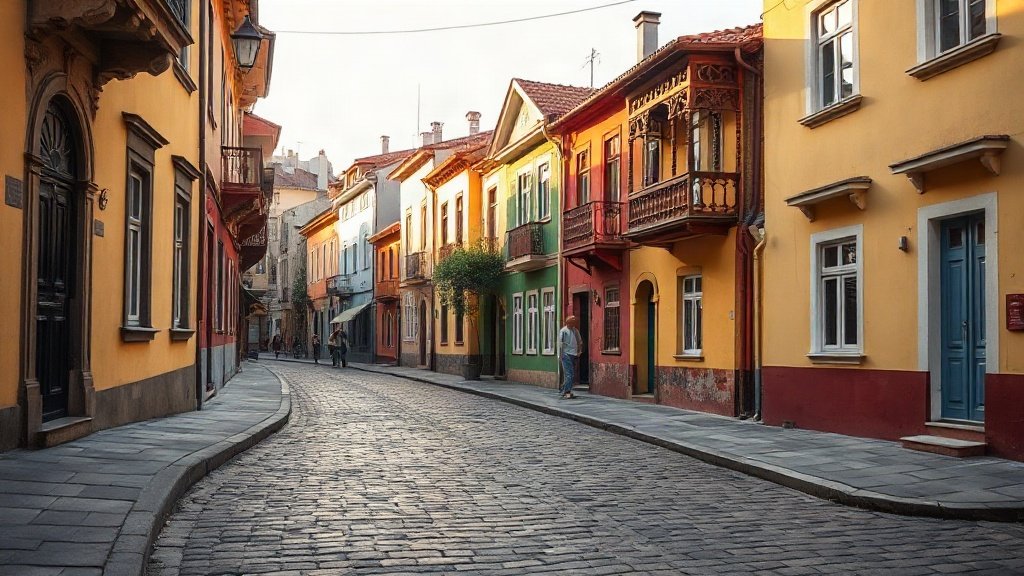
Illustration: AI-generated image
Plovdiv is one of the oldest continuously inhabited cities in Europe, with a history stretching back over 6,000 years. Built on seven syenite hills along the Maritsa River, it layers Thracian, Roman, Byzantine, Ottoman and Bulgarian Revival heritage into a compact, walkable centre that rewards curious travellers.
The Roman Theatre and Ancient Stadium
The city's most famous landmark is the Roman theatre of Philippopolis, discovered in the 1970s after a landslide. Built in the 1st century AD during the reign of Emperor Domitian, it could seat up to 7,000 spectators and is still used for open-air performances in summer. Just below the main pedestrian street, the Roman Stadium once hosted athletic games for 30,000 people; today, a section of its curved seating is visible beneath a glass floor, with more remains in the underpass. Scattered around the centre, fragments of the ancient forum and odeon hint at the city's Roman scale.
The Old Town and Revival Architecture
Climbing the three hills of Trimontium, the Old Town is a maze of cobbled lanes lined with colourful 19th-century houses built by wealthy merchants during the Bulgarian National Revival. Characteristic features include overhanging upper floors, ornate wood-carved ceilings and bright facades in ochre, red and blue. Many of these houses are now museums or galleries open to the public, such as the Ethnographic Museum, housed in a grand Revival mansion with a lovely courtyard. Wandering the quiet streets, you will pass the Hisar Kapia gate, part of the ancient fortifications, and viewpoints over the city.
Kapana: The Creative Quarter
Just below the Old Town, Kapana — meaning "the trap" because of its web of narrow streets — was once a bustling artisan quarter. In recent years it has transformed into Plovdiv's creative heart, filled with small galleries, craft shops, design studios and informal eateries. It is the ideal place to pause for a coffee, browse local art or simply soak up the lively atmosphere, especially in the evenings when the streets fill with young locals and visitors.
Practical Tips for Visiting
Plovdiv is easy to reach from Sofia by train or bus, with journeys typically taking around two hours. Once there, the city centre is best explored on foot; comfortable shoes are essential for the cobbled streets and gentle hills. A day is enough for the main sights, but an overnight stay allows time to enjoy the evening ambience of Kapana and the Old Town. For those with extra time, the nearby Bachkovo Monastery, one of Bulgaria's oldest and most important, makes a rewarding half-day excursion into the Rhodope Mountains.
With its extraordinary layers of history, artistic energy and relaxed pace, Plovdiv offers a perfect introduction to Bulgaria beyond the capital.