Madara Rider: A Guide to Bulgaria's Ancient Rock Relief and Its Scenic Surroundings
Carved high on a cliff face, the Madara Rider is one of Bulgaria's most remarkable medieval monuments and a UNESCO World Heritage site.
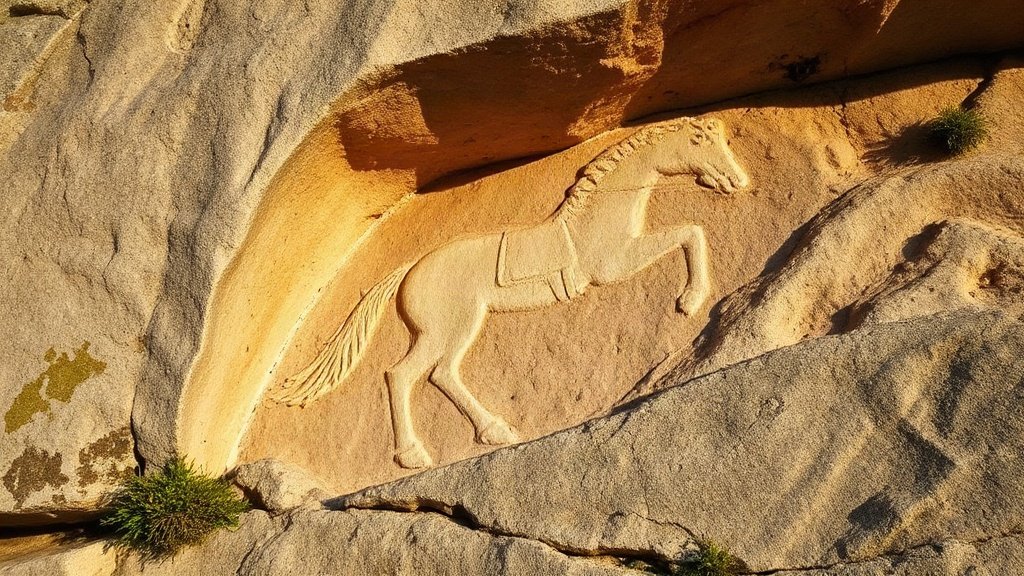
Illustration: AI-generated image
Rising from the limestone cliffs of the Madara Plateau in northeastern Bulgaria, the Madara Rider is a monumental rock relief that has fascinated visitors for centuries. Carved about 23 metres above ground level, it depicts a horseman in a triumphant pose, accompanied by a dog and with a lion pierced by a spear at the horse's feet. This unique work of early medieval art is one of Bulgaria's most important cultural treasures and was added to the UNESCO World Heritage List in 1979.
A Monument Carved in Stone
The relief is believed to date from the early 8th century, during the rule of the Bulgar khans. Most scholars associate it with Khan Tervel, though the exact identity of the rider remains a subject of debate. The figure is often interpreted as a symbolic representation of a ruler, perhaps celebrating a military victory or the might of the Bulgarian state. Surrounding the relief are inscriptions in Greek, which mention historical events and the names of khans, making the site an invaluable source for early Bulgarian history.
The horseman is carved in a naturalistic style, with careful attention to the movement of the horse and the rider's garments. Over the centuries, erosion has softened some details, but the image remains powerful and evocative against the sheer rock face.
How to Get There
The Madara Rider is located near the village of Madara, about 15 kilometres east of the town of Shumen in northeastern Bulgaria. The site is easily accessible by car from Shumen, and there is a car park at the foot of the cliffs. For those using public transport, regular buses connect Shumen with Madara village, from where a well-marked path leads up to the relief.
The climb to the viewing platform takes roughly 20 to 30 minutes on foot, following a gentle but steady trail through woodland. The path is well maintained and suitable for most visitors, though comfortable walking shoes are recommended.
Exploring the Reserve
The Madara Rider is part of the larger Madara Archaeological Reserve, which covers the plateau and its surroundings. Above the relief, on the plateau itself, lie the remains of a medieval fortress that once guarded the area. Hiking up to the fortress rewards visitors with panoramic views over the surrounding countryside and the town of Shumen in the distance.
The reserve also includes several caves, some of which show traces of prehistoric habitation. The most notable is the Madara Cave, a large natural cavern that has been used by humans for thousands of years. Interpretive signs along the trails explain the history and geology of the area, making it an educational stop as well as a scenic one.
Birdwatchers and nature lovers will appreciate the mix of forest and open rock habitats, which attract a variety of species, especially during spring and autumn migrations.
Practical Tips
The site can be visited year-round, but spring and autumn offer the most pleasant temperatures for hiking. Summer can be hot, so bring water and sun protection. There is no shade on the final approach to the relief, so a hat is useful even in cooler months. The viewing platform is fenced for safety, but keep an eye on children.
There are no shops or cafés at the site itself, so pack any snacks you might need. The village of Madara has a few small restaurants and shops, and the town of Shumen offers a wider range of accommodation and dining options for those planning a longer stay in the region.
Whether you are a history enthusiast, a hiker, or simply a traveller seeking a lesser-known gem, the Madara Rider offers a memorable blend of art, nature, and ancient mystery.