Srebarna Nature Reserve: A Guide to Bulgaria's Birdwatcher's Paradise
Discover Srebarna, a UNESCO World Heritage wetland on the Danube that shelters hundreds of bird species, including the endangered Dalmatian pelican.
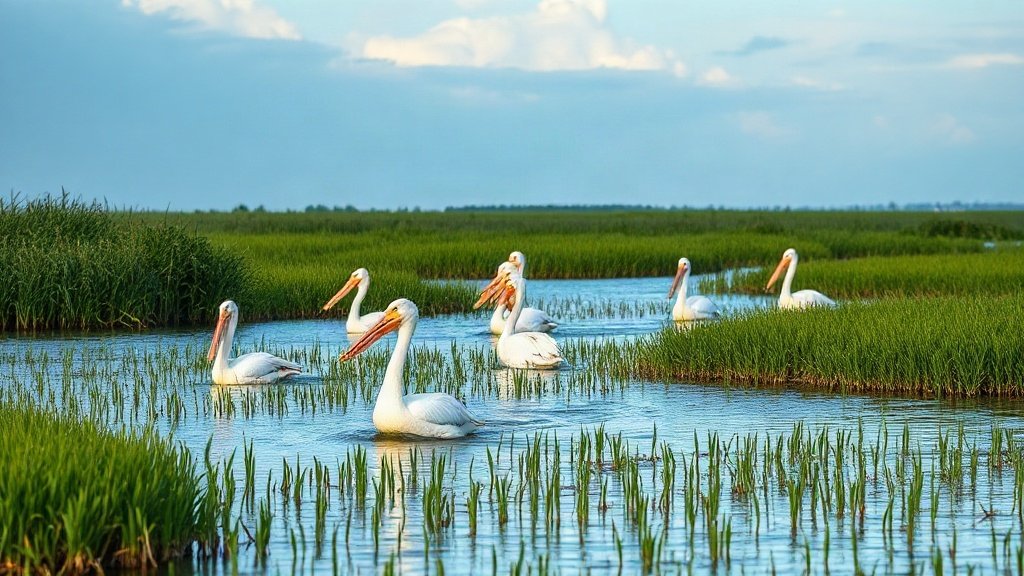
Illustration: AI-generated image
In the quiet northeastern corner of Bulgaria, close to the Danube River, lies one of Europe's most important wetlands. Srebarna Nature Reserve is a place of still water, rustling reeds and the constant sound of birds. For travellers who love wildlife and open landscapes, it offers a rare glimpse into a habitat that has all but disappeared elsewhere on the continent.
A lake full of life
The reserve centres on a shallow freshwater lake, surrounded by extensive reed beds that stretch for hundreds of hectares. These reeds are not just scenery; they are the heart of the ecosystem. They provide nesting sites, shelter and food for an astonishing variety of birds. More than 200 species have been recorded here, from tiny warblers to majestic birds of prey.
The star resident is the Dalmatian pelican, one of the rarest pelican species in the world. Srebarna is one of its most important breeding sites in Europe. You may also see great egrets, purple herons, glossy ibises, pygmy cormorants and ferruginous ducks. During migration, thousands of birds pass through, making every season a little different.
Why it is so special
Srebarna is not just a local treasure; it has international recognition. The reserve is a UNESCO World Heritage Site and a Ramsar Wetland of International Importance. These designations reflect its global significance for bird conservation. The lake and its surroundings support species that are rare or threatened across their range, and the area remains remarkably unspoiled.
For visitors, the experience is subtle. There are no big crowds or dramatic attractions. Instead, you walk along marked trails, climb an observation tower and watch the birds through binoculars or a spotting scope. The stillness is part of the appeal.
Planning your visit
Srebarna is located about 20 kilometres west of the town of Silistra, and roughly 400 kilometres northeast of Sofia. The most practical way to reach it is by car, though buses run to the nearby village of Srebarna from Silistra. From the village, it is a short, signposted walk to the reserve entrance.
The reserve is open to visitors all year round, but the best time for birdwatching depends on what you hope to see. Spring and early summer are ideal for breeding species, while autumn brings large numbers of migrating birds. Winter can be cold, but you may spot white-tailed eagles and other hardy residents.
There is a small museum and information centre near the entrance, where you can learn about the lake's ecology and pick up a trail map. The main trail loops around part of the lake and leads to a high observation tower that gives panoramic views across the reed beds. Bring comfortable walking shoes, water and insect repellent in warmer months. Binoculars are essential; you can sometimes borrow a pair on site, but bringing your own is safer.
What else to see nearby
The area around Srebarna offers more than birds. The town of Silistra, on the Danube, has a long history dating back to Roman times. You can visit the remains of a Roman tomb and walk along the riverfront. The wider region of Dobrudzha is known for its wide fields, quiet villages and traditional food. It is a side of Bulgaria few tourists see, and a day trip to Srebarna fits well with a slower, more exploratory way of travelling.
For anyone drawn to nature, Srebarna is a reminder that quiet places can hold the greatest surprises.