Boyana Church: A Guide to Sofia's Medieval Fresco Masterpiece
Tucked into the foothills of Vitosha Mountain, this small UNESCO-listed church holds some of the most remarkable medieval frescoes in Europe.
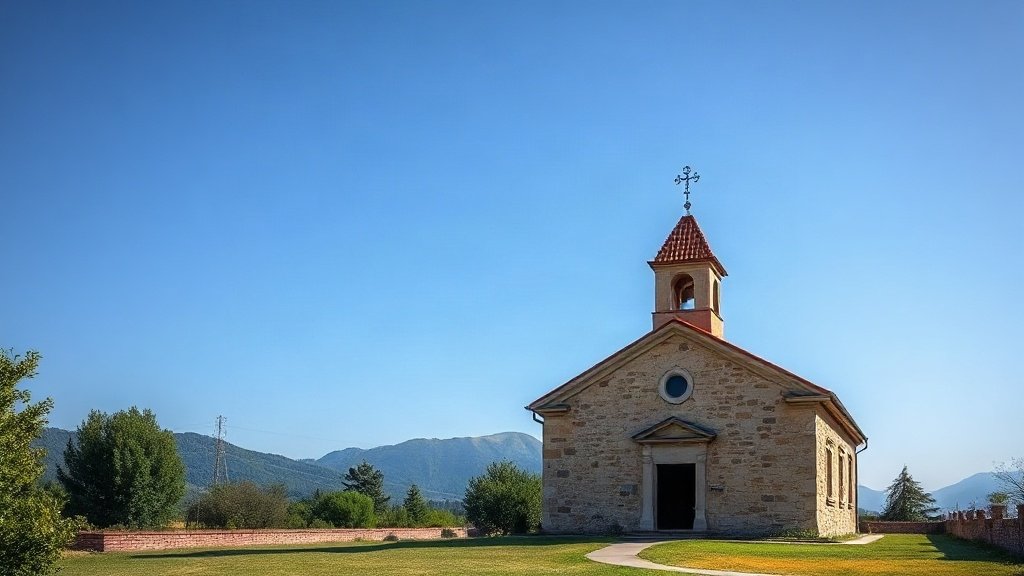
Illustration: AI-generated image
Just a short trip from central Sofia, Boyana Church feels a world away from the city's bustle. This modest stone building, nestled against the green slopes of Vitosha Mountain, is one of Bulgaria's most precious cultural treasures. It is not grand in size, but what it holds inside is extraordinary: layer upon layer of vividly painted frescoes, some dating back nearly eight centuries, that have earned it a place on the UNESCO World Heritage List.
For travellers who love art, history or simply beautiful places, Boyana Church offers an intimate and moving experience. It is easy to reach, easy to explore in an hour or two, and leaves a lasting impression far greater than its small footprint suggests.
Where is Boyana Church?
Boyana Church sits in the Boyana district, a quiet residential neighbourhood on the southern edge of Sofia, at the foot of Vitosha Mountain. The exact address is 3 Boyansko Ezero Street, about 8 kilometres from the city centre. The mountain setting gives the church a peaceful, almost rural atmosphere, and many visitors combine a trip here with a hike or cable car ride up Vitosha.
A brief history
The church is actually three buildings joined together over centuries. The oldest part, the eastern section, dates from the late 10th or early 11th century. A second, two-storey section was added in the 13th century by a local nobleman, and this is where the most famous frescoes were painted in 1259. A third section was built in the 19th century, completing the structure you see today.
The 1259 frescoes are the highlight. They are considered among the finest examples of medieval Bulgarian art and some of the most important surviving works of the European Middle Ages. What makes them so special is their realism and emotional depth. Unlike the stiff, formal style typical of the period, the Boyana figures have expressive faces, natural gestures and a sense of individuality that was centuries ahead of its time.
What to see inside
The most celebrated frescoes cover the walls and ceiling of the 13th-century section. They depict over 240 figures, including saints, biblical scenes and portraits of the church's donors. The portraits of Sebastocrator Kaloyan and his wife Desislava are particularly striking: they look like real people, with detailed clothing and lifelike faces, rather than symbolic images.
Another fascinating detail is the depiction of Christ as a young man, sometimes called the 'Boyana Christ', which shows a more human, approachable figure than the stern judges often painted elsewhere. The colours have retained a remarkable freshness, and the small, dimly lit interior makes the viewing feel intimate and atmospheric.
How to visit
Boyana Church is open to visitors throughout the year, but it is wise to check official information for current opening hours before you go, as they can change with the seasons. Because the frescoes are sensitive to humidity and temperature, visitors are usually admitted in small groups for a limited time, often around ten minutes inside. This helps preserve the paintings while still allowing everyone a close look.
Getting there is straightforward. You can take a city bus from central Sofia – lines 64 or 107 are common options – and get off at the Boyansko Hanche stop, then walk a few minutes. Alternatively, taxis are inexpensive, and many visitors combine the church with a trip to the nearby Vitosha Mountain, where you can enjoy hiking, skiing or panoramic views of Sofia.
Photography inside is not allowed, so be prepared to simply enjoy the experience with your eyes. A small visitor centre and garden outside offer a pleasant place to relax before or after your visit.
Why it matters
Boyana Church is more than a beautiful stop on a Sofia itinerary. It is a direct window into the medieval world, a place where the artistic advancements of 13th-century Bulgaria still speak clearly today. Its UNESCO status recognises not just the skill of the painters but the cultural continuity that the church represents. For any traveller with an interest in history or art, it is an essential and rewarding excursion.