Road Freight in Bulgaria: A Guide to Rules for Hauliers
From permits to driving hours, here’s what businesses need to know about moving goods by road in Bulgaria.
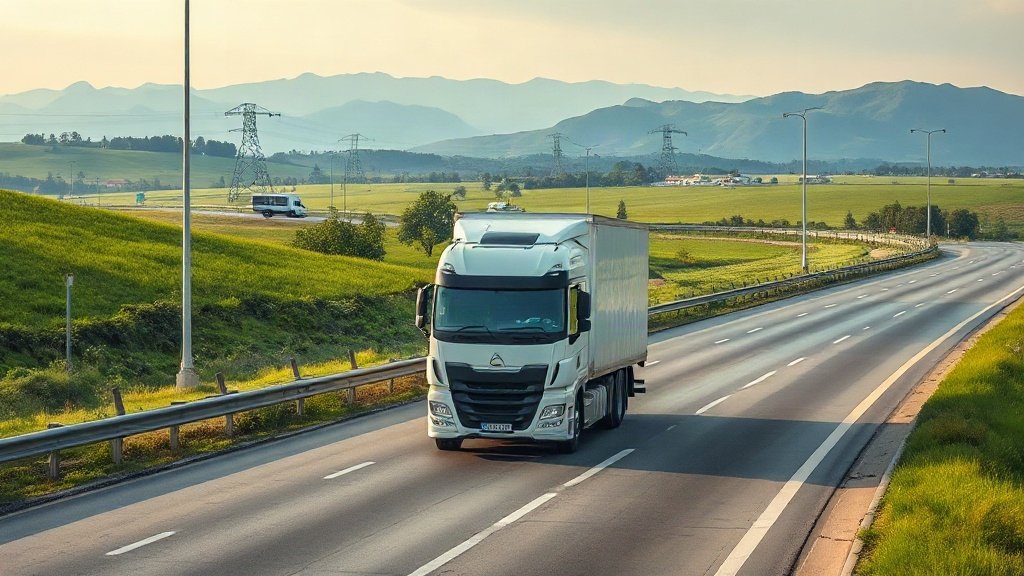
Illustration: AI-generated image
Bulgaria’s position at the crossroads of Europe and Asia makes it a vital corridor for road freight. Thousands of lorries pass through the country every day, linking the EU with Turkey, the Western Balkans and beyond. For businesses involved in haulage or logistics, understanding the rules of the road is essential to keep operations smooth and compliant.
Licensing Your Fleet
Any company that transports goods by road for hire or reward within the EU needs a Community licence. This applies to vehicles over 3.5 tonnes. The licence is issued by the country where the company is established, and it must be carried on board at all times. For journeys to or from non-EU countries, additional permits may be required, such as an ECMT licence or a bilateral permit, depending on the destination.
Domestic haulage within Bulgaria is regulated separately. Operators must hold a valid licence issued by the Bulgarian authorities, and vehicles must be registered for commercial use. Keeping documentation up to date is critical, as roadside checks are frequent.
Driver Qualifications
Professional lorry drivers in Bulgaria must hold a valid driving licence for the relevant vehicle category, as well as a Driver Certificate of Professional Competence (CPC). The CPC requires periodic training every five years, covering topics such as safety, fuel-efficient driving and regulations.
Drivers must also carry a digital tachograph card, which records driving times, breaks and rest periods. The tachograph itself must be calibrated and sealed. Employers are responsible for downloading data regularly and ensuring drivers comply with EU rules on driving hours.
On the Road: Rules and Restrictions
Bulgaria follows the EU’s driving time and rest rules. In general, a driver may drive for a maximum of 9 hours per day, extendable to 10 hours twice a week. A break of at least 45 minutes is required after 4.5 hours of driving. Daily rest must be at least 11 hours, though it can be reduced to 9 hours up to three times between weekly rests.
Speed limits for lorries are 90 km/h on motorways, 80 km/h on other roads outside built-up areas, and 50 km/h in urban areas unless otherwise signed. Vehicles over 3.5 tonnes must be fitted with a speed limiter set to 90 km/h.
Weight and dimension limits follow EU standards. The maximum authorised weight for a standard articulated lorry is 40 tonnes, though intermodal transport may allow up to 44 tonnes for certain routes. Length limits are 16.5 metres for an articulated vehicle and 18.75 metres for a road train. Overweight or oversized loads require special permits.
Tolls and Infrastructure
Bulgaria operates an electronic toll system for heavy goods vehicles. Lorries over 3.5 tonnes must pay a distance-based toll on most motorways and major roads. The toll is calculated according to the vehicle’s emission class, number of axles and the route travelled. Payment is made via an on-board unit or a GPS-based device, which can be obtained from authorised providers.
Light commercial vehicles and cars use a vignette system, which can be purchased online or at border crossings. Bulgaria’s road network includes several major motorways, but some secondary roads may be in poorer condition, so route planning is essential.
Cross-Border Considerations
Bulgaria’s EU membership means there are no customs checks for goods moving to or from other member states. However, for trade with non-EU countries like Turkey or Serbia, customs procedures apply. Drivers must carry the correct documentation, including the CMR consignment note, and be prepared for possible delays at border crossings.
Finally, remember that winter tyres are mandatory from 15 November to 1 March, and snow chains may be required on certain mountain passes. Staying informed about temporary restrictions and weather conditions will help keep your fleet moving safely.