Kazanlak Thracian Tomb: A Guide to Bulgaria's Ancient Painted Burial Chamber
Discover one of Bulgaria's most important archaeological treasures, a UNESCO World Heritage Site known for its remarkably preserved Hellenistic frescoes.
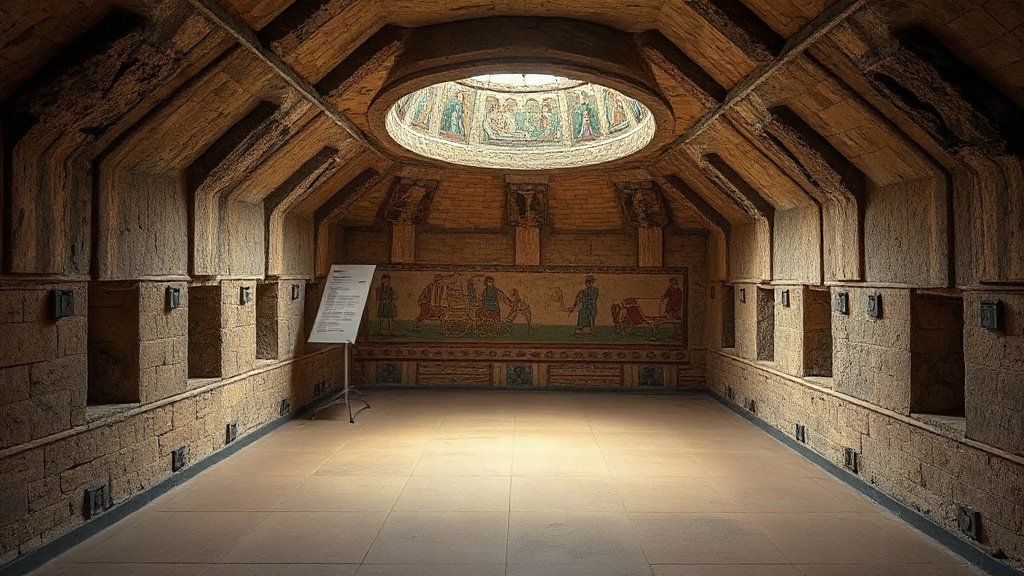
Illustration: AI-generated image
Hidden beneath a grassy mound in the heart of Bulgaria's Rose Valley lies one of the country's most significant ancient treasures: the Kazanlak Thracian Tomb. This small but extraordinary burial chamber, dating back to the 4th century BC, is celebrated for its exceptionally well-preserved wall paintings—some of the finest examples of Hellenistic art anywhere in the world.
The tomb was discovered by chance in 1944, when soldiers digging a trench stumbled upon the entrance. Inside, archaeologists found a narrow corridor leading to a round, beehive-shaped chamber, its walls covered in vivid frescoes. The paintings depict scenes from the life of a Thracian nobleman and his wife, including a sombre funeral feast, a chariot race, and a touching farewell between the seated couple. The colours—ochre, red, black, and white—remain remarkably vibrant, offering a rare glimpse into the artistic sophistication of the ancient Thracians.
Why It Matters
The Kazanlak Tomb is part of a larger necropolis of Thracian burial mounds that dot the region, but it stands out for the quality and completeness of its murals. In 1979, UNESCO inscribed the tomb on the World Heritage List, recognising its outstanding universal value. The frescoes are considered masterpieces of Thracian art and provide invaluable insight into the beliefs, customs, and daily life of a civilisation that once dominated the Balkans. The tomb's architecture—a tholos, or beehive, constructed of brick and stone—also demonstrates advanced engineering skills for its time.
Visiting the Tomb
To protect the delicate original paintings, visitors are not allowed inside the actual tomb. Instead, a faithful replica has been built nearby, reproducing the chamber's dimensions and frescoes to the smallest detail. This replica allows you to experience the tomb's atmosphere without endangering the ancient artwork. The original is accessible only to researchers under strict conditions.
The tomb is located just outside the town of Kazanlak, about 200 kilometres east of Sofia and 100 kilometres northeast of Plovdiv. It is easily reached by car via the Trakia motorway, and regular buses connect Kazanlak with major cities. Once in town, the site is a short taxi ride or a pleasant walk from the centre. The surrounding park is landscaped and peaceful, with the burial mound itself a prominent feature.
While in the area, consider exploring other Thracian heritage sites, such as the nearby Golyama Kosmatka tomb, or combining your visit with a tour of the Rose Valley, especially during the rose harvest in late May and early June. The Kazanlak History Museum also displays artefacts from the tomb and offers further context.
Practical Tips
- The site is open year-round, but spring and autumn offer the most comfortable weather for exploring.
- Allow about an hour to visit the replica and the surrounding grounds; the site is compact but rich in information.
- Combine your trip with a visit to the Shipka Memorial Church and the Thracian tomb of Golyama Kosmatka for a full day of history and scenery.
- Wear comfortable shoes, as you may walk on unpaved paths around the mound.
Whether you're a history enthusiast or simply curious about Bulgaria's ancient past, the Kazanlak Thracian Tomb offers a fascinating and deeply moving encounter with a civilisation that thrived more than two millennia ago.