Etar: Bulgaria's Open-Air Museum of Crafts and Revival Life
Discover the Etar Architectural-Ethnographic Complex near Gabrovo, where water powers traditional workshops and Bulgaria's craft heritage comes alive.
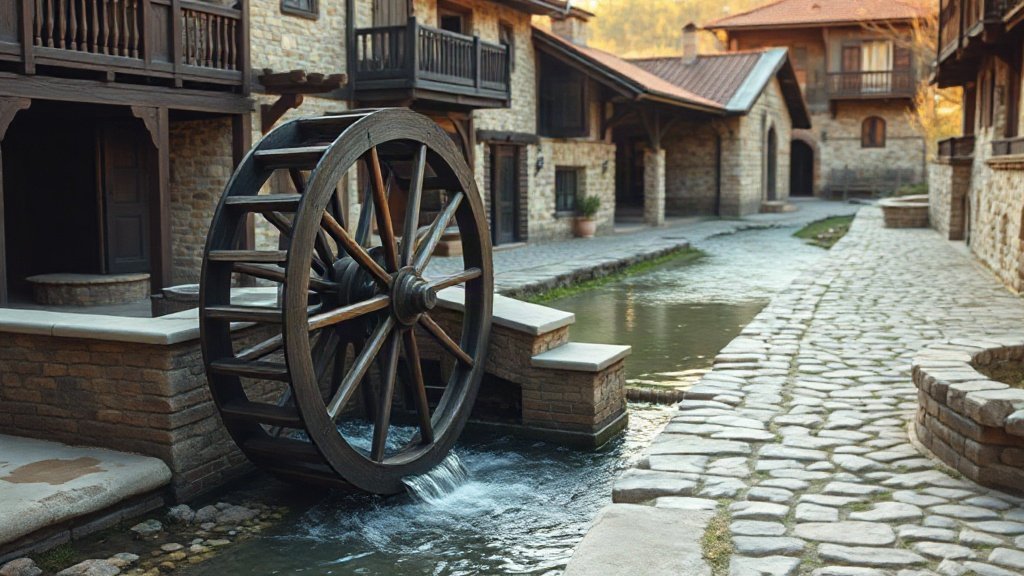
Illustration: AI-generated image
Set in a wooded valley just south of Gabrovo, the Etar Architectural-Ethnographic Complex is Bulgaria's best-known open-air museum, offering a living picture of the country's Revival-period crafts and daily life. Unlike a static collection, Etar hums with activity: water from the Sivek River powers fulling mills, grindstones, and lathes, while artisans demonstrate techniques passed down for generations.
A Vision of the Bulgarian Revival
Etar was conceived in the 1960s to preserve the spirit of the 18th and 19th centuries, when Bulgarian towns thrived on skilled craftsmanship. The complex recreates a typical Revival settlement, with cobbled lanes, stone fountains, and houses featuring overhanging upper floors, carved ceilings, and colourful facades. More than 50 buildings have been carefully gathered or reconstructed here, each serving a purpose: homes, workshops, shops, and public buildings.
Water as the Driving Force
What makes Etar unique is its reliance on water power. A network of channels, sluices, and wooden wheels harnesses the river's energy, driving hammers for coppersmithing, saws for timber, and bellows for the forge. Visitors can watch blacksmiths shaping iron, potters throwing clay, and woodcarvers chiselling intricate patterns. The continuous motion of the water wheels adds a calming rhythm to the museum's atmosphere.
Craftsmanship and Living Tradition
Etar is not a static exhibition but a working community of artisans. Many of the crafts on display are listed as intangible cultural heritage, and the complex plays a role in keeping them alive. You might see a cutler forging a knife blade, a furrier sewing traditional sheepskin vests, or a weaver creating colourful rugs on a wooden loom. Most of the items made here are for sale, offering visitors a chance to take home an authentic piece of Bulgarian craft.
A Practical Visit
The museum is easy to reach from Gabrovo by car or local bus, and there is a car park at the entrance. Plan for at least two hours to wander the lanes at a relaxed pace. Wear comfortable shoes, as the paths are uneven cobblestones. The complex is open year-round, but the best time to see the water wheels in full flow is after spring rains or during the summer when the river is steady. Bring a camera, but be respectful when photographing artisans at work.
Etar offers more than a history lesson: it is a sensory journey into the rhythms of pre-industrial life, where the scent of wood smoke, the clang of the forge, and the cool spray of the millrace create an unforgettable experience. Whether you are a craft enthusiast, a history buff, or simply looking for a peaceful day out, Etar connects you to the roots of Bulgarian culture.