A Guide to Bulgarian Farmers' Markets: How to Shop for Fresh Local Produce
From ripe tomatoes in summer to crisp apples in autumn, Bulgaria's open-air markets offer a direct connection to local producers. This guide explains what to expect, how to shop politely, and how to get the best seasonal ingredients.
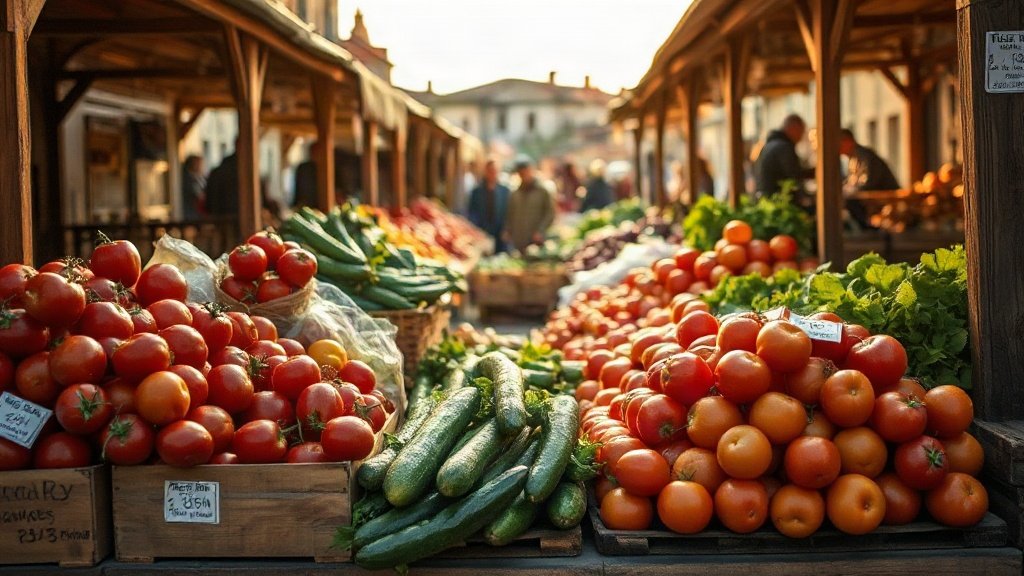
Illustration: AI-generated image
Bulgaria's farmers' markets, known simply as pazari, are more than places to buy food. They are lively social hubs where growers from nearby villages bring their produce straight to town, and where shoppers can find seasonal fruit, vegetables, dairy, honey and homemade preserves at their freshest. Whether you are an expat settling in or a visitor curious about local life, learning to shop at a pazar is one of the most rewarding everyday skills you can pick up.
What to Expect at a Pazar
Most towns and neighbourhoods have at least one open-air market, typically operating several mornings a week. Stalls are arranged in rows, with vendors displaying their goods on wooden tables or crates. You will find everything from tomatoes, cucumbers and peppers in summer to cabbages, leeks and root vegetables in winter. Alongside produce, many stalls offer sirene (white brined cheese), kiselo mlyako (yoghurt), honey, eggs, nuts, dried herbs and jars of lyutenitsa or pickles.
Expect a bustling, informal atmosphere. Vendors often call out to attract customers, and regulars stop to chat. Prices are usually displayed on small cards, but it is perfectly acceptable to ask "Kolko struva?" (How much is it?) if you are unsure.
Seasonal Shopping Tips
One of the greatest pleasures of the pazar is eating with the seasons. In late spring, look for sweet cherries and strawberries; summer brings an abundance of tomatoes, peppers, aubergines and peaches. Autumn is the time for grapes, apples, pumpkins and walnuts, while winter markets are stocked with cabbages, potatoes, carrots and preserved goods. Buying in season not only guarantees better flavour but often means lower prices as well.
To spot truly fresh produce, look for items that are heavy for their size, have vibrant colour and show no signs of bruising. Many vendors proudly label their goods as "domashno" (homemade or homegrown) or "ot gradinata" (from the garden), which usually indicates small-scale, traditional methods. Do not be put off by misshapen fruit or vegetables – they often taste better than uniform supermarket varieties.
Practical Shopping Etiquette
Bring cash in small denominations, as most vendors do not accept cards. A reusable bag or two is essential, and you may also want a container if you plan to buy honey or pickles by weight. It is customary to greet the vendor with a friendly "Dobar den" (Good day) before making your choice. Many sellers will offer a taste of their goods – simply ask "Mozhe li da probam?" (May I try?) if you are curious.
Haggling is not a regular part of market culture, but if you are buying a large quantity, you can politely ask "Može li malko otstapka?" (Is there a small discount?). Vendors often round down the total or add a few extra items as a gesture of goodwill. Being a regular customer pays off – you are likely to be remembered and given the best produce.
Beyond Fruit and Vegetables
While produce is the main draw, many pazari also feature stalls selling fresh flowers, potted herbs, and even household items like brooms or woven baskets. During certain seasons you may find banitsa or other freshly baked goods being sold warm from a small oven. Some markets have a section for second-hand clothes or tools, turning a food run into a full morning outing.
Shopping at a Bulgarian farmers' market is about more than filling your basket. It is a chance to connect with the rhythms of the land, support local growers, and bring a little bit of Bulgaria's rich food culture into your own kitchen. With a few phrases and a sense of curiosity, you will soon feel like a regular.