How to Make Bulgarian Turshiya: A Guide to Winter Pickles
Turshiya is Bulgaria's beloved mixed vegetable pickle, a crunchy, tangy staple that brightens winter meals. Here's how to make your own jar at home.
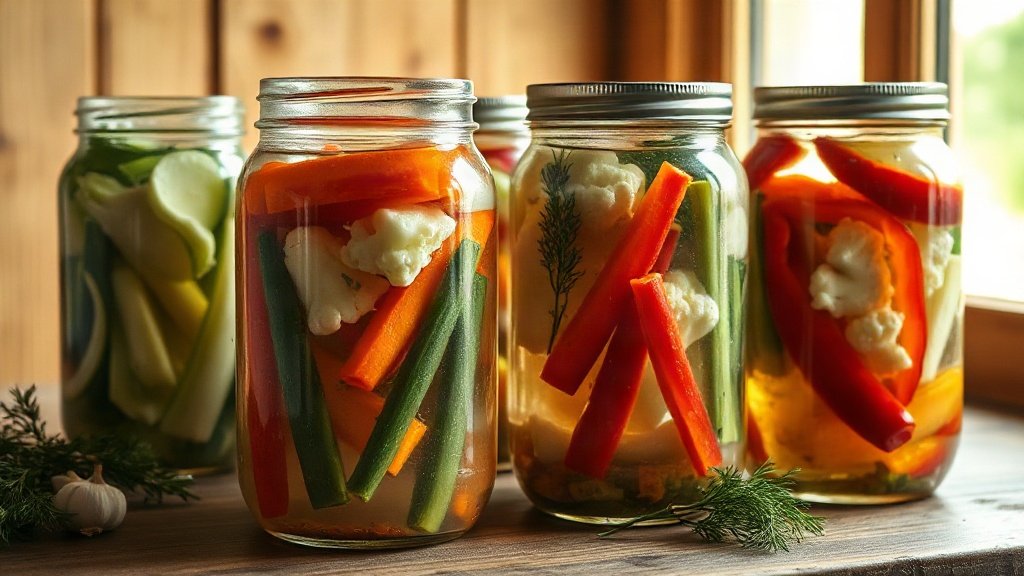
Illustration: AI-generated image
As the first frost settles across Bulgaria, kitchens fill with the sharp, clean scent of vinegar and the soft crunch of raw vegetables being packed into jars. This is the season for making turshiya, the country's beloved mixed pickle that has kept families fed through long winters for generations. Unlike the finely chopped relishes of Western Europe, Bulgarian turshiya is rustic and chunky: whole or large pieces of vegetables submerged in a salty, often slightly sour, brine. The result is a jar full of crunch, tang and the taste of late autumn.
Choosing Your Vegetables
The beauty of turshiya is its flexibility. Traditional recipes call for whatever the garden offers in October and November: firm white cabbage cut into wedges, carrots sliced into thick rounds or sticks, cauliflower broken into florets, green or red peppers left whole or halved, celery sticks, and sometimes small green tomatoes or gherkins. Choose vegetables that are firm and unblemished; softer vegetables like courgettes can turn mushy, so if you include them, use them sparingly. Many cooks add a few cloves of garlic, a sprig of dill, or a piece of fresh horseradish root for extra bite. Quantities are entirely up to you—aim for a colourful mix that will look appealing in the jar.
Preparing the Brine
The brine is the heart of turshiya. The simplest and most traditional version is a salt-and-water solution, roughly 40 to 50 grams of coarse sea salt per litre of water (about 4–5% salinity). Dissolve the salt completely in cold or lukewarm water. Some households add a splash of white wine vinegar or apple cider vinegar to the brine, which gives a sharper, more immediate sourness and helps preserve colour; others rely solely on natural fermentation. If you prefer a milder, more complex flavour, stick to salt only and allow the vegetables to ferment slowly. You can also add a teaspoon of sugar to balance the salt, though this is optional.
Packing and Fermenting
Sterilise your jars and lids by washing them in hot soapy water and drying them in a low oven or with boiling water. Pack the vegetables tightly into the jars, leaving about two centimetres of headspace at the top. Tuck in your aromatics—dill, garlic, peppercorns, bay leaves, or a piece of dried red chilli—among the vegetables. Pour the brine over the vegetables until they are completely submerged; if they float, place a small ceramic weight or a clean cabbage leaf on top to keep them under the liquid. Seal the jars loosely (if using clip-top jars, leave the clip undone for the first few days) and leave them at room temperature, out of direct sunlight. Fermentation will begin within a day or two, producing small bubbles. After three to five days, taste a piece; when the flavour is pleasantly sour, move the jars to a cool, dark place such as a cellar, balcony (if frost-free), or refrigerator. Turshiya will keep for several months if kept cool and the vegetables remain submerged.
Serving and Storing
Turshiya is a versatile side dish, served cold and straight from the jar. It pairs beautifully with hearty winter stews, bean dishes, grilled meats, or simply with a slice of fresh bread and a piece of white cheese. Many Bulgarians start a meal with a small plate of turshiya alongside a glass of rakia. The brine itself is also prized: a spoonful added to soups or salad dressings gives a bright, salty tang. Always use a clean fork or spoon to remove vegetables from the jar to prevent contamination, and top up with a little extra brine if the level drops.
Why Turshiya Works
Beyond its delicious crunch, turshiya is a practical way to preserve the autumn harvest without freezing or complex equipment. The salt inhibits harmful bacteria while allowing beneficial lactic acid bacteria to thrive, naturally fermenting the vegetables and creating a probiotic-rich food. This traditional method has been used for centuries across the Balkans, and making your own turshiya is a satisfying way to connect with Bulgarian food culture and reduce food waste. Once you master the basic brine, you can experiment with spices, herbs, and vegetable combinations to create a jar that is uniquely yours.