Kiselo Zele: Bulgaria's Traditional Fermented Cabbage for Winter
A guide to Bulgaria's whole-head sauerkraut, from how it's made to the hearty dishes it stars in.
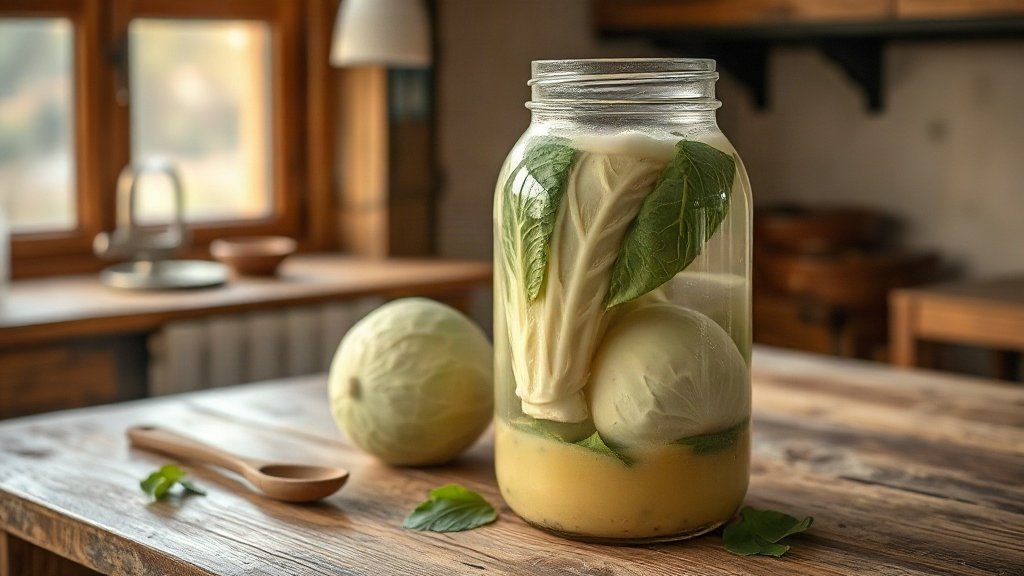
Illustration: AI-generated image
As autumn turns to winter, Bulgarian kitchens fill with the tangy scent of kiselo zele – whole cabbage heads fermented in brine. Unlike finely shredded sauerkraut found elsewhere, kiselo zele keeps the cabbage intact, making it a versatile base for some of the country's most comforting cold-weather dishes.
What is Kiselo Zele?
Kiselo zele (literally "sour cabbage") is made by submerging whole white cabbage heads in a saltwater brine, often with a few corn cobs or a slice of rye bread to aid fermentation. The process takes several weeks, during which natural lactic acid bacteria transform the cabbage into a tangy, slightly crunchy preserve. The result is both a flavour enhancer and a key ingredient in traditional recipes.
How It's Made at Home
Making kiselo zele is a ritual in many Bulgarian households. Families buy large quantities of cabbage in late autumn, remove the outer leaves, and pack the heads tightly into large plastic barrels or ceramic crocks. A brine of water and coarse salt is poured over, and a weight keeps everything submerged. The barrel is left in a cool place – a cellar, balcony or garage – for three to four weeks. Once the cabbage turns slightly translucent and tastes pleasantly sour, it's ready to use.
Dishes That Shine with Kiselo Zele
The most famous use is sarmi – stuffed cabbage leaves filled with rice, minced meat and spices, then simmered slowly. The sour leaves give sarmi their signature tang that sweet fresh cabbage cannot match. Kiselo zele is also chopped into winter salads, often dressed with sunflower oil and paprika, or added to bean soups and stews for a bright, acidic note. The brine itself, called rasol, is sometimes drunk as a folk remedy or used in cooking.
Why It's a Winter Staple
Beyond flavour, kiselo zele has practical roots. In the past, fermentation was the main way to preserve vegetables through the cold months when fresh produce was scarce. Today, it remains a cherished taste of home, and many Bulgarians insist that no commercial version can match a barrel made by a grandmother. Rich in vitamin C and beneficial probiotics, it's also valued for its health benefits.
If you visit Bulgaria in winter, look for kiselo zele at local markets or try sarmi in a traditional restaurant – the sour, savoury depth is a true taste of the season.