The Gadulka: Bulgaria's Bowed String Instrument and Its Folk Legacy
Discover the gadulka, a pear-shaped bowed instrument that has been the soulful voice of Bulgarian folk music for centuries. Learn about its history, sound, and role in traditional ensembles.
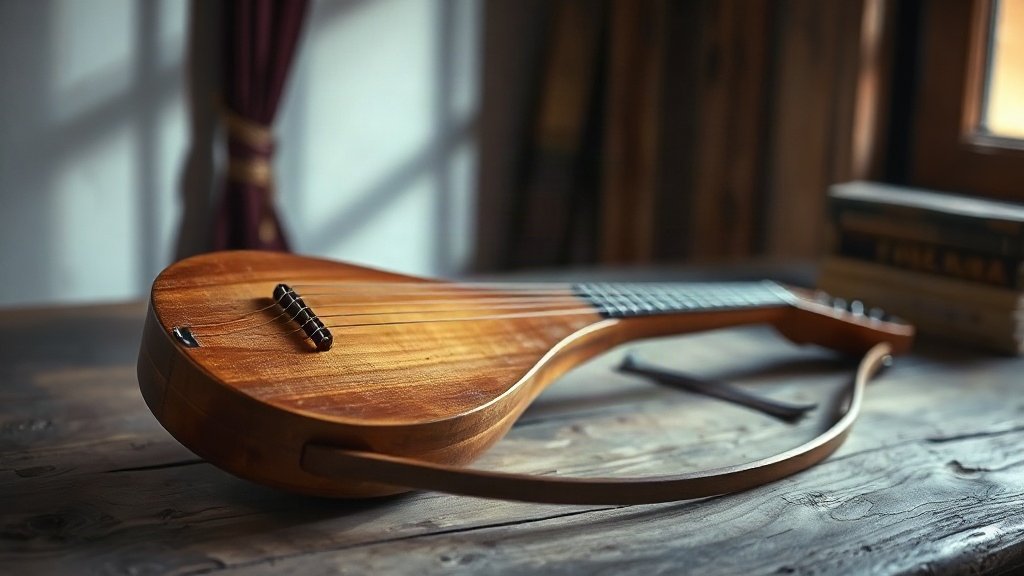
Illustration: AI-generated image
The gadulka is one of the most distinctive voices in Bulgarian folk music. This bowed string instrument, with its resonant pear-shaped body and melancholic yet lively tone, has accompanied village celebrations, weddings, and dances for generations. Whether played solo or as part of a traditional ensemble, the gadulka carries a heritage that remains very much alive today.
A Brief History
Like many Balkan folk instruments, the gadulka evolved from medieval bowed instruments brought to the region centuries ago. By the 18th and 19th centuries, it had become firmly rooted in Bulgarian musical tradition, especially across Thrace, the Rhodope Mountains, and the Shop region. While similar instruments exist in neighbouring countries, the Bulgarian gadulka developed its own tuning, playing style, and repertoire.
How It’s Built and Played
The gadulka is carved from a single piece of wood, typically maple or sycamore, with a hollow body covered by a spruce soundboard. It usually has three or four main playing strings, plus a set of thinner sympathetic strings that vibrate beneath them, enriching the sound. The player holds the instrument vertically, resting it on the knee, and draws a bow across the strings, using the fingernails of the left hand to press the strings from the side rather than on top—a technique that allows for rapid ornamentation and slides.
Two main types exist: the smaller, higher-pitched gadulka common in western Bulgaria, and the larger kopanka found in the Rhodopes, which has a deeper, more resonant voice. Both produce a sound that is warm, slightly nasal, and capable of great emotional expression, from slow, soulful melodies to fast, rhythmic dance tunes.
The Gadulka in Bulgarian Ensembles
In a traditional folk ensemble, the gadulka often plays the melody alongside the gaida (bagpipe) and kaval (flute), while the tapan (drum) provides rhythm. In the Thracian style, it is the lead instrument for slow, ornamented songs and lively horo dances. Wedding orchestras frequently feature a gadulka player, who may play for hours on end, improvising variations on well-known tunes.
Where to Experience the Gadulka
Today, the gadulka can be heard at folk festivals, village fairs, and cultural events throughout Bulgaria. Many community centres (chitalishta) offer lessons for children and adults, ensuring the tradition passes on. Even if you cannot attend a live performance, recordings of Bulgarian folk music readily showcase the gadulka’s unique character—a sound that instantly evokes the spirit of the Balkans.