Serdica: A Guide to Sofia's Ancient Roman Ruins
Beneath the modern streets of Bulgaria's capital lie the remains of Serdica, a Roman city with remarkably preserved walls, streets and an amphitheatre. Here's how to explore them.
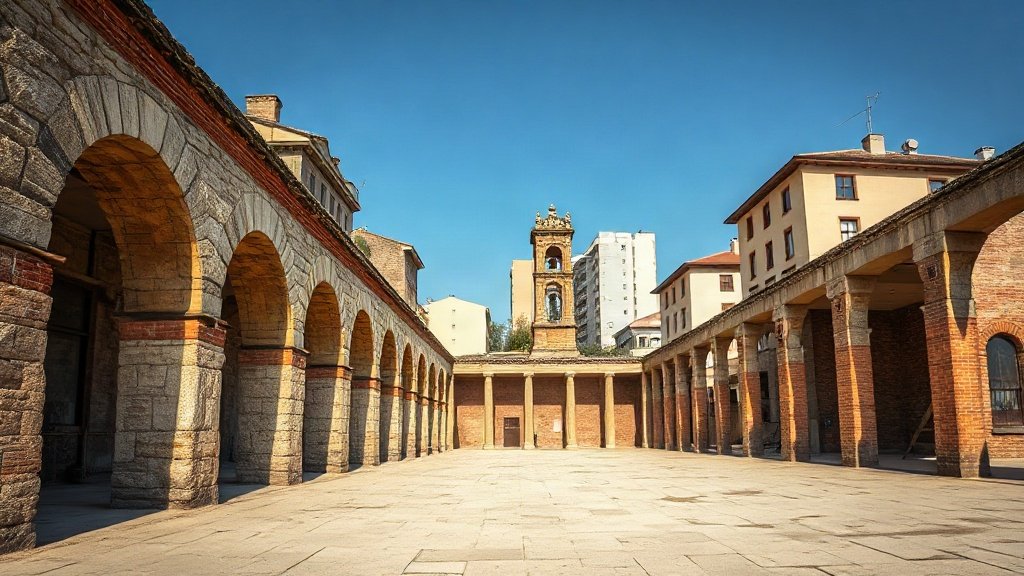
Illustration: AI-generated image
A City Beneath the City
Sofia is one of Europe's oldest capitals, and its history goes back thousands of years. Long before it became the Bulgarian capital, it was Serdica, an important Roman city founded in the 1st century AD. Today, you can walk through its ancient streets, see original Roman walls and imagine life nearly two millennia ago.
Where to Find the Ruins
The heart of ancient Serdica lies directly under Sofia's centre, around the Serdika Metro Station and the Largo area. The most impressive remains are displayed in the Serdica Archaeological Complex, an open-air museum built into the underpass connecting the Presidency and the Council of Ministers. Here you can see sections of six Roman streets, an early Christian basilica and parts of the old city wall.
Nearby, the rotunda of St George, a 4th-century red-brick building, sits in the courtyard of the Presidency. It is considered the oldest preserved building in Sofia and is still a functioning church.
The Amphitheatre and Beyond
Just east of the main complex, the remains of the Serdica Amphitheatre lie beneath the Arena di Serdica Hotel. A small section is visible in the hotel's lobby, but the most evocative part is outdoors: a curved stone wall and seating area that evokes the original structure. Although much of the amphitheatre is buried, it is one of the largest in the eastern Roman Empire.
Other Roman remnants are scattered around the centre. Look for the Roman wall fragments near the Central Mineral Baths and along the Boulevard Knyaginya Maria Luiza. The ancient city gates and towers are marked with information boards.
A Brief History of Serdica
The Thracian tribe Serdi settled here long before the Romans arrived. In the 1st century AD, the Romans conquered the region and built the city of Serdica. It grew into a major urban centre, with a grid of streets, public baths, temples and an amphitheatre. Emperor Constantine the Great reportedly considered making Serdica his capital, calling it "my Rome". The city remained important through the Byzantine era and later became part of the Bulgarian state, eventually known as Sredets and then Sofia.
Tips for Visiting
Most of the ruins are free to view from public spaces. The Serdica Archaeological Complex is open daily and is fully accessible. It is best to start at the Serdika Metro Station, where you can orient yourself with maps and interpretive panels in English. Plan at least an hour to explore the complex and nearby sites. Combine your visit with the Saint Sofia Basilica and the Alexander Nevsky Cathedral for a full historical tour.