How to Make Bulgarian Petmez: A Traditional Grape Molasses for Your Pantry
Petmez is a thick, sweet grape molasses with centuries of history in Bulgarian kitchens. Learn how to make it at home with just one ingredient and a little patience.
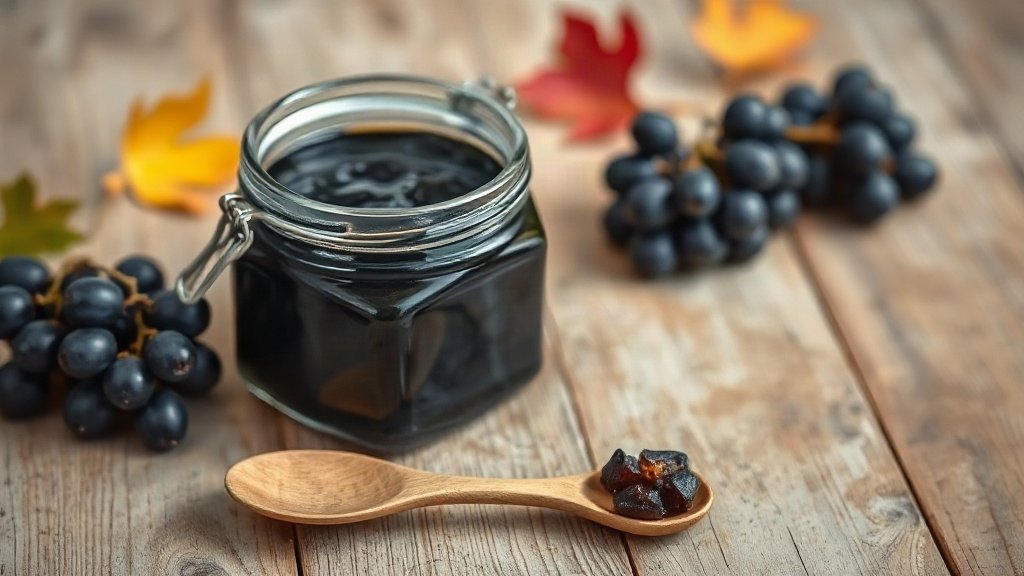
Illustration: AI-generated image
Petmez is one of Bulgaria's oldest sweeteners, a dark, glossy molasses made by slowly boiling down grape juice until it becomes thick and syrupy. Long before refined sugar was widely available, households across the country relied on petmez to sweeten winter dishes, spread on bread or stir into warm drinks. Today it remains a beloved homemade treat, especially in rural areas where families still gather after the autumn grape harvest to prepare a year's supply.
What is petmez?
Petmez is essentially concentrated grape juice, with no added sugar, preservatives or pectin. The natural sugars in the grapes caramelise during the long cooking process, giving petmez its deep colour and complex flavour—sweet with a slight tartness and a hint of fruit. The texture is similar to honey or thick syrup, and the taste is often compared to grape molasses or pekmez found in neighbouring Turkey and the Balkans.
Traditionally, petmez was made from wine grapes or a mixture of grapes and other fruits like plums or apples. In some regions, pumpkin or sugar beet was used as well, but grape petmez remains the most common. The process requires no special equipment, just a large pot, a wooden spoon and plenty of time.
How to make petmez at home
Making petmez is simple but slow. The key is patience: the juice must reduce by about three-quarters to reach the right consistency. A typical batch from 10 kilograms of grapes yields roughly 2 litres of petmez.
- Choose your grapes. Any ripe, sweet grapes work, but dark varieties like Mavrud, Pamid or Cabernet Sauvignon give a richer colour and flavour. Avoid grapes that are unripe or starting to ferment.
- Crush and strain. Wash the grapes and remove stems. Crush them by hand or with a potato masher, then strain through a fine cloth or cheesecloth to extract the juice. For a clearer petmez, let the juice settle for an hour and pour off any sediment.
- Boil the juice. Pour the juice into a large, heavy-bottomed pot. Bring to a boil over medium-high heat, then reduce to a gentle simmer. Skim off any foam that rises to the surface during the first 20 minutes—this helps clarify the petmez.
- Reduce slowly. Continue simmering, stirring occasionally to prevent sticking, until the juice thickens and darkens. This can take anywhere from 3 to 6 hours, depending on the quantity and sugar content. The petmez is ready when it coats the back of a spoon and drips slowly, like warm honey.
- Test the consistency. Place a drop on a cold plate; if it holds its shape without spreading, it's done. Be careful not to overcook, as it can become too hard or bitter.
- Jar and store. Pour the hot petmez into sterilised glass jars, leaving a small headspace. Seal tightly and store in a cool, dark place. Properly sealed petmez keeps for a year or more without refrigeration.
Traditional uses for petmez
Petmez is incredibly versatile in Bulgarian cooking. The most classic way to enjoy it is spread on a slice of fresh bread, often with a knob of butter or a sprinkle of crushed walnuts. It is also stirred into warm milk or tea as a natural sweetener, or mixed with tahini to make a halva-like paste called tahan halva.
In baking, petmez can replace honey or sugar in recipes for banitsa, kozunak or simple cakes, adding moisture and a distinctive fruity note. It is also drizzled over pancakes, porridge or yoghurt for a quick breakfast. Some families cook petmez with pumpkin chunks to make a sweet winter compote, while others use it as a glaze for roasted meats or vegetables, where its sweetness balances savoury flavours.
Why make your own?
Homemade petmez connects you to a Bulgarian tradition that predates modern sugar refining. The process is straightforward, requires only grapes, and produces a pantry staple that brightens winter meals. It also makes a thoughtful gift—a jar of dark, glossy petmez tied with a ribbon is a taste of Bulgarian autumn, preserved for months to come.
Whether you have access to homegrown grapes or buy a box from the local market, making petmez is a rewarding way to slow down and savour the season. The next time you find yourself with an abundance of grapes, consider setting aside an afternoon for this ancient, delicious craft.