Rila Monastery: Bulgaria's Spiritual and Artistic Treasure
A guide to the history, architecture and cultural significance of Rila Monastery, Bulgaria's largest and most revered Orthodox sanctuary.
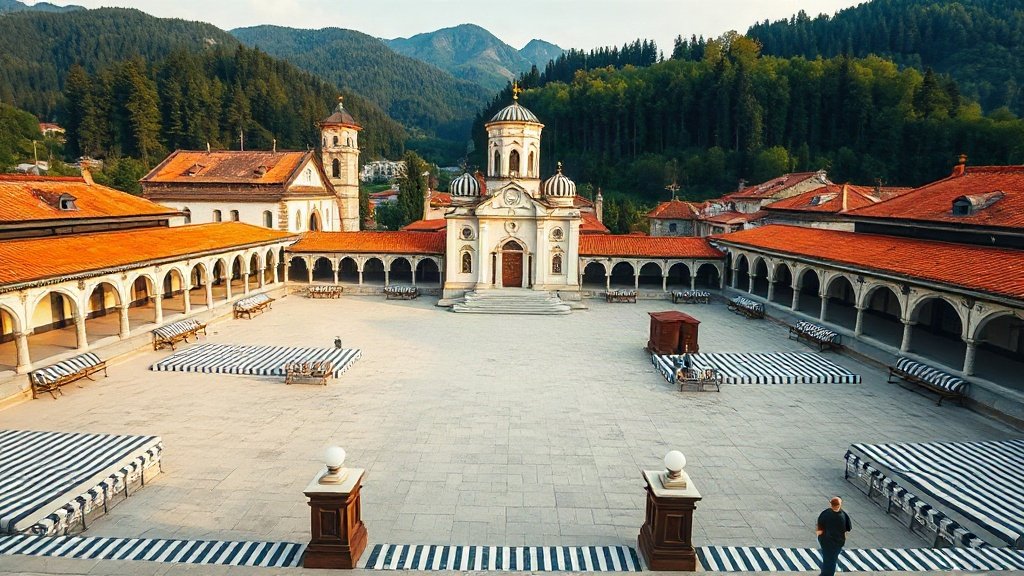
Illustration: AI-generated image
Set deep in the pine forests of the Rila Mountains, about 120 kilometres south of Sofia, stands Bulgaria's largest and most beloved Orthodox monastery. Founded in the 10th century by the hermit St Ivan of Rila, the complex has been rebuilt, burned and restored across the centuries, evolving into a symbol of Bulgarian faith, identity and artistic achievement.
A Thousand Years of Faith and Resilience
The monastery's story begins with St Ivan, who lived as a solitary ascetic in a nearby cave. After his death, his disciples built a small community around his tomb. Over time, the monastery became a centre of pilgrimage, but its remote location made it vulnerable to raids and fires. The present-day appearance dates largely from the early 19th century, when it was rebuilt after a devastating fire, with later additions in the 20th century.
Architecture and Art: A Harmony of Colour and Form
The monastery's most striking feature is its four-storey residential wings, which enclose a vast cobblestone courtyard. Their striped facades of dark wood and white plaster, topped with red-tiled roofs and arched galleries, create a rhythmic and welcoming enclosure. At the heart of the courtyard stands the main church, the Church of the Nativity of the Virgin, built in the 1830s. Its exterior is a masterpiece of Bulgarian National Revival architecture, with alternating bands of red brick and white stone, and five domes crowned with gilded crosses.
Inside, the church is covered almost entirely in frescoes painted by some of the most renowned artists of the Samokov and Bansko schools. The vivid scenes from the Bible, lives of saints and allegories of virtue and vice are considered among the finest examples of Bulgarian religious painting. The gilded iconostasis, carved in the early 19th century, is a marvel of woodcarving, while the museum houses a priceless collection of icons, manuscripts and church plate.
The Tower of Hrelyo and the Monastery's Treasures
Rising from the courtyard is the medieval Tower of Hrelyo, built in the 14th century by a local feudal lord. It is the oldest surviving structure on the site and served as a defensive keep. At its top, a small chapel contains rare wall paintings from that period. The monastery's library holds thousands of manuscripts and early printed books, attesting to its historical role as a centre of learning and Slavic literacy.
A UNESCO World Heritage Site
In 1983, Rila Monastery was inscribed on the UNESCO World Heritage List for its outstanding universal value. It is not only a place of worship but also a living museum of Bulgarian culture, attracting visitors from around the world. The surrounding landscape, with its steep forested slopes and clear mountain air, adds to the sense of peace and timelessness. Whether you come as a pilgrim, an art lover or a curious traveller, the monastery offers a profound encounter with Bulgaria's spiritual and artistic heritage.