Irakli Beach: Bulgaria's Wild Black Sea Escape
Irakli is a protected stretch of coast where golden sand meets rolling dunes and forested hills, offering a rare slice of unspoiled Bulgarian seaside.
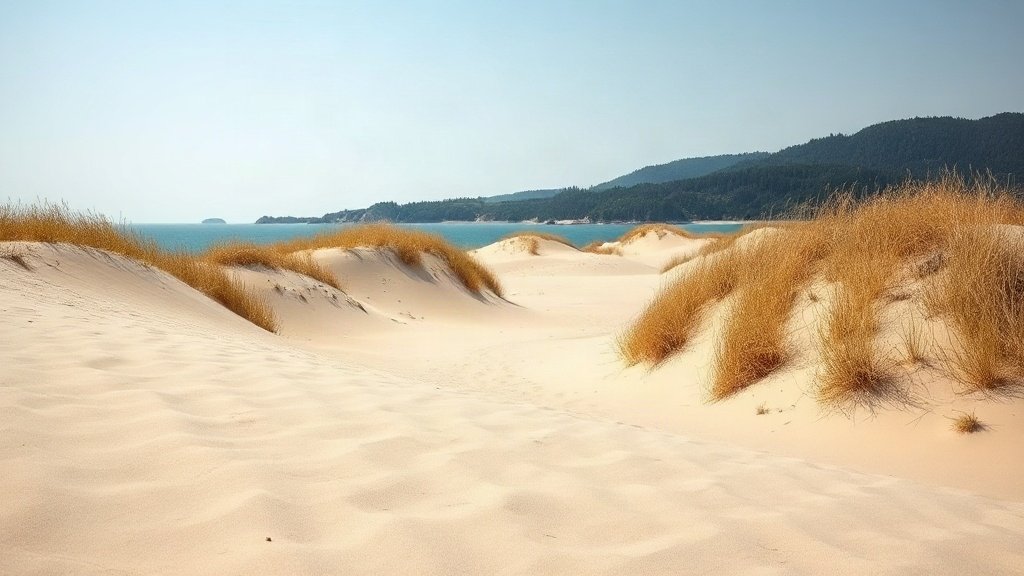
Illustration: AI-generated image
Irakli is one of the last truly wild stretches of coastline on the Bulgarian Black Sea. Located a short drive south of Varna and just north of the resort town of Obzor, it is part of a protected area that keeps developers away and preserves a rare ecosystem of dunes, cliffs and riverside forest.
Getting There
The beach is reached by a turn-off from the main coastal road. There is no public transport directly to the sand, so most visitors come by car or hike down from nearby villages. Parking is informal along the dirt track, and a short walk through fragrant scrub leads to the shore.
What to Expect
The beach itself is a long, wide arc of golden sand, backed by rolling dunes covered in grasses and wildflowers. At its southern end, the Irakli River meets the sea, creating a shallow lagoon that is popular with families. The water is clean and usually calm, though like the rest of the Black Sea coast, it can get choppy when the wind picks up.
Because the area is protected, there are no sunbeds, umbrellas, beach bars or shops. The lack of development is exactly the appeal: you'll share the sand with gulls, sand martins and perhaps a few nudists, as Irakli has a long tradition as a clothing-optional beach. If that's not for you, simply choose a spot further along the wide shore.
Hiking and Nature
The hills behind the beach are criss-crossed with footpaths that lead through oak woods and open meadows, offering sweeping views over the sea. One popular route climbs to the headland at Cape Emine, where the ruins of a medieval fortress stand above sheer cliffs. The round trip takes about two hours and is best done in the morning or late afternoon to avoid the midday heat.
Birdwatchers will find plenty to enjoy, especially during spring and autumn migration, when the coast lies on the Via Pontica flyway. Look out for hoopoes, bee-eaters and the occasional sea eagle overhead.
Practical Tips
- Bring everything you need: water, food, sun protection and a rubbish bag. There are no facilities, and the nearest shops are several kilometres away.
- Wear sturdy shoes if you plan to hike, as the paths are stony and uneven.
- Check the weather before you go. The beach is exposed, and a strong onshore wind can make sunbathing uncomfortable.
- Respect the protected landscape: take only photos, leave only footprints, and avoid picking plants or disturbing wildlife.
For those who want to linger, wild camping is not officially permitted within the protected area, but many visitors choose to stay discreetly. If you do stay overnight, keep noise to a minimum and leave no trace. The reward is a night sky free of light pollution and the sound of waves as your lullaby.
When to Visit
The beach is at its liveliest in July and August, though even then it never feels crowded compared to the big resorts. For a more peaceful experience, come in June or September, when the sea is still warm and the days are long but the holiday rush has eased. Spring and autumn are ideal for hiking, with wildflowers or golden leaves adding colour to the landscape.