Stob Pyramids: A Hiker's Guide to Bulgaria's Sandstone Formations
Tucked into the rugged hills near Rila Monastery, the Stob Pyramids are a surreal gallery of red sandstone pillars, carved by wind and rain over millennia. Here's how to visit them and what to expect on the trail.
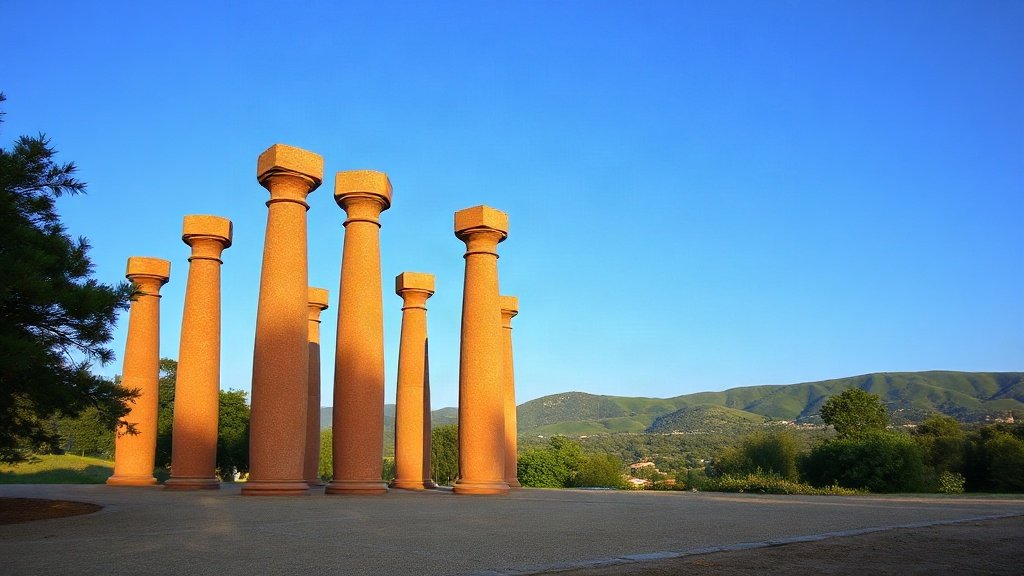
Illustration: AI-generated image
Tucked into the lower slopes of the Rila Mountains, the Stob Pyramids (Stobski piramidi) are one of Bulgaria's most curious natural wonders. These clusters of red and ochre sandstone pillars, some reaching over ten metres high, look like something from another world. They sit just a short detour from the famous Rila Monastery, making them an easy add-on to a day trip.
What are the Stob Pyramids?
Despite the name, these are not ancient constructions but natural rock formations. They are carved from loosely cemented sandstone and conglomerate deposited over five million years ago. Wind, rain and frost have eroded the softer layers, leaving behind tall, slender towers with rounded caps, often compared to mushrooms, chimneys or petrified figures. Locals have long associated them with legends of a wedding party turned to stone, a story told throughout the Balkans for similar landmarks.
Getting There
The pyramids lie near the village of Stob, in Kyustendil Province, about 90 kilometres south of Sofia. Most visitors arrive by car, taking the E79 motorway towards the town of Kocherinovo, then following signs to Stob. From the village, a well-trodden path leads uphill to the formations. Public transport is limited, but buses from Sofia to Kocherinovo run several times a day, and from there you can hike or take a short taxi ride to the trailhead.
The Hiking Trail
The walk to the pyramids is a moderate uphill climb of roughly 1.5 kilometres, gaining around 300 metres in elevation. The path is not always clearly marked, so keep your eyes peeled for red and white trail markers. It usually takes 30 to 45 minutes to reach the main cluster. Once there, you can wander among the pillars, which are spread over a hillside, and enjoy sweeping views towards the Struma Valley. Be careful on steep or uneven ground, especially after rain. The round trip, including time to explore, is about two hours.
When to Visit and What to Bring
Spring and autumn are ideal, with mild temperatures and lush green surroundings. Summer can be hot, so start early in the morning. Winter visits are possible but the trail may be icy or muddy. Wear sturdy shoes or hiking boots, carry water and sun protection, and consider a light jacket even in summer, as it can be breezy on the exposed slopes. There are no facilities on the trail, so bring any snacks you might need.
A Perfect Pairing with Rila Monastery
Because of their proximity, the Stob Pyramids make an excellent half-day adventure before or after visiting Rila Monastery, which is only about 15 kilometres away. Many travellers choose to see the pyramids in the morning when the light is best for photography, then continue to the monastery for the afternoon. The contrast between the solemn medieval architecture and the wild natural sculptures is striking, and together they showcase two very different faces of the Rila region.