Kashkaval Pane: Bulgaria's Crispy Fried Cheese You Should Try
Discover Bulgaria's beloved breaded and fried kashkaval cheese, a golden appetiser with a molten centre, served in homes and mehanas across the country.
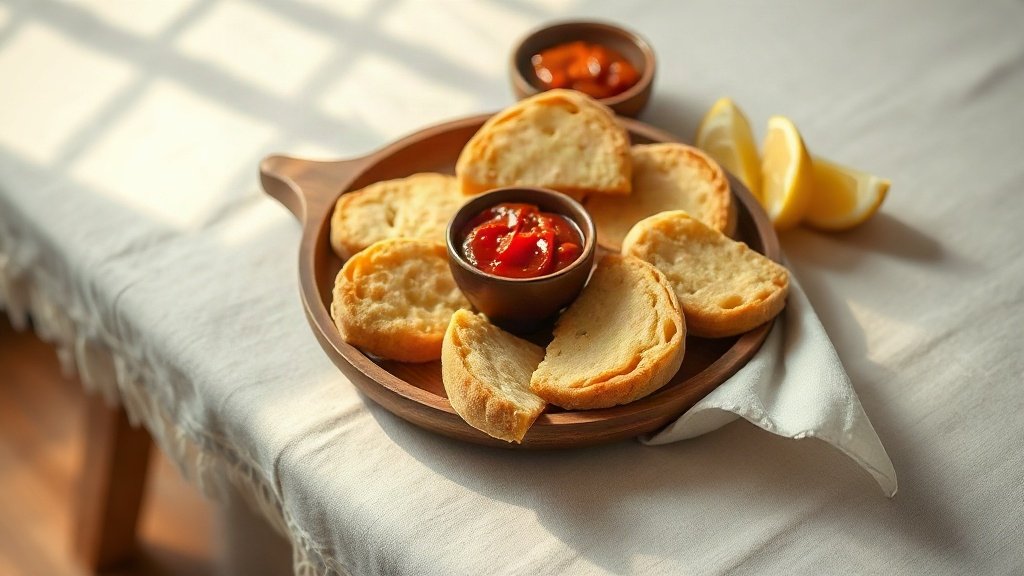
Illustration: AI-generated image
When you think of Bulgarian cheese, sirene (the brined white cheese) often comes to mind first, but the country's yellow cheese, kashkaval, holds its own special place at the table. One of the most delicious ways to enjoy kashkaval is as kashkaval pane — thick slices of cheese, breaded and fried until the outside is crisp and golden and the inside turns irresistibly molten. This simple yet satisfying dish is a staple of Bulgarian home cooking and a favourite starter in traditional mehanas.
What is Kashkaval Pane?
Kashkaval pane (кашкавал пане) translates directly as 'breaded kashkaval'. It consists of slices of kashkaval cheese that are coated in flour, beaten egg, and breadcrumbs, then shallow-fried or deep-fried in hot oil. The result is a crunchy, golden shell that gives way to a soft, stretchy, savoury centre. It is typically served hot, often with a squeeze of lemon or a side of lutenitsa, and sometimes accompanied by french fries and a simple salad.
Kashkaval itself is a semi-hard yellow cheese made from cow's, sheep's, or a mix of milks. It has a mild, slightly salty and buttery flavour, and it melts beautifully, which makes it perfect for frying. In Bulgaria, kashkaval is widely available in supermarkets and from cheesemongers; the firmer varieties hold their shape better when fried.
How It Is Made
The process is straightforward and uses everyday ingredients. First, the kashkaval is cut into thick slices or rectangular blocks, around one to two centimetres thick. Each piece is dusted with flour, then dipped into beaten egg, and finally coated generously with fine breadcrumbs. Some cooks repeat the egg and breadcrumb step for a thicker crust. The coated cheese is then fried in hot oil — sunflower oil is most common in Bulgaria — until the outside is deep golden brown, usually just one or two minutes per side. Because the cheese melts quickly, the frying must be brief to prevent it from oozing out completely.
For the best result, it is recommended to chill the breaded cheese for about 30 minutes before frying; this helps the coating adhere and slows the melting. Some home cooks also double-bread the slices for extra crunch. Once fried, the pieces are drained on kitchen paper to remove excess oil.
Where to Find It and How to Serve It
Kashkaval pane is a common item on the menus of traditional Bulgarian restaurants (mehanas), usually listed among hot appetisers. It is also a popular choice for home gatherings, as it is quick to prepare and universally liked. In some places, it is served as part of a mixed appetiser platter alongside kyopoolu, lutenitsa, and cold cuts.
The classic accompaniments are a lemon wedge, which adds brightness, and a spoonful of lutenitsa or a simple tomato sauce. Some people enjoy it with a fresh Shopska salad or a side of crispy potatoes. It pairs well with a cold beer or a glass of white wine. Since kashkaval pane is rich and filling, a little goes a long way; two or three pieces per person are usually enough as a starter.
A Dish for All Seasons
Although fried cheese might sound heavy, kashkaval pane is enjoyed year-round in Bulgaria. In winter, it offers warmth and comfort; in summer, it is often served at outdoor tables with a chilled drink. Because it uses simple, shelf-stable ingredients, it is easy to make at any time. If you cannot find Bulgarian kashkaval, a good-quality semi-hard yellow cheese such as provolone, gouda, or even a mild cheddar can be used as a substitute, though the flavour will differ slightly.
Whether you encounter it in a cosy mehana or try your hand at making it at home, kashkaval pane is a delightful introduction to Bulgaria's love of cheese. Its crisp exterior and gooey centre make it a crowd-pleaser that is hard to resist.