How to Make Bulgarian Lyutenitsa: A Simple Step-by-Step Guide
Lyutenitsa is a thick, tangy pepper-and-tomato spread that appears on almost every Bulgarian table. Here's how to make a traditional batch at home with simple ingredients.
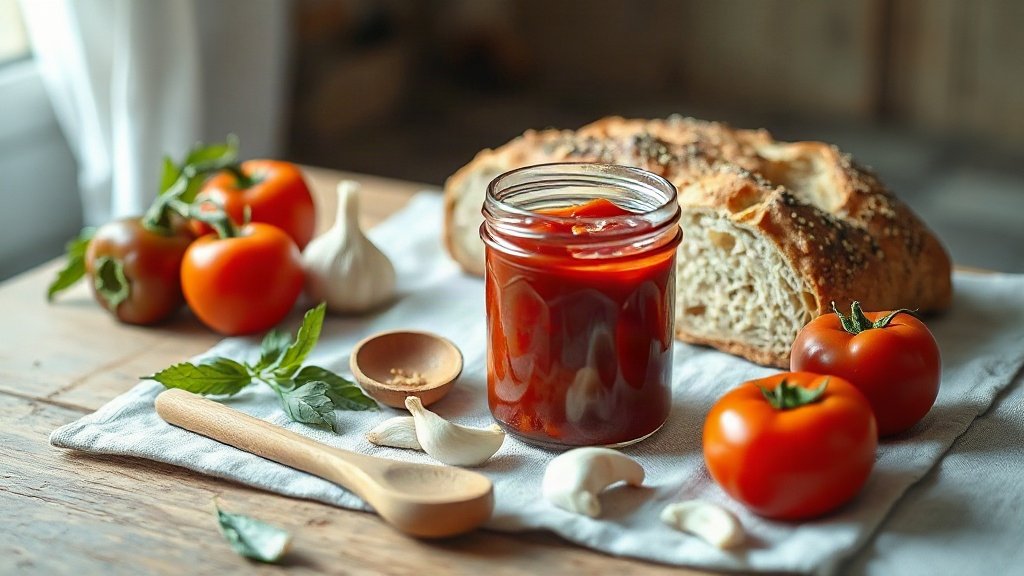
Illustration: AI-generated image
Lyutenitsa (sometimes spelled lutenitsa) is one of Bulgaria’s best-loved foods. This thick, savoury spread made from roasted red peppers, tomatoes and aubergine has a deep, smoky-sweet flavour and a gentle kick from garlic and chilli. It is eaten all year round, but especially in late summer and autumn, when peppers are at their peak and families gather to cook large batches for the winter.
What makes lyutenitsa special
Unlike a smooth sauce or relish, lyutenitsa is chunky and dense, with a texture that holds its shape on a slice of bread. The key is roasting or grilling the peppers until their skins blacken, which gives the spread its characteristic smoky depth. Tomatoes add sweetness and acidity, while roasted aubergine (optional but common) contributes body and a creamy note. Garlic, sunflower oil, sugar and salt round out the flavour, and a small amount of hot pepper gives lyutenitsa its name – "lyuto" means hot or spicy in Bulgarian.
Ingredients for a home batch
This recipe makes about four to five 500 ml jars. You will need:
- 2 kg red peppers (the long, sweet “kapia” type is traditional, but any fleshy red pepper works)
- 1 kg ripe tomatoes
- 1 medium aubergine (about 300 g)
- 100 ml sunflower oil
- 2–3 garlic cloves, minced
- 1–2 teaspoons sugar (to taste)
- 1–2 teaspoons salt (to taste)
- A pinch of hot chilli flakes or one small hot pepper (optional)
Step-by-step method
- Roast the vegetables. Wash the peppers, tomatoes and aubergine. Place the peppers and aubergine on a baking tray and roast in a hot oven (220°C / 425°F) or grill over a flame until the skins are blistered and blackened, turning occasionally. This takes 20–30 minutes. The tomatoes can be roasted alongside, but many cooks peel them raw and cook them separately to preserve their fresh acidity.
- Peel and prepare. Transfer the roasted peppers and aubergine to a bowl, cover with a lid or cling film and let them steam for 10 minutes. This makes peeling easier. Remove the skins, stems and seeds. Peel the tomatoes if you did not roast them, then chop roughly.
- Blend or mince. Using a food processor, blender or a mincer, process the roasted peppers and aubergine until you have a coarse, textured purée – not too smooth. You can also leave some chunks for a rustic feel. Purée the tomatoes separately.
- Cook the mixture. In a large, heavy-bottomed pot, heat the sunflower oil over medium heat. Add the pepper-aubergine mixture and the tomato purée. Stir well and bring to a gentle simmer. Cook uncovered, stirring frequently to prevent sticking, for 45–60 minutes until the mixture thickens and the oil begins to separate slightly at the edges.
- Season. Add the minced garlic, sugar, salt and optional chilli. Taste and adjust – lyutenitsa should be pleasantly sweet, tart and lightly spicy. Cook for another 10–15 minutes to let the garlic mellow.
- Jar and store. While the lyutenitsa is still hot, spoon it into sterilised glass jars, leaving a little headspace. Seal with lids and turn the jars upside down for 10 minutes to create a vacuum. Allow to cool completely. Unopened jars keep in a cool, dark place for up to a year; once opened, refrigerate and use within a few weeks.
How Bulgarians enjoy it
Lyutenitsa is a breakfast staple, spread thickly on white bread or toast, often topped with crumbled white cheese (sirene). It also pairs beautifully with grilled meats, roasted vegetables, boiled eggs or as a dip for breadsticks. Some people use it as a base for pizza or stir a spoonful into soups and stews for extra depth. A classic combination is a slice of bread, a layer of lyutenitsa and a slice of yellow cheese – simple and satisfying.
Making lyutenitsa at home is a rewarding way to capture the flavours of a Bulgarian autumn. The aroma of roasting peppers filling the kitchen is almost as memorable as the taste itself.