Cherni Vit Cheese: Bulgaria's Unique Green Mould Cheese
Discover the story behind Cherni Vit, a rare Bulgarian sheep's milk cheese with a distinctive green mould and sharp, earthy flavour.
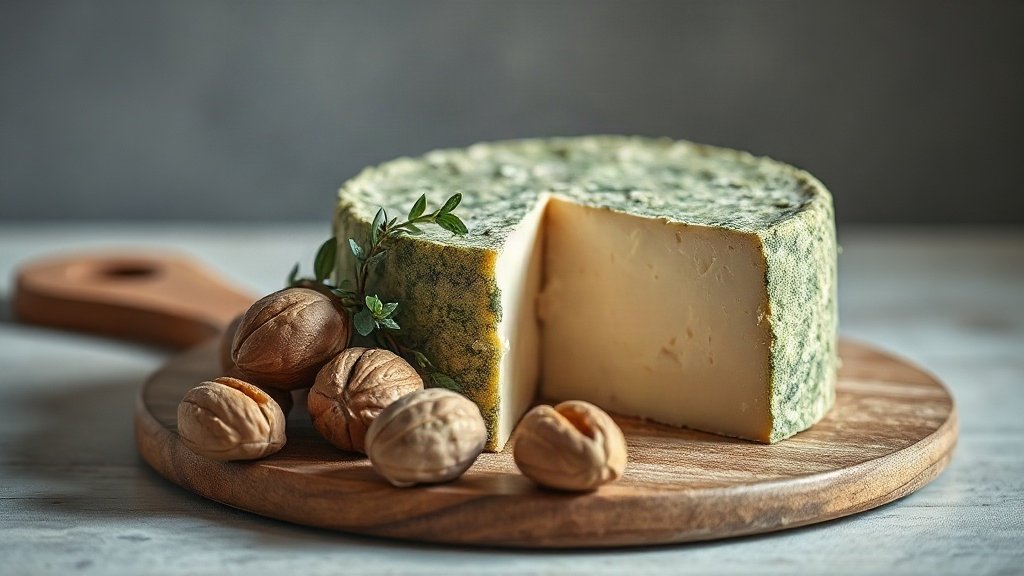
Illustration: AI-generated image
While Bulgaria is famous for its white brined sirene and yellow kashkaval, there is a lesser-known cheese that sparks curiosity among food lovers: Cherni Vit. Named after the village in the Teteven Balkan Mountains where it originates, this cheese stands out for its unusual green mould, complex flavour, and rarity. If you are keen to explore Bulgaria's deeper dairy traditions, Cherni Vit is a fascinating place to start.
What is Cherni Vit cheese?
Cherni Vit is a type of cheese made exclusively from sheep's milk, traditionally produced in the village of Cherni Vit and the surrounding region. It is most recognisable by the blue-green mould that develops on its rind and, over time, throughout the paste. Unlike many blue cheeses, the mould in Cherni Vit is not injected but develops naturally during a long ageing process in humid cellars or caves.
The flavour is sharp, earthy, and slightly piquant, with a crumbly to creamy texture depending on age. Younger wheels are milder and more crumbly, while longer-aged ones become stronger and more spreadable. The aroma is distinctly rustic, reminiscent of damp stone and mountain herbs.
A tradition nearly lost
Cherni Vit cheese has deep roots in the pastoral traditions of the Balkan Mountains. For centuries, shepherds made it in the summer months, when sheep grazed on highland pastures rich in wild herbs and grasses. The cheese was aged in natural caves, where the cool, humid environment encouraged the growth of local moulds.
During the 20th century, industrial cheese production and changing agricultural practices nearly wiped out this artisanal product. By the early 2000s, only a handful of elderly villagers remembered how to make it. Thanks to the efforts of local enthusiasts and international slow food movements, the cheese was revived as a symbol of Bulgaria's gastronomic heritage. Today, it is produced in small quantities and is considered a delicacy.
How it's made
The process begins with raw sheep's milk, which is gently heated and curdled using traditional rennet. The curds are cut, drained, and pressed into cylindrical moulds. The fresh cheeses are then salted and left to air-dry before being moved to ageing cellars.
Over several months, the cheese develops its signature green mould. The rind becomes mottled with blue-green patches, and the interior gradually takes on a similar hue. The exact mould species vary with the local environment, which gives Cherni Vit its unique character. No two batches are exactly alike.
How to enjoy it
Cherni Vit cheese is versatile and can be enjoyed in many ways:
- On a cheese board: Serve at room temperature with crusty bread, honey, walnuts, and fresh or dried fruit.
- In salads: Crumble over roasted vegetables or a simple green salad for a punch of flavour.
- With traditional dishes: Melt it over warm potatoes or use it to enrich a hearty bean stew.
- As a snack: Pair with a glass of full-bodied Bulgarian red wine, such as Mavrud or Melnik.
Because of its intense taste, a little goes a long way. Start with a small piece to appreciate its complexity before adding it to dishes.
Finding Cherni Vit cheese
Due to its limited production, Cherni Vit cheese is not always easy to find. It is occasionally available at farmers' markets, specialised cheese shops, and some restaurants that champion Bulgarian products. When you do come across it, it is worth trying for a taste of Bulgaria's authentic mountain terroir.