A Practical Guide to Making Winter Preserves, Bulgarian Style
Autumn is when many Bulgarian households fill their pantries. Here is how the tradition of zimnina works, and how to try a simple version yourself.
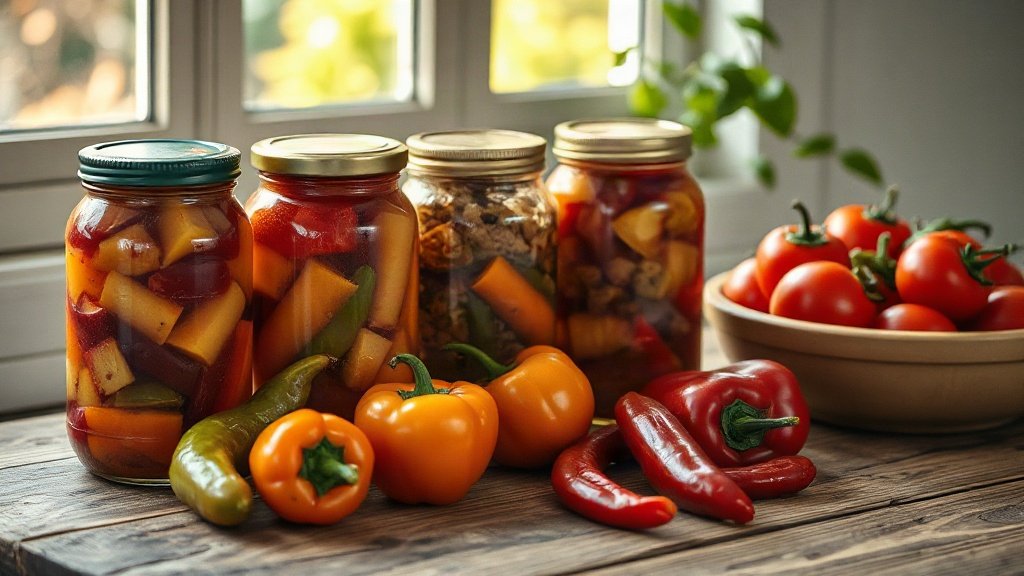
Illustration: AI-generated image
Walk through almost any Bulgarian neighbourhood in October and you will notice it: the smell of roasting peppers drifting from balconies, yards and kitchen windows. This is the season of zimnina, the long-standing habit of preserving food for the cold months.
The word simply means "winter supplies". For many families it is part pantry-building, part social occasion, with relatives and neighbours helping out and jars passed around afterwards.
What goes into zimnina
The range is wide, but a few staples appear again and again:
- Lyutenitsa, a cooked spread of roasted peppers and tomatoes, sometimes with aubergine or carrot.
- Turshiya, mixed pickled vegetables such as cabbage, cauliflower, carrots, peppers and green tomatoes.
- Kyopolou, a smoky aubergine and pepper relish.
- Compotes and jams, made from plums, cherries, apricots and other fruit.
- Dried goods, including peppers, herbs and beans.
Roasted red peppers are often prepared in large quantities, peeled by hand and then cooked down slowly. It is a patient job, which is partly why it is done in company.
A simple way to start
If you have never preserved anything, pickles are the gentlest introduction. A basic brine of water and salt, with vegetables packed into clean jars, is the foundation of many traditional recipes. Some cooks add vinegar, garlic, dill, peppercorns or bay leaves, and everyone has a favourite combination.
- Choose firm, fresh vegetables and wash them well.
- Wash jars and lids thoroughly and let them dry.
- Pack the vegetables tightly with your chosen flavourings.
- Cover with brine so nothing sits above the liquid.
- Store in a cool, dark place and follow a trusted recipe for timing.
Good hygiene matters more than anything else. Clean jars, correct salt levels and careful sealing are what keep preserves safe, so follow a reliable recipe rather than improvising on your first attempt.
Where to find the ingredients
Open-air markets across the country fill with peppers, tomatoes and cabbages in early autumn, often sold by the crate. Buying in bulk with friends or neighbours is common, and it makes the work lighter and more fun.
You will also see jars and sealing lids in homeware shops and supermarkets at this time of year, which tells you how widespread the habit is.
Why it still matters
Plenty of Bulgarians now buy ready-made jars, yet home preserving remains a point of pride. A jar of lyutenitsa from a grandmother or a friend's village kitchen is a familiar gift, and opening one in January brings back a little of the autumn sun.
For newcomers, joining in is one of the friendliest ways to understand everyday Bulgarian life. Ask a neighbour or colleague about their family recipe and you may well be invited to help with the next batch.