Topcheta Supa: Bulgaria's Comforting Meatball Soup Explained
Topcheta supa is a hearty Bulgarian soup of tender little meatballs, rice and vegetables in a clear broth. Learn what makes it special and how to make it at home.
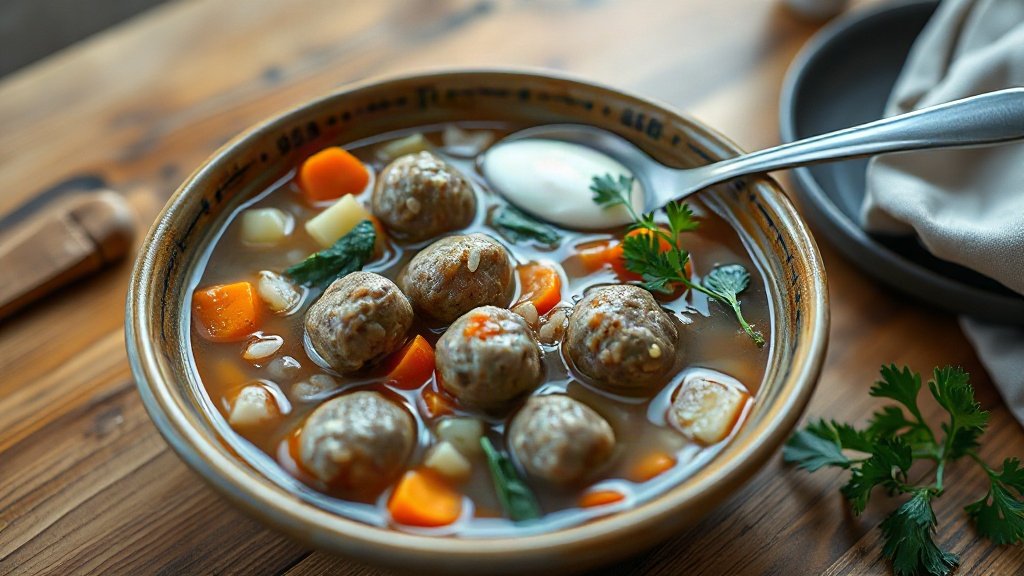
Illustration: AI-generated image
Topcheta supa, or Bulgarian meatball soup, is a beloved comfort food found on family tables across the country. Unlike heavier stews, it features small, tender meatballs floating in a clear, savoury broth with rice and finely diced vegetables. The name comes from topcheta, meaning 'little balls' or 'marbles', a nod to the petite size of the meatballs that makes each spoonful satisfying yet light.
What Makes Topcheta Supa Special?
The hallmark of this soup is its delicate balance. The meatballs are typically made from a mixture of minced pork and beef, seasoned with salt, black pepper, and often a pinch of savoury (chubritsa) or paprika. Some cooks add a little grated onion or soaked bread to keep them moist. Rice is used instead of noodles, absorbing the broth's flavour while keeping the soup gluten-free friendly. Vegetables like carrots, celery, onion, and occasionally red pepper are diced small so they soften quickly and release sweetness into the broth.
Key Ingredients and Preparation
To make topcheta supa at home, start by preparing the meatballs. Combine minced meat with finely chopped onion, an egg, a little rice (or breadcrumbs), and seasonings. Roll into small balls, about the size of a hazelnut or small cherry tomato, and set aside. In a pot, sauté diced carrot, celery, and onion in a little oil until soft, then add water or stock and bring to a simmer. Drop in the meatballs gently and add a handful of rice. Simmer until the meatballs are cooked through and the rice is tender, usually 20–30 minutes. Season with salt, pepper, and a sprinkle of dried savoury. For extra depth, some recipes include a spoonful of tomato paste or a few chopped tomatoes, though the classic version remains pale and brothy.
Serving and Traditions
Topcheta supa is served hot, often as a starter or a light main course, especially during cooler months. A dollop of thick Bulgarian yoghurt or a squeeze of lemon is a common finishing touch, adding a pleasant tang that cuts through the richness. Fresh parsley is sprinkled on top for colour and freshness. It is a staple of home cooking rather than restaurant menus, frequently prepared for Sunday lunches or when someone needs a comforting, nourishing meal. Many Bulgarians have fond memories of their grandmother's version, with each family guarding its own subtle tweaks.
Variations Across Bulgaria
While the basic recipe is consistent, regional and personal variations exist. Some cooks use only pork or a mix with veal. Others replace rice with fine orzo or small pasta shapes. In some areas, boiled potatoes or green beans are added to make the soup more substantial. A tomato-based version, sometimes called topcheta supа s domati, yields a richer, reddish broth. For a lighter option, the meatballs can be made with chicken or turkey mince. Vegetarian adaptations use lentil or chickpea balls, though purists argue that the name implies meat.
Making It at Home
Topcheta supa is forgiving and easy to prepare, making it an excellent introduction to Bulgarian cooking. Use a good quality stock for extra flavour, but water works well as the meatballs and vegetables create their own broth. Keep the meatballs small and uniform, as they cook quickly and are easier to eat with a spoon. If the soup thickens too much from the rice, add a splash of hot water. Leftovers keep well in the fridge for a couple of days, though the rice may absorb more liquid, so you might need to thin it when reheating. Serve with crusty bread and a simple salad for a complete meal that tastes of Bulgaria's home kitchen.