Survakane: Bulgaria's New Year Blessing with a Decorated Branch
On the first morning of the year, children across Bulgaria perform a centuries-old ritual of tapping elders with a decorated cornel branch while reciting wishes for health and prosperity.
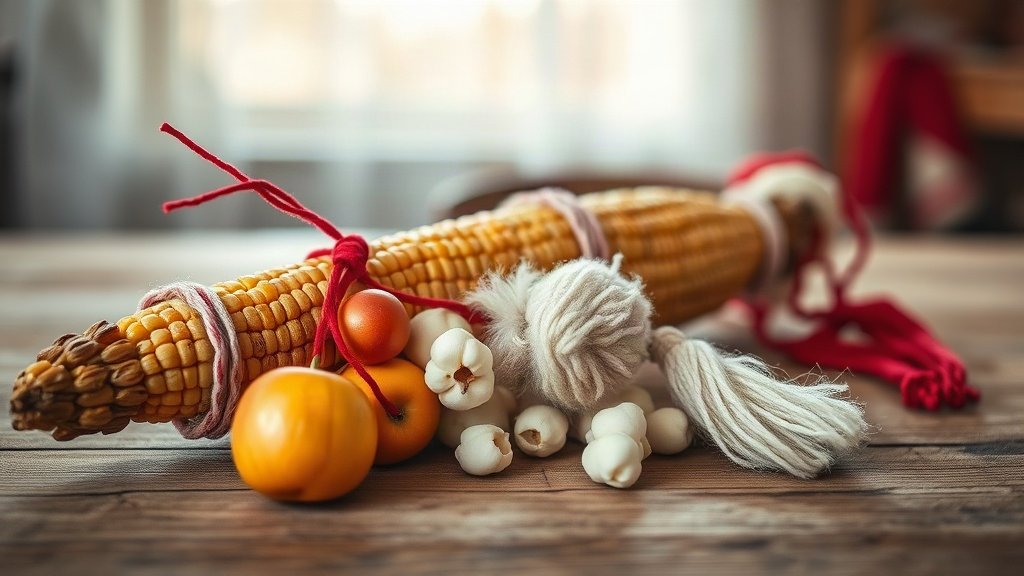
Illustration: AI-generated image
On the first day of the new year, before the winter sun has fully risen, children across Bulgaria set out to perform a ritual that links the modern calendar to a pre-Christian past. Survakane (сурвакане) is a blessing custom in which young people lightly tap adults on the back with a specially decorated branch called a survachka, while reciting verses for health, wealth and good fortune in the year ahead.
The Survachka Branch
The survachka is traditionally made from a cornel (dogwood) branch, chosen because the cornel tree is among the first to blossom in spring, symbolising health and vitality. The branch is decorated with coloured threads — red being particularly important as the colour of life and vigour — along with dried fruits, popcorn, small coins and sometimes woollen pom-poms. Families often prepare the survachka on New Year's Eve, and after the ritual it is kept in the home, sometimes until the following year or burned in the spring to release its protective power.
The Ritual and Verses
Children visit relatives and neighbours, tapping each adult gently on the back from the shoulders downwards while reciting rhythmic blessings. The words vary by region but typically wish for a bountiful harvest, many healthy children, and prosperity in the home. The tapping is symbolic, transferring the life-giving energy of the branch to the person being blessed. In return, adults give the children small gifts, sweets or coins as a token of gratitude.
Regional Variations
While the core practice is consistent, details differ across Bulgaria. In some areas only boys perform the ritual, while in others girls also take part. The survachka may be made from a peach or pear branch instead of cornel. The recited verses might mention specific livestock, vineyards or beehives, reflecting local livelihoods. In many villages, survakane is performed not only on 1 January but also on St. Basil's Day, which coincides with the New Year and is known in Bulgarian as Survaki.
Significance and Modern Practice
Survakane is rooted in ancient beliefs about the power of the new year to renew life and drive away evil. The dogwood's early blossoming makes it a potent symbol of health and longevity, and the decorated branch serves as a wish for a fruitful year. Even in contemporary Bulgaria, the tradition remains widespread, especially in smaller towns and villages, and is often taught in schools as part of the national cultural heritage. Many Bulgarian families living abroad continue the custom, passing it on to their children as a link to their roots.
Survakane is a joyful, family-centred tradition that connects Bulgarians to their agricultural past and the cycle of the seasons. For visitors, witnessing or taking part in the ritual on New Year's morning offers a warm and authentic glimpse into Bulgarian folk culture.