Shevitsa: The Hidden Language of Bulgarian Embroidery
Discover the symbolic stitches and colours that turn Bulgarian folk costumes into a wearable expression of identity.
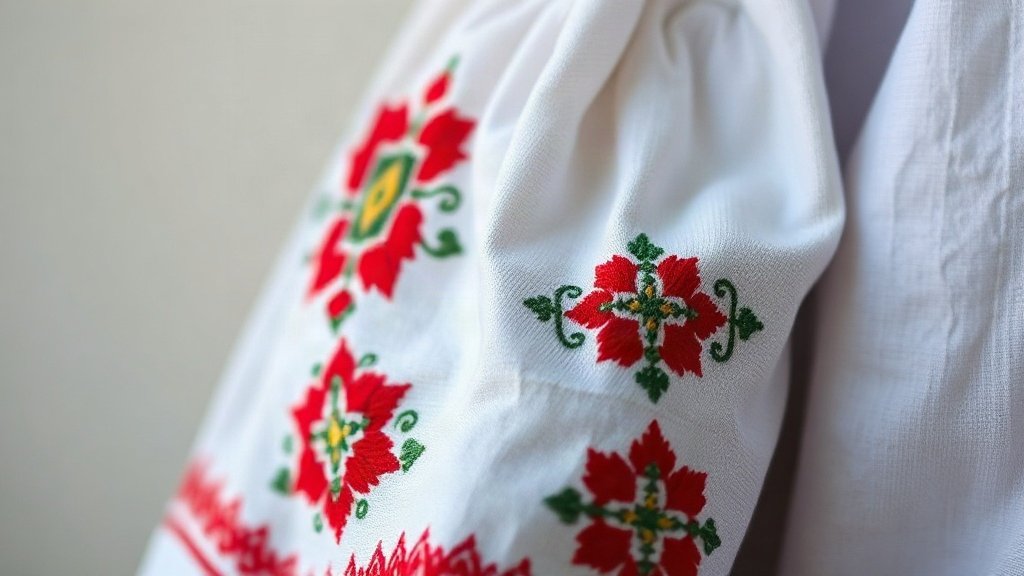
Illustration: AI-generated image
Walk through any ethnographic museum in Bulgaria and one detail leaps out from the glass cases: the elaborate embroidery adorning shirts, aprons, headscarves and sleeves. This is shevitsa, a tradition that goes far beyond decoration. For centuries, Bulgarian women stitched protective symbols, wishes for health and coded messages into cloth, creating a visual language that spoke of region, status and belief.
What is Shevitsa?
Shevitsa (шевица) is the Bulgarian word for embroidery, but it most often refers to the geometric and floral needlework found on traditional folk costumes and textiles. Unlike Western embroidery that often aims for realistic depiction, shevitsa uses stylised motifs arranged in bands, borders and medallions. The stitches themselves—cross stitch, straight stitch, chain stitch and others—are usually worked in wool or silk thread on homespun linen or hemp fabric.
The tradition is rooted in pre-Christian beliefs, when certain shapes were thought to ward off evil spirits and bring fertility or protection. Over time, Christian symbols were woven in as well, creating a rich hybrid of pagan and Orthodox imagery. Today, shevitsa remains a source of national pride and appears on everything from modern fashion to souvenirs.
Symbols and Motifs
Each figure in shevitsa carries meaning, though interpretations can vary by region. Common motifs include:
- The rosette or "elbetitsa": a sun or flower symbol representing life, energy and the divine.
- The rhombus or diamond: linked to fertility and the female principle, often seen as a stylised field or womb.
- The swastika-like "kolovoz" or "svarga": an ancient solar cross symbolising the cycle of time and good fortune (not to be confused with its 20th-century misappropriation).
- The tree of life: a vertical axis with branches, connecting earth and sky, past and future.
- Anthropomorphic figures: especially the "mother goddess" with raised arms, a protective image found in many Balkan cultures.
Colours also carry significance. Red is dominant—a life force, protection and the blood of ancestors. White symbolises purity and the spiritual world. Black is often used for outlines, giving the designs a crisp, graphic quality. Regional palettes may add blue, green, yellow or gold, but red on white remains the most iconic combination.
Regional Styles
Bulgaria’s ethnographic regions each developed distinctive shevitsa patterns, making it possible to identify a costume’s origin at a glance. For example:
- Northern Bulgaria: bold geometric bands, often in red and black, with dense stitching on apron hems and sleeve cuffs.
- Thrace (south-central): larger floral motifs and brighter colours, influenced by proximity to the Aegean and trade routes.
- Rhodope Mountains: simpler, more linear patterns in ochre and brown, reflecting a more austere lifestyle.
- Shopluk (around Sofia): distinctive white-on-white embroidery with subtle relief, often featuring tiny cross stitches and delicate borders.
These regional differences are celebrated in folk festivals, where dancers wear authentic or carefully reproduced costumes from their home areas. Even today, learning the local style is a way to connect with one’s roots.
Where to See and Learn Shevitsa
Ethnographic museums across Bulgaria hold impressive collections of shevitsa-decorated garments and textiles. The National Ethnographic Museum in Sofia, housed in the former royal palace, displays examples from all regions with detailed explanations. Regional museums in towns like Plovdiv, Varna and Veliko Tarnovo also have strong textile sections.
For those who want to try their hand, workshops and courses are occasionally offered through chitalishta (community culture centres) or private studios. Many Bulgarian grandmothers still teach the skill to younger generations, and pattern books featuring traditional charts are widely available. Even if you never pick up a needle, understanding a few key motifs will transform how you see Bulgarian folk art.
Shevitsa is more than pretty stitching—it is a silent conversation across centuries, a map of identity and belief stitched into cloth. Next time you spot a red-threaded rhombus or a branching tree of life on a shirt cuff, you will know it is speaking to you.