Rila Monastery: A Guide to Bulgaria's Spiritual Heart in the Mountains
Discover the beauty and history of Rila Monastery, Bulgaria's largest and most famous Orthodox monastery, nestled in the Rila Mountains.
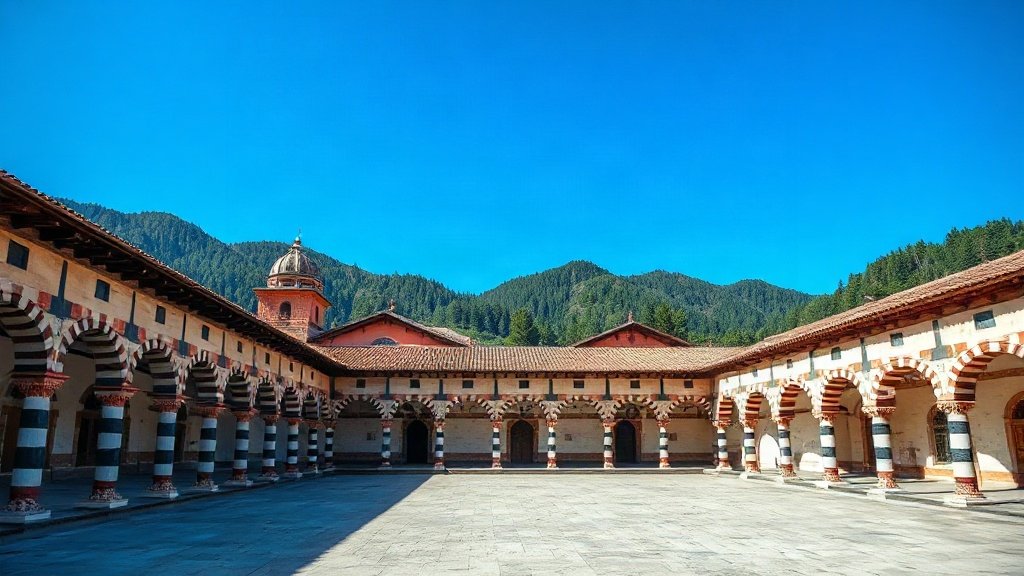
Illustration: AI-generated image
Tucked into a forested valley in the Rila Mountains, Rila Monastery is Bulgaria's most iconic religious site and a masterpiece of National Revival architecture. With its black and white striped arches, colourful frescoes, and peaceful courtyards, it draws pilgrims and travellers alike. As a UNESCO World Heritage site, it's a must-see for anyone exploring Bulgaria's cultural and natural treasures.
A Monastery Forged by Faith and Fire
Rila Monastery was founded in the 10th century by the hermit St John of Rila, whose cave and tomb remain objects of veneration. The original monastery was built by his followers, but over the centuries it suffered destruction by fires and raids. The current complex dates mainly from the early 19th century, after a devastating fire in 1833. During Ottoman rule, the monastery became a centre for preserving Bulgarian language, culture, and faith, and it played a key role in the national revival.
What to See Inside the Monastery
The main church, the Nativity of the Virgin, stands at the heart of the courtyard. Its five domes and arcaded exterior are covered with vivid frescoes painted by some of the best artists of the Samokov and Bansko schools. Inside, the iconostasis is a stunning work of woodcarving, and the walls are richly decorated with biblical scenes.
Don't miss the Hrelyo Tower, the oldest surviving structure, built in the 14th century as a defensive keep. The monastery museum houses priceless artefacts, including the famous Rafail's Cross—a wooden cross intricately carved with 140 miniature biblical scenes, the work of a monk over 12 years. The four-storey residential wings surround the courtyard with their distinctive striped arches, creating a serene and contemplative atmosphere.
Getting There from Sofia
Rila Monastery lies about 117 km south of Sofia, a drive of roughly two hours. From the capital, take the A3 motorway towards Blagoevgrad, then follow the signs on road 107 through the scenic Rila valley. The road is well maintained but winding in places, so allow extra time in winter. Regular buses also run from Sofia's bus station, making the monastery accessible for those without a car. From the ski resort of Bansko or the town of Blagoevgrad, the journey is shorter but still offers beautiful mountain views.
Practical Tips for Your Visit
As an active Orthodox monastery, visitors are asked to dress respectfully: shoulders and knees should be covered, and shorts are not permitted inside the church. Photography is allowed in the courtyard but not inside the main church. Arriving early in the morning helps avoid tour groups, especially in summer. The monastery is open year-round, and each season offers a different charm—from snow-dusted domes in winter to lush greenery in spring.
If you have time, combine your visit with a hike into the surrounding Rila Mountains. Several trails start near the monastery, including the path to St Ivan's Cave, where the saint is said to have lived as a hermit. The area also has simple guesthouses and restaurants, allowing you to linger and experience the peaceful mountain atmosphere.
Rila Monastery is more than a tourist attraction; it is a living symbol of Bulgarian spirituality and resilience. Whether you come for the art, the history, or the tranquil setting, it offers an unforgettable glimpse into the soul of the country.