Rakia: Bulgaria's Traditional Fruit Brandy and Its Rituals
Discover the cultural heart of rakia, Bulgaria’s beloved homemade brandy—from orchard to glass, with the toasts and traditions that surround it.
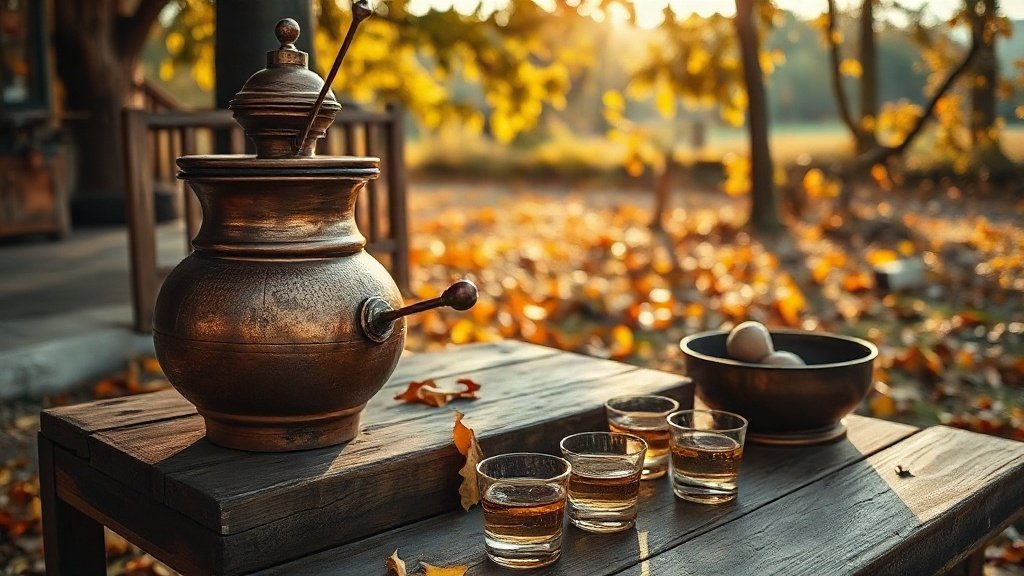
Illustration: AI-generated image
In Bulgaria, no welcome is complete without a small glass of rakia. This potent fruit brandy, typically between 40 and 50 percent alcohol, is far more than a drink—it is a symbol of hospitality, a staple at celebrations and a proud tradition passed down through generations. Made at home or in small village distilleries, rakia carries the flavours of Bulgarian orchards and the warmth of shared moments.
From Fruit to Fire: How Rakia Is Made
Rakia begins with fruit—most often grapes, plums, apricots or pears—which is fermented before being distilled in a traditional copper still, known locally as a kazan. The first distillation, called parva rakia, is often strong and rough; a skilled distiller will run it through the still again for a cleaner, smoother spirit. The result may be kept clear and young, or aged in oak barrels to develop a golden colour and deeper character.
In villages across Bulgaria, autumn is the season of rakia making. Family orchards are harvested, and neighbours often gather around a shared kazan, taking turns to feed the fire and sample the flow. The process is as social as it is practical, with stories swapped and songs sung while the clear liquid drips into waiting jars.
The Main Varieties of Bulgarian Rakia
Each region and family has its favourite, but certain types stand out:
- Grozdova rakia – made from grapes, the most widespread and often considered the classic. It can be produced from wine grapes or the leftover pomace after winemaking.
- Slivova rakia – made from plums, with a deep, fruity aroma and a loyal following, especially in mountain areas.
- Kajsieva rakia – distilled from apricots, prized for its delicate sweetness and floral notes.
- Muskatova rakia – made from Muscat grapes, intensely aromatic and often reserved for special occasions.
Beyond these, adventurous distillers infuse rakia with honey, herbs, rose petals or even walnuts, creating liqueur-like versions that are sipped slowly after a meal.
Serving Rakia Like a Local
Rakia is typically served in small, straight-sided glasses holding 50 to 100 millilitres. It may be chilled or served at room temperature, depending on the season and the drinker’s preference. It is almost always enjoyed alongside food: a classic meze of shopska salad, pickled vegetables, cured meats and white cheese is the ideal pairing.
The drink is meant to be sipped, not thrown back, though on festive occasions a quick shot may follow a toast. The most common toast is “Nazdrave!” (To your health), often extended to “Na zdrave i veselie!” (To health and joy). If a Bulgarian host offers rakia, accepting at least a small sip is considered polite—it is a gesture of friendship and trust.
Rakia in Bulgarian Culture and Celebrations
Rakia punctuates the rhythm of Bulgarian life. It is poured at weddings to toast the newlyweds, at christenings to bless the child, and at name days and saints’ days to honour the celebrant. Even at funerals, a glass may be raised in memory of the departed, followed by the words “Bog da go prosti” (May God forgive him).
Many villages hold informal rakia-tasting gatherings after the distillation season, and some regions host festivals celebrating the craft. For visitors, sharing a glass of rakia with locals is an invitation to slow down, swap stories and experience Bulgaria’s famous hospitality at its most authentic. Whether you prefer the bold grape version or a sweeter apricot, every sip carries a tradition that has warmed Bulgarian tables for centuries.