Plovdiv's Old Town: A Walking Route Through Bulgaria's Architectural Gem
Discover the atmospheric lanes and colourful Revival houses of Plovdiv's historic core, from the Roman Theatre to the cobbled streets of the creative quarter.
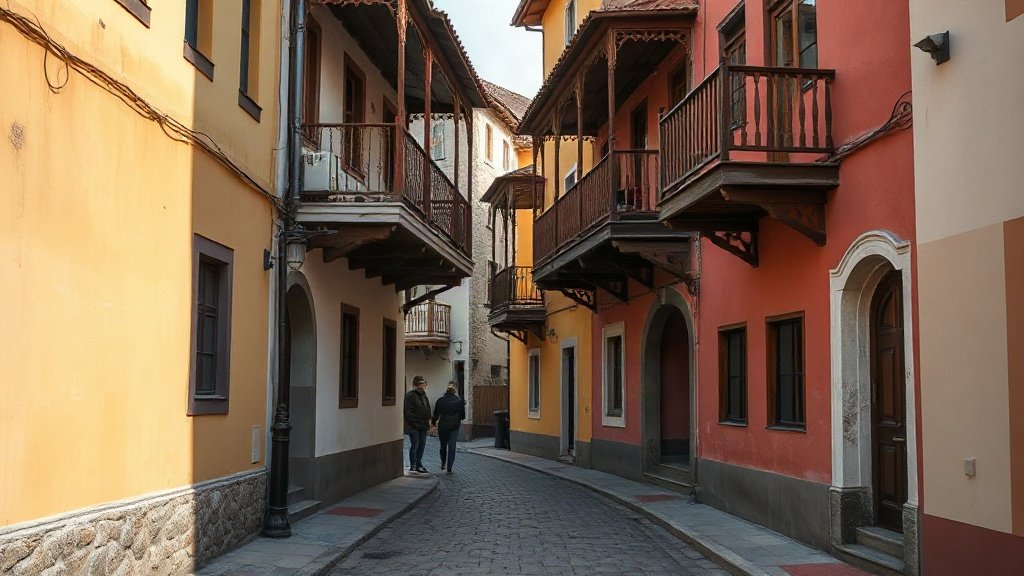
Illustration: AI-generated image
Plovdiv is one of Europe's oldest continuously inhabited cities, with a history stretching back around 8,000 years. Perched on three hills above the Maritsa River, its Old Town is a remarkable open-air museum of Bulgarian Revival architecture, Roman remains and artistic energy. A stroll through its steep cobbled lanes feels like stepping back in time, yet the area buzzes with contemporary life.
Starting at the Roman Theatre
Begin your walk at the ancient theatre, tucked between the southern slopes of two of Plovdiv's hills. Built in the 2nd century AD during the reign of Emperor Trajan, it was discovered in the 1970s after a landslide and has been beautifully restored. The semi-circular marble seating could once hold around 6,000 spectators, and today it still hosts performances, from opera to rock concerts. Even when there is no show, the view from the top rows over the city and the Rhodope Mountains is worth the climb.
Wandering through cobbled lanes
From the theatre, head uphill into the heart of the Old Town. You will pass clusters of Revival houses dating from the 18th and 19th centuries, when wealthy Plovdiv merchants built grand homes. Their walls are painted in rich ochres, terracottas and blues, and their upper floors often overhang the street, supported by wooden beams. Look for the distinctive enclosed balconies and elaborately carved ceilings. Several of these houses are now museums, such as the Hindliyan House and the Balabanov House, which offer a glimpse into period interiors and lifestyles.
Discovering Roman and medieval layers
Plovdiv's history is layered beneath its streets. The partially excavated Roman Stadium, built in the 2nd century to seat up to 30,000 spectators, lies beneath the main pedestrian street, its curved end visible in a small square. In the Old Town, remnants of the medieval fortress walls and the early Christian basilica with floor mosaics remind visitors of the city's strategic importance through the ages. The Ethnographic Museum, housed in a grand Revival building, showcases traditional costumes, crafts and everyday objects from across Bulgaria.
Where to stop for a breather
For panoramic views, climb to Nebet Tepe, one of Plovdiv's original hills and the site of the earliest settlement. The ruins of a fortress and the sweeping vista over the city and plains make it a favourite spot, especially at sunset. Afterwards, descend towards the Kapana district at the foot of the Old Town. Once a craftsmen's quarter, its narrow lanes are now filled with art galleries, design studios, small eateries and cafes. It is an ideal place to rest your feet and soak up the creative atmosphere.
Practical tips for your walk
An independent walk through the Old Town takes about two to three hours at a leisurely pace. Consider these suggestions:
- Wear comfortable shoes: the cobblestones are uneven and the streets are steep.
- Go early in the morning or late in the afternoon to avoid the biggest crowds and the midday heat.
- Look out for small signs and plaques that explain the history of individual buildings.
- If you visit in summer, check whether any performances are scheduled at the ancient theatre and book ahead if possible.
Whether you are a history enthusiast, an architecture lover or simply someone who enjoys wandering through beautiful old streets, Plovdiv's Old Town offers an unforgettable taste of Bulgaria's cultural heritage.