Pitka: Bulgaria's Round Bread for Rituals and Feasts
Pitka is more than a loaf: this round, decorated bread marks births, weddings and holidays. Learn its symbolism and how it's baked.
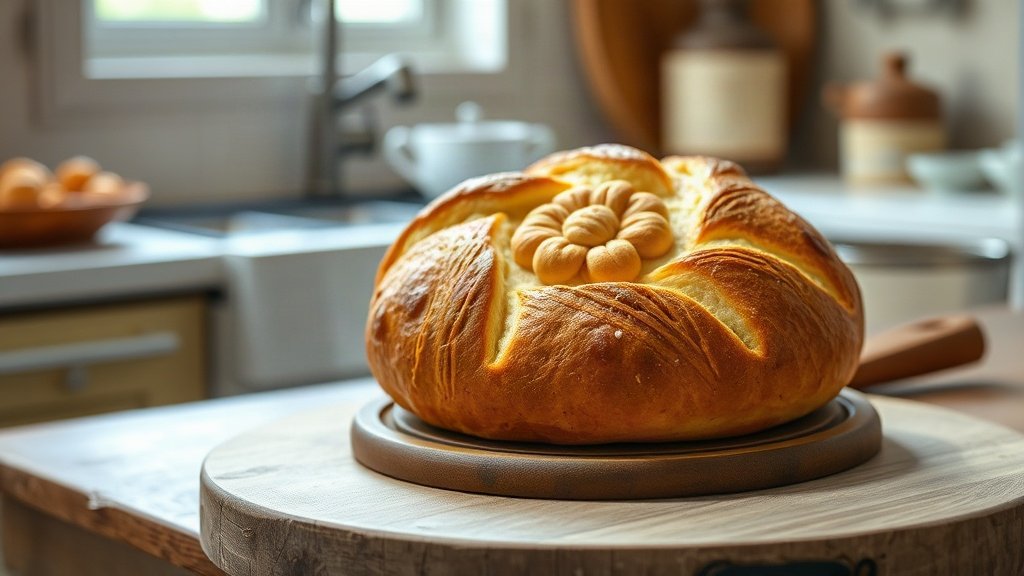
Illustration: AI-generated image
In Bulgaria, bread is never just food—it is a symbol of life, hospitality and togetherness. At the heart of this tradition is pitka, a round, often elaborately decorated bread that appears at nearly every important celebration. Unlike everyday loaves, pitka is made with care and intention, its shape and embellishments carrying deep meaning.
A Bread for Every Celebration
Pitka is baked for births, weddings, name days, Christmas Eve, Easter and even to welcome honoured guests. On the third day after a baby is born, a pitka is broken over the child's head to bring health and luck. At weddings, the bride and groom share a pitka decorated with symbols of fertility and prosperity. On Christmas Eve, the bread contains a hidden coin, and whoever finds it is said to enjoy good fortune in the coming year.
What sets pitka apart from ordinary bread is that it is almost always broken by hand rather than cut with a knife. Breaking the bread symbolises unity, sharing and the bond between family members. A piece is often set aside for the house, for God or for absent relatives.
How Pitka is Made
The basic dough is simple: flour, water, yeast or baking soda, and salt. However, festive versions are enriched with milk, eggs, oil or butter, and sometimes sweetened with sugar or honey. Some recipes call for yoghurt, which gives a tender crumb and a slightly tangy flavour.
After the dough has risen, it is divided: a large portion is shaped into a smooth round base, while smaller pieces are rolled, braided and shaped into decorative elements. These can include flowers, leaves, grapevines, suns, birds or geometric patterns, all made from the same dough. The decorations are attached with a little water or egg wash, and the whole loaf is brushed with egg yolk to produce a glossy, golden crust.
Serving and Symbolism
Pitka is served warm or at room temperature, often alongside honey, salt, cheese or a bowl of chubritsa-spiced salt for dipping. The ritual of breaking the bread is usually performed by the eldest member of the family or the host, who lifts the loaf and breaks it into pieces, distributing them to everyone present. On Christmas Eve, the coin inside is often a silver lev, and the person who finds it is expected to have a lucky year.
The round shape itself is significant: it represents the sun, the cycle of life and eternity. The decorations are never random—each element carries meaning, from fertility and abundance to protection against evil spirits.
Making Your Own Pitka
While pitka can look intricate, it is a forgiving bread that home bakers can master. Start with a basic enriched dough, let it rise until doubled, then shape it into a round. Reserve a small portion of dough for decorations, and let your imagination guide you: simple braided rings, twisted ropes or small balls arranged in a circle are all traditional. If you wish to hide a coin, wrap it in a small piece of baking paper and tuck it into the dough before the final rise.
Bake at a moderate temperature until deeply golden and hollow-sounding when tapped. Serve fresh, broken by hand, with a little honey or salt. Even without a special occasion, a homemade pitka brings a sense of ceremony to the table—and a taste of Bulgaria's rich baking heritage.