Martenitsa: the red and white threads Bulgarians wear every March
Every year on 1 March, Bulgarians exchange small red and white charms called martenitsi. Here is what they mean, how they are worn and when they come off.
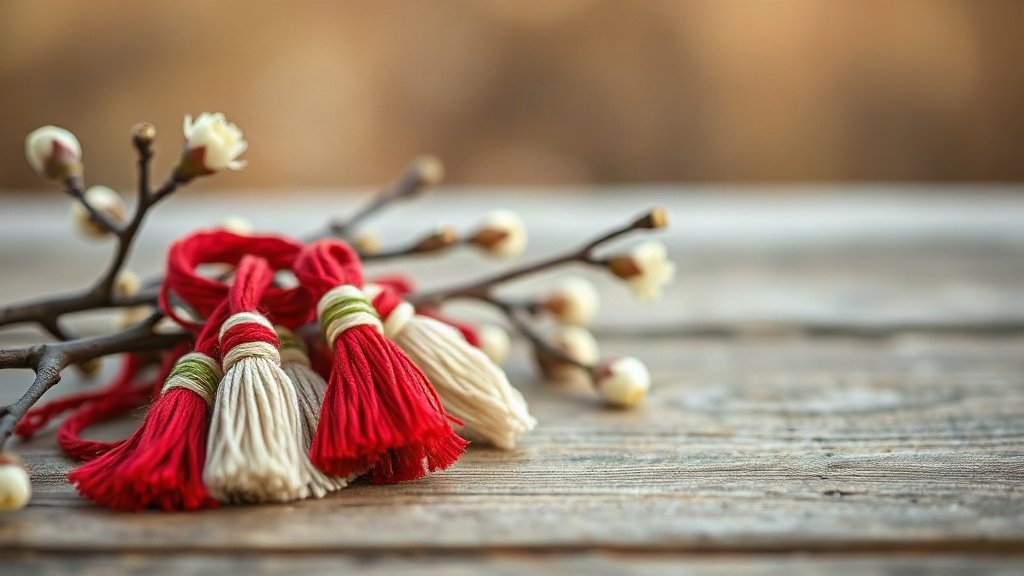
Illustration: AI-generated image
Walk through any Bulgarian town in the last days of February and you will notice stalls and shop counters filling up with tiny red and white tassels, dolls and bracelets. These are martenitsi, and they are one of the best-loved customs in the country's calendar.
The tradition belongs to Baba Marta (Grandma March), a figure of folklore who stands for the moody, changeable weather of early spring. On 1 March, Bulgarians give each other martenitsi and wish one another health and happiness for the months ahead.
What is a martenitsa?
At its simplest, a martenitsa is made of twisted red and white wool or cotton thread. The most familiar version is a pair of figures, usually a boy and a girl called Pizho and Penda, but you will also find bracelets, pins, small tassels and plenty of modern designs.
The colours carry the symbolism:
- White is commonly linked with purity, light and good health.
- Red is commonly linked with life, vitality and a good flush of colour in the cheeks.
Together they express a wish for a healthy, bright year as winter loosens its grip.
How it is given and worn
Martenitsi are traditionally given, not bought for oneself. Family, friends and colleagues exchange them on the morning of 1 March, often with the phrase Chestita Baba Marta (Happy Baba Marta). Children often make them at school or kindergarten, and many Bulgarians send them to friends abroad.
People usually pin a martenitsa to their clothing near the chest or tie it around the wrist. Parents may tie one on a child's wrist, and some people tie small ones to the branches of fruit trees or to pets and livestock as a wish for health and abundance.
When it comes off
The martenitsa is worn until you see the first signs of spring, traditionally a stork, a swallow or a blossoming tree. At that point it is taken off. Customs for what to do next vary by region and family:
- Tie it to a blossoming fruit tree, as a wish for a fruitful year.
- Tuck it under a stone, so that the wish stays with the earth.
- Hang it on a rosebush.
Many people simply keep it as a pleasant reminder of the start of spring.
Joining in as a visitor or expat
If you are in Bulgaria at the start of March, accepting a martenitsa is a lovely gesture, and returning the favour is warmly received. Markets, craft fairs and small shops sell handmade versions, which make an easy and thoughtful gift. Wear it visibly, and you will find it a quick way into conversations with neighbours and colleagues.
The custom is widely regarded as a living piece of Bulgarian heritage, and its simplicity is part of its charm: a bit of thread, a kind wish and the shared hope that spring is on its way.