Lutenitsa: Bulgaria's Beloved Pepper and Tomato Spread
Discover lutenitsa, the rich roasted pepper and tomato spread that graces Bulgarian tables year-round. Learn how it's made, how to enjoy it, and why it's a pantry staple.
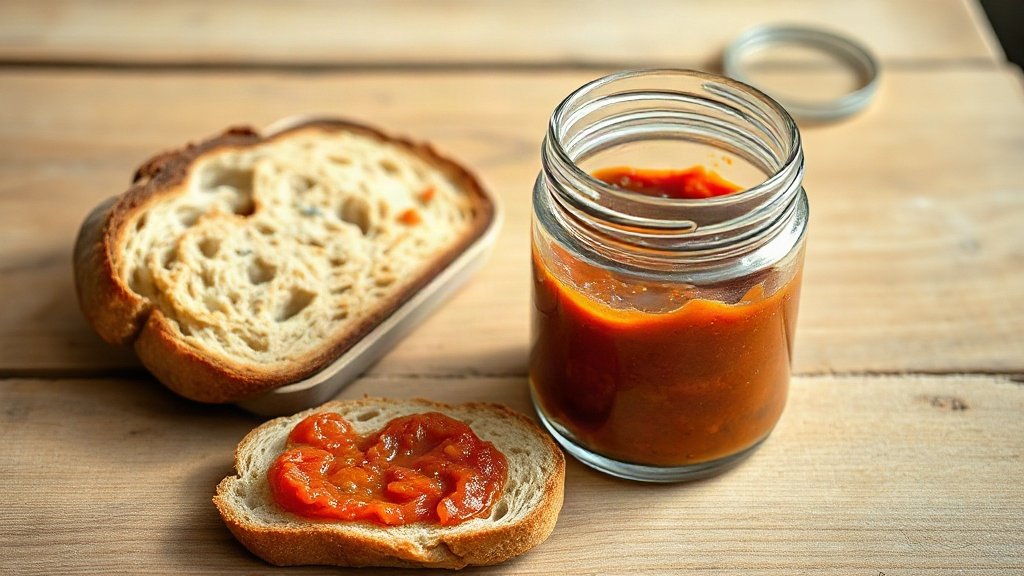
Illustration: AI-generated image
Walk into any Bulgarian kitchen from late summer into autumn and you'll likely find a big pot simmering on the stove, filling the house with the sweet, smoky scent of roasting peppers. That pot is often destined to become lutenitsa, the country's beloved thick spread made from red peppers, tomatoes, and a few humble ingredients. It's a taste of Bulgarian home cooking that has earned its place on every table, from breakfast to dinner.
What is lutenitsa?
Lutenitsa is a smooth or slightly chunky spread, depending on who makes it, traditionally prepared in large batches at the end of summer when peppers and tomatoes are at their ripest. The name comes from the Bulgarian word lyut, meaning hot or spicy, though most homemade versions are mild and sweet, with heat coming from the slow-roasted peppers rather than added chilli. Some families do add a bit of hot pepper for extra kick, but the base remains rich and savoury-sweet.
The core ingredients are simple: roasted red peppers (usually the long, fleshy kapia variety), ripe tomatoes, sunflower oil, salt, and sometimes sugar to balance acidity. Garlic, aubergine, or carrot may appear in regional variations, and many cooks add a pinch of cumin or chubritsa (Bulgarian summer savoury) for depth. The mixture is cooked down for hours until thick enough to stand a spoon upright, then jarred and sealed for the winter ahead.
How lutenitsa is made
Making lutenitsa is a communal ritual. Peppers are roasted over an open flame or in the oven until their skins blacken and blister, then peeled and seeded. Tomatoes are often blanched and peeled too. Both are minced or blended, then combined with oil and seasonings in a large cauldron. The mixture is simmered slowly, stirred constantly to prevent scorching, until it reduces to a glossy, concentrated paste. The finished spread is packed into sterilised jars, topped with a thin layer of oil to preserve it, and stored in a cool cellar or pantry.
Because the process is labour-intensive, many Bulgarians buy ready-made lutenitsa from shops, but homemade is considered the gold standard. The flavour varies from household to household: some prefer a finer texture, others leave bits of pepper for a rustic feel. Sun-ripened Bulgarian peppers and tomatoes give the best result, with a natural sweetness that needs little added sugar.
How to enjoy lutenitsa
Lutenitsa is endlessly versatile. It's most often spread thickly on a slice of fresh bread, sometimes topped with a crumbling of white cheese (sirene) for a quick breakfast or snack. It pairs beautifully with grilled meats like kebapche and kufte, and it's a classic companion to fried eggs or a simple omelette. Many people stir a spoonful into soups, stews, or bean dishes to add richness. It can also be served as a dip with raw vegetables or crisps, or used as a sandwich spread instead of ketchup or mustard.
In recent years, lutenitsa has crossed borders, appearing on cheese boards and in fusion recipes, but its heart remains in the Bulgarian home. Whether you make your own batch in September or pick up a jar from a local shop, a spoonful of lutenitsa is a taste of Bulgarian tradition that never goes out of style.