Lazaruvane: Bulgaria's Spring Singing Ritual for Girls
Each spring, young Bulgarian girls take to the streets in traditional dress, singing blessings from house to house in a ritual that marks the passage to womanhood.

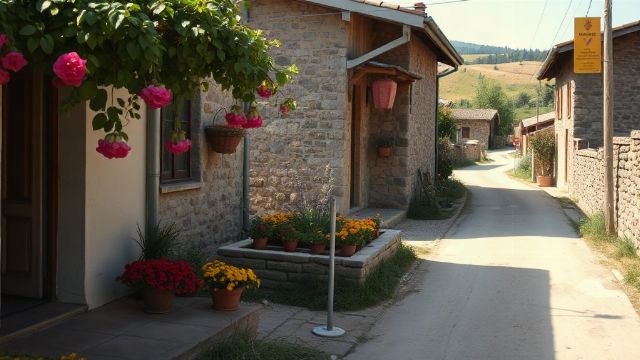
Illustration: AI-generated image
In villages across Bulgaria, the approach of Palm Sunday brings a particular kind of music to the streets. Young girls, dressed in embroidered costumes and crowned with flowers, walk from house to house, their voices rising in songs of health, fertility and good fortune. This is Lazaruvane, a spring ritual that has been part of Bulgarian folk life for centuries and continues to thrive today.
Lazaruvane takes its name from Lazarus, the biblical figure whom Jesus raised from the dead, but its roots reach back to pre-Christian springtime customs celebrating renewal and the awakening of nature. The ritual is performed on Lazarovden (St. Lazarus Day), the Saturday before Palm Sunday, a date that marks the beginning of Holy Week in the Orthodox calendar. It is a day of special significance for young women, as participation signals a transition from girlhood to maidenhood—an important step in traditional village society.
The Ritual
On the morning of Lazarovden, groups of girls—often aged 10 to 16 but sometimes younger—gather in their finest traditional dress. They wear white shirts with red embroidery, colourful aprons, and headdresses made of willow branches, early spring flowers and ribbons. Each group is led by an older girl, often one who has participated before, and they move through the village in a set order, following paths that were once believed to trace the boundaries of the community.
At each house, the lazarki sing a selection of songs. The lyrics are specific to the occasion: some praise the beauty of the young girls, others wish the household prosperity, health and a good harvest. There are songs for farmers, for newlyweds, for children, and for the elderly. The homeowners listen, then offer small gifts—eggs, flour, coins, or sweets—which the girls collect in baskets. In some regions, the singing is accompanied by a simple dance step, a slow swaying that echoes the movements of planting or weaving.
A Living Tradition
Today, Lazaruvane is still practised in many rural areas, and it has also found a place in urban settings through community centres and folk ensembles. Schools sometimes organise performances so that children can learn the songs and steps. The ritual has been adapted to modern life, but its core—girls singing blessings from door to door—has remained remarkably intact.
For visitors to Bulgaria, witnessing Lazaruvane can be a memorable experience. It is not a staged event but a living custom, and the best way to see it is to be in a village on the Saturday before Palm Sunday. While some larger towns hold public demonstrations, the most authentic celebrations happen quietly, in the side streets and courtyards where the tradition has always lived. Travellers who are invited to watch are often struck by the joy and dignity of the young participants, and by the way the entire community opens its doors to receive their songs.
Lazaruvane is a reminder that Bulgarian culture is not only found in museums or on festival stages. It is a thread that runs through the seasons, connecting generations and keeping the promise of spring alive.