Kukeri: Bulgaria's Winter Monster-Dancing Tradition
Every winter, Bulgarian villages echo with the clanging of bells and the stomping of masked dancers. Here's what to know about the kukeri tradition and where to see it.
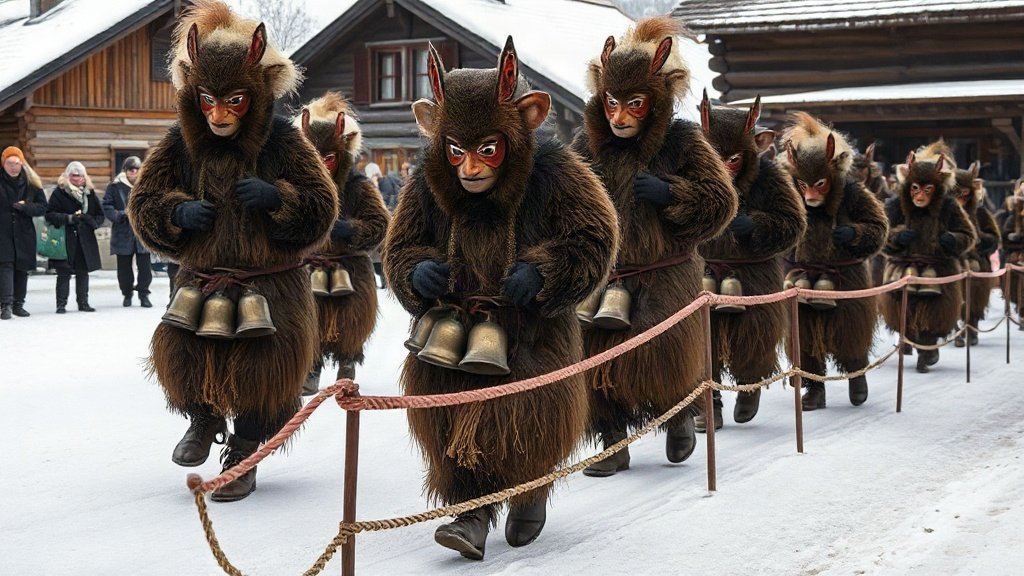
Illustration: AI-generated image
In the depths of a Bulgarian winter, the quiet of a mountain village can suddenly be shattered by an otherworldly cacophony. The source is a troupe of towering figures, draped in fur and animal skins, their faces hidden behind terrifying masks, and around their waists, massive copper bells that clang with every synchronized stomp. These are the kukeri, and their ritual dance is one of Bulgaria's most spectacular living traditions.
The Origin and Meaning
Kukeri is a pre-Christian rite with roots in ancient Thracian and Slavic paganism. The masked dancers are believed to chase away evil spirits and malevolent forces that linger during the transition from winter to spring. By making a deafening noise and performing aggressive, exaggerated movements, the kukeri purify the village, ensuring health, fertility, and a bountiful harvest for the coming year.
The tradition is still practiced in many parts of Bulgaria, particularly in the western and southwestern regions. While it has evolved over centuries, the core purpose remains unchanged: to scare away the bad and welcome the good.
The Costumes and the Dance
Each kukeri costume is a work of art, often handmade over many weeks. The most striking element is the headdress or mask, which can be a towering structure of feathers, ribbons, mirrors, and carved wood. Faces are hidden, transforming the dancer into a supernatural being. The body is covered with goat or sheep skins, and heavy belts hung with dozens of bronze or copper bells are strapped around the waist. A single costume can weigh up to 40 kilograms.
The dance itself is a rhythmic, stomping procession. The kukeri leap and lunge in unison, making the bells crash like thunder. They jingle, spin, and whirl, sometimes mock-fighting with one another or chasing away invisible demons. The effect is both menacing and mesmerising, a chaotic blend of movement and sound that has been described as a "living earthquake".
Where and When to See Kukeri
The largest and most famous kukeri festival is the Surva International Festival of Masquerade Games, held in the town of Pernik every January. It draws thousands of participants from Bulgaria and abroad, turning the streets into a riot of colour and noise. But the tradition is not confined to one place; many villages stage their own kukeri processions, often on fixed dates around New Year's Day, St. Vasil's Day (1 January), and before Lent in late February or early March.
Some notable regions include:
- Pernik region – besides the festival, villages like Batanovtsi and Kraynitsi keep the custom strong.
- Razlog and Bansko area – the villages around these mountain towns hold kukeri events on 1 January.
- Rhodope Mountains – remote villages such as Shiroka Laka and Gela perform their own distinctive variations, often with more elaborate masks.
- Blagoevgrad region – towns like Simitli host lively processions in early January.
Tips for Visitors
If you plan to witness a kukeri celebration, a little preparation goes a long way. The events take place outdoors, often in cold, sometimes snowy weather, so dress warmly and wear sturdy, waterproof boots. The bells are extremely loud, so consider bringing earplugs, especially for children. Arrive early to secure a good viewing spot along the parade route, and be ready for a lot of jostling and movement – the kukeri may come right up to you, so keep a safe distance from their swinging bells.
Most of all, embrace the chaos. This is not a polished performance but a raw, energetic ritual that has survived for millennia. Respect the participants and the local customs, and you'll be rewarded with an unforgettable glimpse into Bulgaria's ancient soul.