Kavarma: Bulgaria's Hearty Clay Pot Meat Stew You Should Try
Kavarma is a rich Bulgarian stew of meat, onions and peppers, slow-cooked in a clay pot until tender. It's a beloved tavern dish with many regional twists.
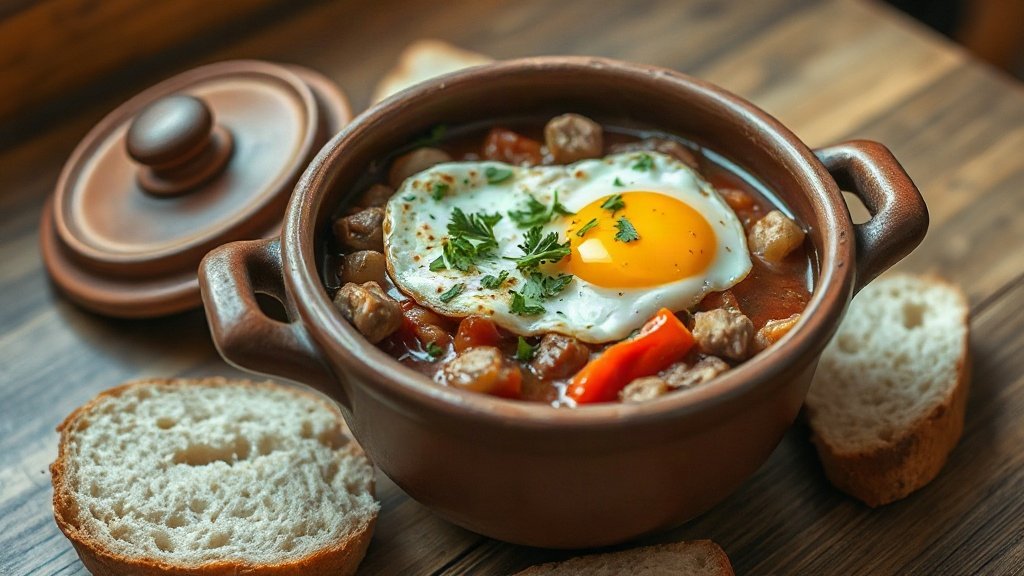
Illustration: AI-generated image
Kavarma (каварма) is one of Bulgaria's most satisfying traditional dishes: a rich, slow-cooked stew of meat, onions and peppers, often finished with a baked egg. It is closely associated with the country's mehana (tavern) culture and is a staple on menus across the country, from cosy mountain inns to city restaurants.
What is kavarma?
The name comes from the Turkish word kavurma, meaning 'fried' or 'roasted', which points to the dish's Ottoman roots. Unlike a simple fry-up, however, Bulgarian kavarma is a slow braise. The meat—usually pork or chicken, sometimes lamb or veal—is cut into bite-sized pieces and stewed gently with onions, mushrooms, peppers and tomatoes in a small clay pot called a gyuveche. The pot traps steam and flavour, giving kavarma its signature depth.
What sets kavarma apart from other Bulgarian stews is the finishing touch: an egg is cracked on top and baked until just set. The yolk blends into the sauce, adding silkiness and richness. Some versions also include white cheese, parsley and a splash of wine.
Regional variations
There is no single kavarma recipe. In the Rhodope Mountains, cooks often use wild mushrooms and local potatoes. Along the Black Sea coast, you might find it made with fish. In wine-growing regions, red wine is added to the pot. One famous variation is kavarma po radomirski, from the town of Radomir, which uses spicy peppers and is sometimes served with a fried egg on the side. Another is kavarma po banski, from the ski resort of Bansko, known for generous amounts of pork and a smoky, paprika-rich sauce.
Despite the variation, the essence remains: tender meat, melting onions and a glossy, savoury sauce. It is comfort food at its most rustic.
How to enjoy kavarma
Kavarma is traditionally served in the same clay pot it is cooked in, so be careful—the pot is hot. It is usually accompanied by fresh bread for soaking up the sauce, and a simple salad such as Shopska or a tomato and cucumber salad. In winter, it is common to pair kavarma with a glass of red wine or a small rakia as an aperitif.
If you are cooking kavarma at home, the key is patience. Brown the meat well before adding liquid, then let it simmer gently for at least an hour. Use a clay pot if you have one, but a heavy casserole dish works too. Add the egg only in the last ten minutes, cover and bake until the white is set but the yolk is still runny.
For visitors to Bulgaria, ordering kavarma in a traditional mehana is an experience in itself. It arrives bubbling and aromatic, often with a dramatic crack of the egg on top. It is a dish that speaks of simplicity, seasonality and the joy of slow cooking.