Kapama: Bansko's Hearty Winter Meat and Sauerkraut Stew You Should Try
A traditional Bulgarian dish from the mountain town of Bansko, kapama combines several meats, sauerkraut and rice, slowly baked for hours to create a rich, warming one-pot meal.
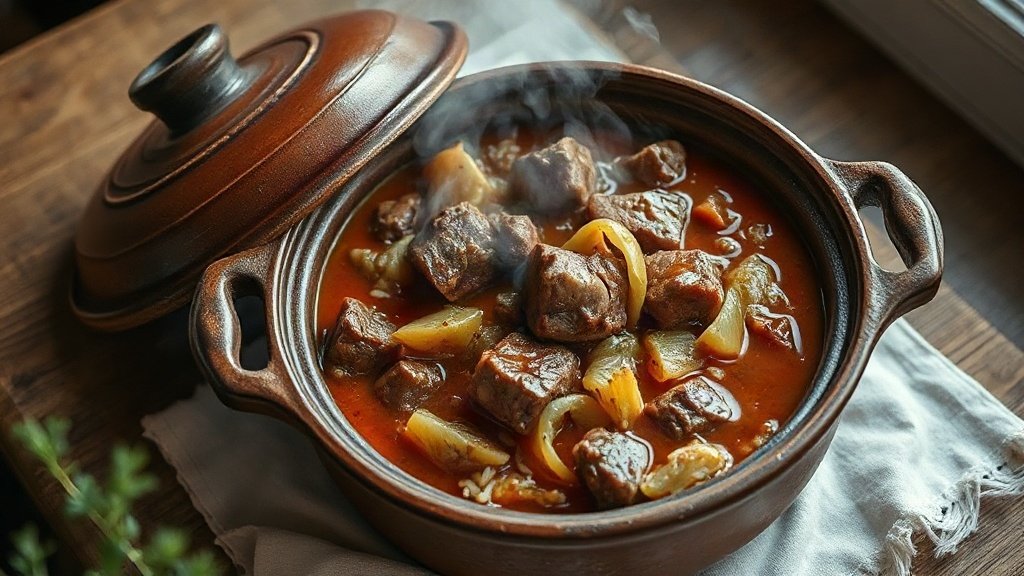
Illustration: AI-generated image
If you find yourself in Bulgaria during the colder months, keep an eye out for kapama – a rich, slow-cooked stew that hails from the mountain town of Bansko, nestled at the foot of the Pirin Mountains. This hearty one-pot dish is a celebration of local ingredients and patient cooking, designed to warm you from the inside out.
A dish with deep roots
Kapama is closely associated with Bansko, a town known for its robust, meat-centric cuisine born of a harsh mountain climate. Historically, it was a dish prepared for special occasions and winter feasts, when families would gather to share a substantial meal that made the most of preserved and fresh ingredients. The name itself is thought to derive from the Turkish word 'kapamak', meaning 'to cover' or 'to seal', referring to the way the pot is sealed during cooking.
What goes into kapama
At its heart, kapama is a layered dish. The base is usually sauerkraut (kiselo zele), which provides a tangy counterpoint to the rich meats. On top of that go generous pieces of pork and chicken, and sometimes veal, rabbit or even game, depending on availability and family preference. Rice is scattered throughout, absorbing the flavours as it cooks, and the whole thing is seasoned with paprika, black pepper, bay leaves and perhaps a little chubritsa (Bulgarian summer savory). Some versions include pieces of sausage or blood sausage for extra depth.
Slow cooking is key
The magic of kapama lies in its cooking method. Traditionally, the ingredients are placed in a clay pot called a gyuvech, which is then sealed – sometimes with a simple dough lid – and baked in a low oven or covered in embers for several hours. The long, slow cooking allows the meats to become meltingly tender and the sauerkraut to mellow, while the rice drinks up the savoury juices. The result is a dish that is deeply comforting, with layers of flavour that develop over time.
How to enjoy kapama
Kapama is best served straight from the pot, with chunks of crusty bread to mop up the sauce and perhaps a dollop of thick yoghurt on the side to cut through the richness. It pairs wonderfully with a glass of robust Bulgarian red wine, such as a Mavrud or Melnik. While it is most commonly found in Bansko and the surrounding region during winter, a well-made kapama is a treat any time you come across it – whether in a traditional mehana or a family kitchen.