Gyuvech: Bulgaria's Hearty One-Pot Vegetable and Meat Stew
Discover gyuvech, Bulgaria's beloved clay-pot stew that combines tender meat, seasonal vegetables and herbs for a comforting meal with deep roots in home cooking.
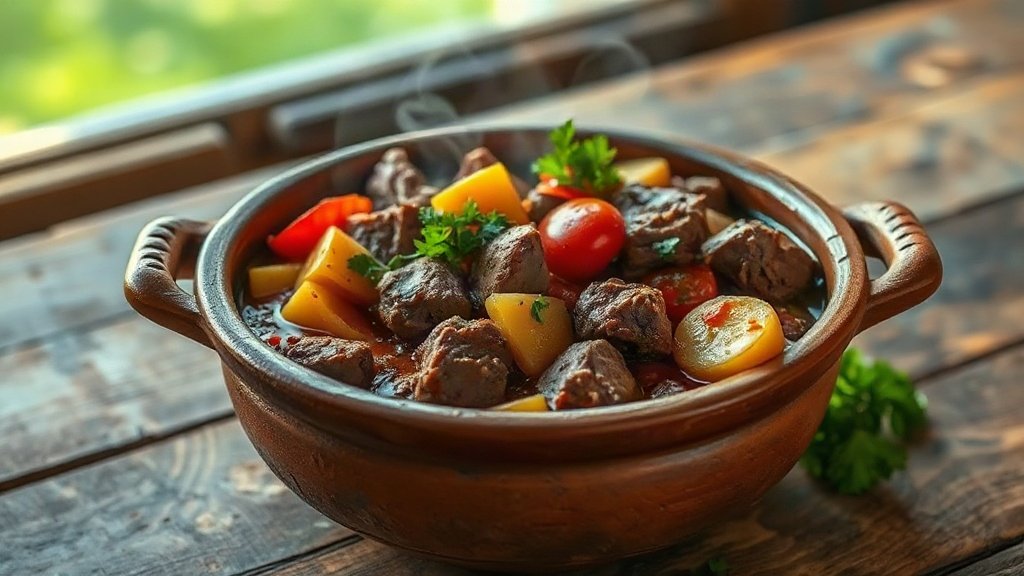
Illustration: AI-generated image
In Bulgarian home cooking, few dishes are as comforting and versatile as gyuvech. Named after the clay pot in which it is traditionally baked, this slow-cooked stew brings together meat, vegetables and herbs in a single, deeply satisfying meal. It is a staple of family tables across the country, from the Rhodope Mountains to the Danube plain, and it adapts beautifully to whatever is in season.
What is Gyuvech?
Gyuvech (гювеч) is a Bulgarian dish that belongs to a wider family of Balkan clay-pot cooking. The word itself refers to the earthenware vessel used to prepare it, much like a casserole or tagine. The dish is essentially a stew or bake made with layers of meat and vegetables, seasoned with herbs and often finished with a beaten egg on top. It is cooked slowly in the oven, allowing the flavours to meld and the ingredients to become tender and aromatic.
While recipes vary from household to household, the essence remains the same: a rustic, nourishing one-pot meal that requires minimal fuss but rewards patience. It is the kind of dish that fills the kitchen with a rich, savoury aroma and brings everyone to the table.
Key Ingredients
Gyuvech is wonderfully flexible, which is part of its charm. The most common meat choices are pork, chicken or lamb, though beef and even sausage can be used. Vegetarian versions are equally popular, especially during fasting periods in the Orthodox calendar, and simply omit the meat or replace it with extra vegetables and beans.
The vegetable base typically includes onions, peppers, tomatoes, potatoes and carrots. Depending on the season, you might also find okra, green beans, peas, courgettes or aubergines. The vegetables are usually chopped into chunks, not finely diced, so they hold their shape during the long cooking time.
Seasonings are simple but effective: salt, black pepper, paprika (both sweet and hot), and Bulgarian savory (chubritsa), which lends a distinctive herbal note. Fresh parsley is stirred in at the end for brightness. Some cooks add a splash of white wine or water to help create a light sauce.
A Simple Gyuvech Recipe
Making gyuvech at home is straightforward, and you do not need a traditional clay pot—a heavy ovenproof dish with a lid works well. Here is a basic method to serve four to six people.
Start by browning about 500 grams of cubed pork or chicken in a little oil in a frying pan. Transfer the meat to a large bowl. In the same pan, lightly sauté two chopped onions and two or three sliced peppers until softened. Add to the bowl. Then add two or three chopped tomatoes, two or three peeled and cubed potatoes, and any other vegetables you like—a handful of green beans or okra works nicely.
Season the mixture with a teaspoon of paprika, a pinch of hot paprika if desired, a teaspoon of dried savory, salt and pepper. Toss everything together, then spread it in the baking dish. Pour in about 100 ml of water or white wine. Cover the dish with a lid or foil and bake at 180°C (160°C fan) for 60–90 minutes, until the meat is tender and the potatoes are cooked through.
About ten minutes before the end, you can crack an egg or two over the top and return the dish, uncovered, to the oven until the egg is set. This optional step adds richness and is especially common in home cooking. Serve the gyuvech hot, sprinkled with fresh parsley, with a slice of crusty bread to mop up the juices.
Serving and Enjoying Gyuvech
Gyuvech is a complete meal in itself, but it pairs wonderfully with a simple shopska salad or a dollop of thick yoghurt on the side. A glass of Bulgarian red wine—perhaps a Mavrud or Melnik—complements the dish well, though a cold beer is also a popular choice.
Leftovers, if there are any, taste even better the next day as the flavours continue to develop. The dish can be reheated gently on the stove or in the oven.
A Dish for Every Season
One of the joys of gyuvech is its adaptability. In summer, use ripe tomatoes, peppers and courgettes from the garden. In winter, root vegetables like carrots, parsnips and celeriac take centre stage, along with preserved tomatoes or lutenitsa for depth. Vegetarians can add soaked white beans or chickpeas for protein and texture.
Whether you are feeding a hungry family or simply craving something warm and hearty, gyuvech is a reminder that the best meals often come from humble ingredients and a little time in the oven.





