Todorovden: Bulgaria's Spring Horse Festival and Ancient Rites
Each year, Bulgarians mark Todorovden, a joyful celebration of horses, racing and spring renewal that blends Orthodox faith with age-old folk customs.
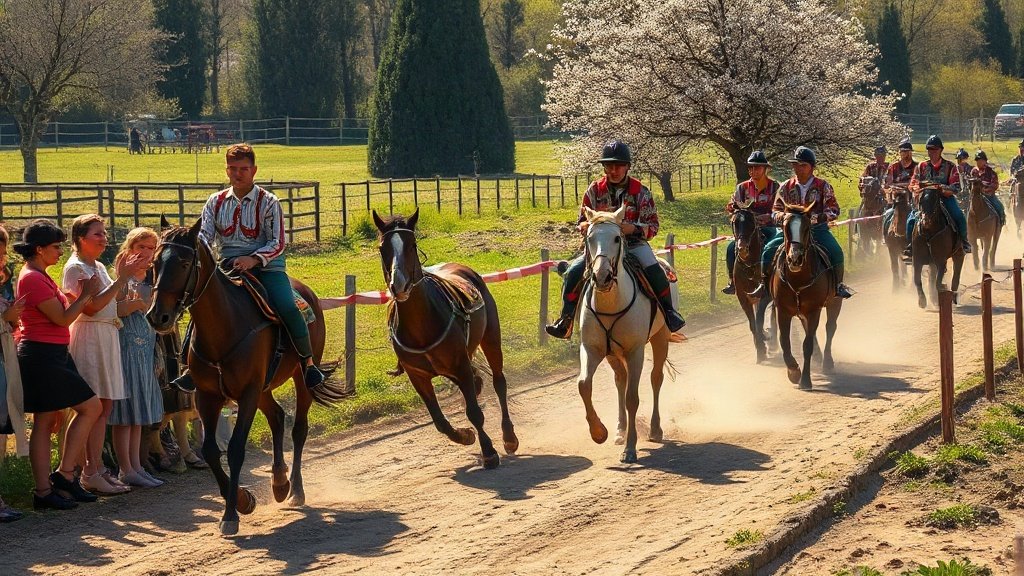
Illustration: AI-generated image
On the first Saturday of Great Lent, many Bulgarian villages and towns come alive with the sound of hooves and cheers for Todorovden, also known as Horse Easter. Dedicated to Saint Theodore, the day is a vibrant expression of gratitude for horses and a symbolic welcome of spring.
The heart of the celebration is the kushiya, a horse race that draws competitors from near and far. Owners spend days preparing their animals: manes are braided with red threads and beads, tails are brushed, and hooves are polished. Early in the morning, horses are led to a water source to drink, then blessed by a priest. Riders, often young men, compete in heats along dirt tracks or through fields, with the winner receiving a wreath, a towel, or a live animal such as a lamb or rooster as a prize.
Food plays a central role, especially the ritual breads baked by women. Known as konski pitki or koncheta (little horses), these loaves are shaped like horseshoes, horse heads, or full animals, decorated with dough braids and black peppercorns for eyes. They are broken and shared among family and neighbours, and some pieces are fed to the horses to ensure their strength and health. In many regions, the bread is tossed into the air, and the way it lands is read as an omen for the coming year.
Todorovden also carries a social dimension. After the races, villagers gather for a communal meal with music and horo dancing. In some areas, unmarried women perform a silent ritual by the water, similar to Laduvane, hoping to glimpse their future husband. The day reinforces bonds between families and the community, while honouring the animals that have long been essential to rural life.
Though the exact date shifts with the Orthodox calendar, the essence of Todorovden remains unchanged: a celebration of vitality, fertility and the enduring partnership between people and horses. Visitors in late winter or early spring may chance upon this lively tradition in the countryside, where it continues to thrive as a beloved part of Bulgaria's living heritage.





