The Kaval: Bulgaria's End-Blown Flute and Its Shepherd's Song
Discover the kaval, Bulgaria's traditional end-blown flute, and its enduring role in folk music, from lonely shepherd melodies to lively dance tunes.
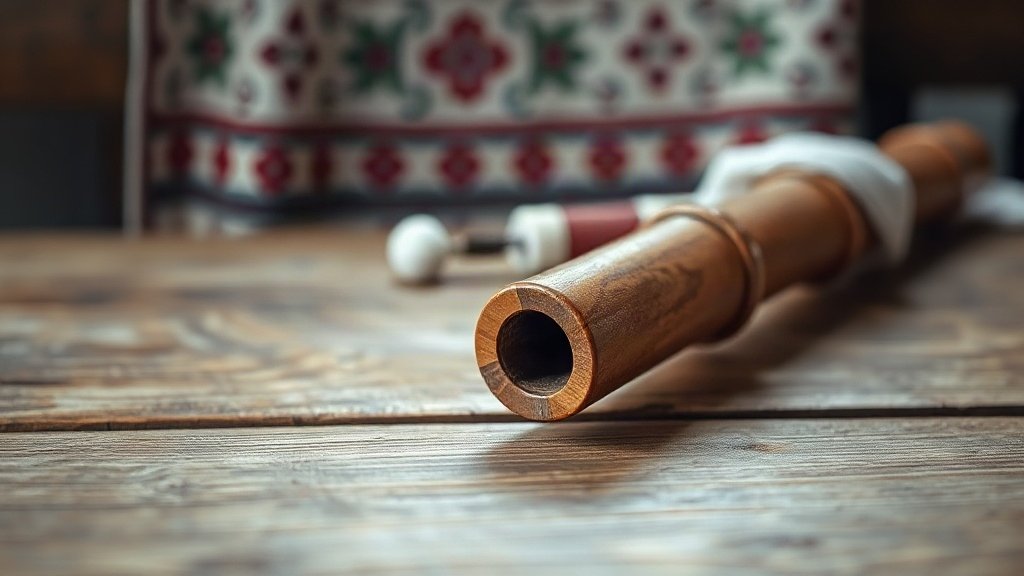
Illustration: AI-generated image
The kaval is one of Bulgaria's most beloved folk instruments, a long wooden flute played by blowing across the top edge. Its haunting, breathy tone has echoed across mountain pastures and village squares for centuries, carrying the soul of Bulgarian music.
Origins and Spread
The kaval belongs to a family of end-blown flutes found across the Balkans, Anatolia and the Middle East. In Bulgaria, it has been documented since at least the 18th century, though its roots are far older. Shepherds traditionally played the kaval while tending flocks, using its soothing sound to calm animals and pass the hours. Over time, it moved from the hills into the heart of folk ensembles, where it now leads melodies alongside the gaida, gadulka and tapan.
Construction and Types
A Bulgarian kaval is typically made from a single piece of wood, often plum, cornel, ash or apricot. It is an open tube, usually between 60 and 90 centimetres long, with seven finger holes on the front and one thumb hole on the back. Unlike many Western flutes, it has no mouthpiece; the player blows across the bevelled top edge, producing a soft, focused tone. There are three main sizes: the soprano kaval in C, the alto kaval in A, and the less common bass kaval. Some instruments have an additional low note hole, and a few are made in two pieces for easier transport.
Playing Technique
Producing sound on the kaval requires careful breath control and a relaxed embouchure. The player rests the flute against the lower lip at a slight angle and directs a thin stream of air across the top edge. By adjusting the angle and air speed, they can reach a range of over two and a half octaves. The lowest notes are breathy and mellow, while the high register can be piercing and flute-like. Skilled players use a technique called parlando—adding a soft, vocal-like quality by humming while playing—and rapid ornaments such as trills and mordents that give Bulgarian music its distinctive colour.
Role in Bulgarian Music
The kaval is a staple of Bulgarian folk orchestras and wedding bands. It carries slow, free-rhythm melodies known as bavni pesni, which often imitate the contours of speech, as well as fast dance tunes in irregular metres like 7/8 and 11/8. Regional styles vary: in the Rhodope Mountains, kaval playing is ornamented and deeply expressive, while in Thrace it tends to be brighter and more virtuosic. Today, the instrument is taught in music schools and folk ensembles across the country, ensuring its voice endures for new generations.
For visitors to Bulgaria, hearing a kaval live—whether at a village festival, a folk concert or a chance encounter with a shepherd—offers an unforgettable window into the nation's musical heritage.





