The Gadulka: Bulgaria's Bowed String Instrument and Its Haunting Voice
Discover the gadulka, Bulgaria's traditional bowed string instrument, its construction, playing techniques, and central role in folk music ensembles across the country.
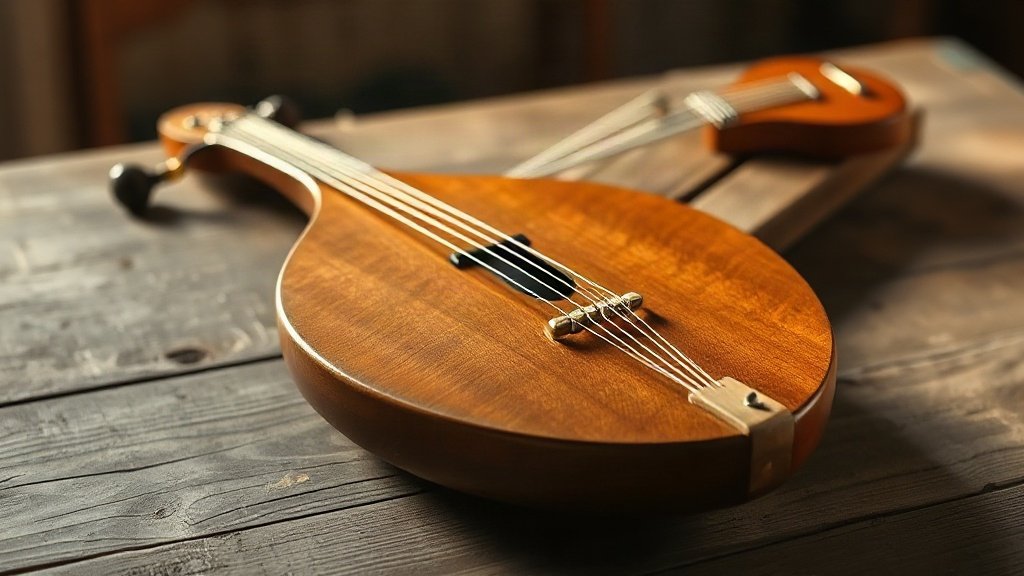
Illustration: AI-generated image
The gadulka is one of Bulgaria's most distinctive folk instruments, a bowed string instrument that produces a warm, resonant sound often described as the 'voice' of Bulgarian traditional music. Played with a short bow and held vertically, it is a staple of folk ensembles and a symbol of the country's rich musical heritage.
What is a Gadulka?
The gadulka belongs to the family of bowed lutes found across the Balkans and Eastern Europe. It has a pear-shaped body carved from a single block of wood, typically maple or sycamore, with a flat soundboard made of spruce. The instrument usually has three or four main strings made of steel or gut, and often up to ten thin sympathetic strings that resonate beneath the main strings, adding a shimmering, ethereal quality to the sound.
Unlike a violin, the gadulka is held vertically, resting on the player's knee or against the body. The bow is short and curved, and the player presses the strings with the fingernails rather than the fingertips, producing a characteristic sharp attack and subtle slides between notes.
History and Regional Variations
The gadulka has ancient roots, with similar instruments depicted in Byzantine and medieval Bulgarian art. Its name derives from the Old Slavic word *gaditi*, meaning 'to play a stringed instrument'. Over centuries, it evolved into several regional forms, each with slight differences in size, tuning, and number of strings.
In the Dobrudzha region of northeastern Bulgaria, the gadulka is smaller and tuned higher, often played with a light, dance-like bowing. In the Thracian region, it is larger and tuned lower, with a deeper, more singing tone suited to slow, lyrical melodies. The Rhodope Mountains have their own variant, sometimes called the *kemenche*, which shares similarities with the Turkish and Greek bowed instruments.
Playing Techniques and Musical Role
The gadulka is primarily a melody instrument, often carrying the main tune in folk songs and dances. Its playing style is highly ornamented, with extensive use of vibrato, trills, and slides. The player frequently employs double stops, playing two strings at once to create a drone effect that mimics the accompaniment of the gaida (bagpipe).
In traditional ensembles, the gadulka typically plays alongside the kaval (end-blown flute), gaida, tambura (long-necked lute), and tapan (drum). It is especially prominent in wedding music, where it leads the horo dance with lively, rhythmic patterns. In slower songs, its mournful, voice-like quality evokes deep emotion, earning it a central place in Bulgaria's rich vocal tradition.
The Gadulka Today
Although the gadulka is less well-known internationally than the gaida or kaval, it remains a vital part of Bulgaria's living folk culture. It is taught in music schools and folk ensembles across the country, and master craftsmen continue to build instruments using traditional methods. Folk festivals and competitions regularly feature gadulka players, ensuring that this ancient instrument's haunting voice continues to resonate for generations to come.





