Survakane: Bulgaria's New Year Tapping Ritual for Health and Luck
On the first morning of the year, Bulgarian children tap elders on the back with a decorated cornel twig, reciting verses for health, wealth and good fortune.
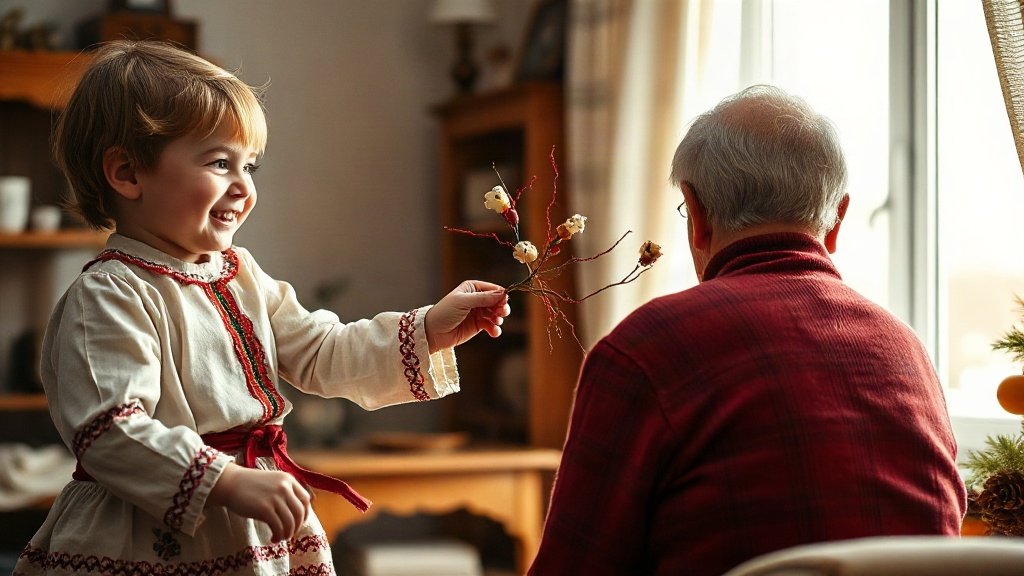
Illustration: AI-generated image
Across Bulgaria, the first day of the new year begins not with fireworks but with the gentle tap of a decorated cornel twig on the back. This is Survakane, a custom that ushers in health, luck and prosperity for the months ahead. Children, the main actors in this ritual, rise early on 1 January to visit family and neighbours, carrying specially prepared sticks called survaknitsa.
The tradition is ancient, rooted in pre-Christian beliefs about the power of the cornel tree, which is one of the first to blossom in spring. Its buds symbolise new life and resilience. By lightly striking someone's back, the child transfers that vitality, wishing them a year as healthy and fruitful as the tree itself.
The Survaknitsa: A Wand of Good Wishes
A survaknitsa is a branch of cornel, or sometimes another flexible wood like willow or pear, cut just before the new year. It is bent into a small arc or ring and decorated with coloured threads, wool, dried fruits, popcorn, small coins and sometimes a piece of bread. Each element carries meaning: red threads for health and vitality, white for purity, coins for wealth, and dried fruits for abundance. The decorations are often made by the children themselves in the days before New Year, sometimes with help from grandparents.
How the Ritual Unfolds
On New Year's morning, children visit relatives and neighbours, starting with their own parents and grandparents. They tap each person gently on the back while reciting a rhythmic blessing. The verses vary by region, but the essence is always the same: wishes for good health, a bountiful harvest, many animals, and success at school or work. One common version goes:
Surva, surva godina,
vesela godina,
zelen klas na niva,
golyam grozd na lozye,
zhivо-zdravo dо godina,
dо godina, do amina!
In English: "Surva, surva year, merry year, green ear in the field, big cluster on the vine, alive and well until next year, until next year, amen!"
In return, the hosts give the children small gifts—sweets, coins, nuts or small amounts of money—thanking them for the blessing. The tapping is never hard; it is symbolic, and many adults jokingly ask for an extra tap for more luck.
Regional Variations and Family Bonds
While the core of Survakane is shared nationwide, details differ. In the western regions, especially around Sofia and Pernik, the survaknitsa is often a straight stick with a forked top, while in the Rhodopes it may be a delicate ring. Some areas have a tradition of adult men performing a similar custom called survakari, wearing masks and bells, but that is a separate practice tied to mumming. The children's Survakane is more intimate, focused on family and close community.
The ritual also reinforces intergenerational bonds. Sitting by the fire on New Year's morning, a child taps a grandparent, and the grandparent responds with a kiss and a coin. In an age of digital greetings, this tactile, face-to-face custom keeps families and neighbourhoods connected.
Why Survakane Still Matters
Survakane survives because it is simple, joyful and tied to the most universal of wishes: a good year ahead. It is not a commercial holiday; the survaknitsa is home-made, often from a branch cut in the garden. Schools sometimes organise workshops before the winter break, ensuring the craft is passed on. For many Bulgarians, the sound of a child's voice reciting "Surva, surva" is the true sound of New Year's Day.
Visitors to Bulgaria in early January may witness children walking from house to house in small towns and villages. They are welcome to receive a tap and a blessing—just be ready with a small coin or treat to say thank you.