Sirni Zagovezni: Bulgaria's Sunday of Forgiveness and Fire
The Sunday before Lent, Bulgarians ask forgiveness, share a meal of cheese and eggs, and light bonfires to mark the transition into spring and the fasting season.
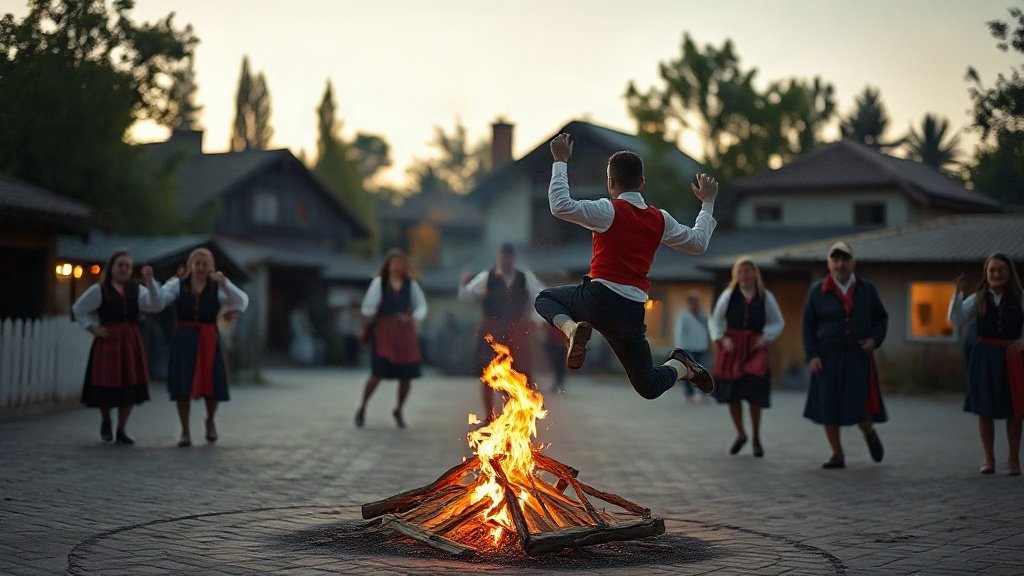
Illustration: AI-generated image
On the Sunday before Great Lent begins, Bulgarians observe Sirni Zagovezni — a day of forgiveness, family meals and fire. The name comes from "sirene" (cheese) and "zagovezni" (to give up eating), because it is the last day before the Orthodox fasting period when dairy products and eggs may be eaten. The day is also known as Forgiveness Sunday or, in some regions, Proshka, from the word for "asking pardon".
Sirni Zagovezni falls seven weeks before Orthodox Easter, always on a Sunday, and its date moves each year. It is the last day of the week known as "Syrna Sedmitsa" (Cheese Week) or "Proshka Week", during which dairy foods are still permitted. After the evening meal, the fast begins: for the next seven weeks, Orthodox Bulgarians abstain from meat, dairy, eggs and sometimes oil, depending on personal devotion.
Asking for forgiveness
The central ritual of Sirni Zagovezni is asking for and granting forgiveness. In the afternoon or evening, younger family members bow and kiss the hand of their parents, grandparents and godparents, saying "Prosti" (Forgive me). The elder replies "Prosto da ti e" (May it be forgiven) or "Gospod da ti prosti" (May God forgive you). This exchange is believed to clear old grievances and allow the family to begin the Lenten fast with a clean heart.
The festive meal
The table on Sirni Zagovezni is rich with foods that will soon be forbidden: white cheese, yoghurt, butter, boiled eggs and banitsa filled with cheese or eggs. A special tradition is "hamkane" — a boiled egg or piece of white halva is tied to a red thread and hung from the ceiling. Children, and sometimes adults, gather around and try to catch the swinging treat with their mouths, without using their hands. It is a moment of laughter and play, and the person who succeeds is said to enjoy good luck and health throughout the year.
Bonfires and fire-jumping
As evening falls, in villages and small towns, people light large bonfires called "oratnitsi" or "pokladi". The fires are often built from old Christmas branches and other dried wood, and are set on a hill or in the square. Young men and women take turns jumping over the flames, sometimes three times each for good luck. Jumping over the fire is believed to bring health and protect against fleas and snakes in the coming spring. In some places, the fires are also used to send smoke signals to neighbouring villages, a playful reminder that the fasting season is about to begin. The celebration often continues with a horo dance around the fire.
Regional variations add colour to the day: in some parts of Bulgaria, the day is called "Pokladi" or "Sirni Pokladi", and the forgiveness ritual happens before the fire-jumping; in others, people visit their godparents to ask pardon and share a small gift. Today, Sirni Zagovezni is still widely observed, both in rural areas and in cities, where families gather for the traditional meal and children enjoy hamkane. It marks the transition from winter feasting to the sober weeks of Lent and, beyond its religious roots, reinforces family bonds and the importance of reconciliation.





