Pacha: Bulgaria's Winter Jellied Meat Delicacy
Learn about pacha, a traditional Bulgarian dish of meat set in savoury jelly, enjoyed especially during the colder months and festive gatherings.
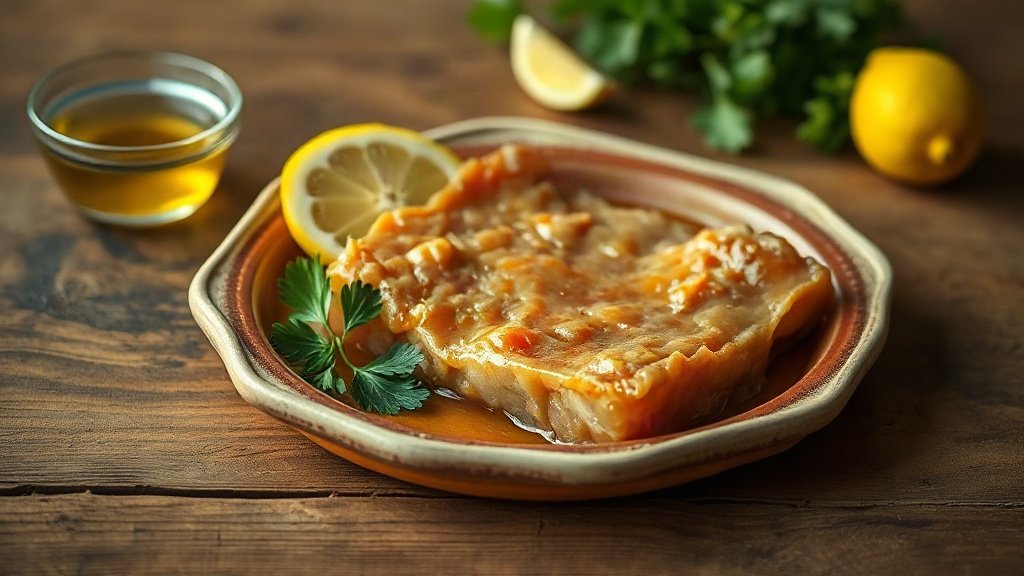
Illustration: AI-generated image
Pacha is one of Bulgaria's most distinctive winter dishes: a terrine of tender meat suspended in a shimmering, savoury jelly. Made from cuts rich in natural gelatine, it is a rustic yet celebratory food that appears on tables across the country when temperatures drop.
What is pacha?
Pacha (пача) belongs to the wider family of jellied meat dishes found across the Balkans and Eastern Europe, similar to aspic. The name comes from the Turkish word paça, meaning trotter or shank. In Bulgaria, pacha is traditionally made with pork or lamb — often the head, trotters, ears, tail and sometimes shanks — which are slowly simmered until the broth becomes rich with collagen. Once cooled, this broth sets into a firm jelly that encases the shredded meat.
Unlike many modern terrines, pacha is not flavoured with fancy aromatics. The seasoning is simple: salt, black peppercorns, bay leaves, and plenty of garlic. The garlic is usually crushed and stirred into the warm broth before setting, giving the jelly a gentle but unmistakable bite.
How pacha is made
The process takes patience but little effort. The chosen meat cuts are cleaned thoroughly and placed in a large pot with cold water. They are brought to a boil, skimmed, then left to simmer for several hours — often four to six — until the meat falls off the bone and the liquid is deeply flavoured. Some cooks add a splash of white wine or vinegar towards the end for brightness.
Once the meat is tender, it is pulled from the bones and arranged in bowls or moulds. The broth is strained, seasoned generously with garlic and sometimes a little vinegar, then poured over the meat. The moulds are refrigerated overnight until completely set. The result is a wobbly, translucent jelly with pieces of meat suspended inside.
How to serve and eat pacha
Pacha is always served cold, sliced or scooped onto a plate. It is traditionally accompanied by a small dish of crushed garlic mixed with vinegar and a pinch of hot red pepper, which diners spoon over their portion. Fresh parsley and lemon wedges are common garnishes, and crusty bread is essential for mopping up the garlicky jelly.
In many Bulgarian homes, pacha is a staple of the winter holiday season. It is especially associated with St. Nicholas Day on 6 December, when pork versions are common, and it often appears at New Year's celebrations as well. Some people believe it helps with the morning after a festive evening — a folk remedy that has never been scientifically proven, but which adds to its reputation as a restorative dish.
The cultural role of pacha
Pacha is not an everyday food; it is a dish of occasion and season. Making it requires time and a certain willingness to work with less glamorous cuts of meat, which reflects Bulgaria's rural culinary heritage of using every part of the animal. While younger generations may not make it as often as their grandparents, pacha remains a beloved part of the national table, especially in smaller towns and villages.
Trying pacha is a way to understand a deeper layer of Bulgarian food culture — one that values simplicity, thrift, and the deep savoury satisfaction that only slowly cooked meat can provide.





