Kyufte and Kebapche: Bulgaria's Beloved Grilled Meats
Learn the difference between Bulgaria's two most popular minced meat dishes, how they are cooked, and the best way to enjoy them like a local.
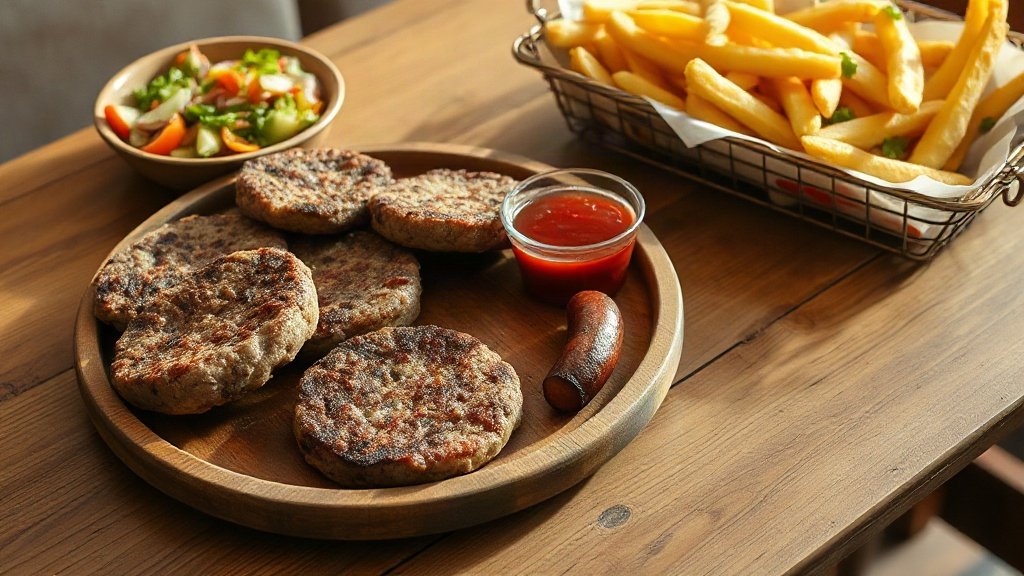
Illustration: AI-generated image
If there is one smell that sums up a Bulgarian summer evening, it is the smoke from a charcoal grill carrying the scent of minced meat, onions and cumin. Across the country, from city parks to village squares, grills are fired up to cook two of Bulgaria's most loved foods: kyufte and kebapche.
What Are Kyufte and Kebapche?
Both are made from minced meat, usually a mix of pork and beef, seasoned with onions, cumin, black pepper and sometimes savoury. The key difference is shape. Kyufte are round, flattened patties, while kebapche are longer, thinner, sausage-like rolls. Kebapche also tend to have a firmer texture because the meat is kneaded longer to develop a springy bite.
These are not exactly burgers or sausages, though they fill a similar role. They are served as a main course, often several pieces per portion, and are meant to be eaten with a fork and knife, not in a bun. The meat mixture is usually prepared fresh daily, and the best versions are hand-shaped just before they hit the grill.
The Art of Grilling
The best kyufte and kebapche are cooked over hot charcoal, which gives them a smoky crust while keeping the inside juicy. They are never breaded or fried. Skilled grill masters know just when to turn them so they stay moist. A common trick is to brush them with a little beer or water while grilling to prevent drying out.
You will find them at almost any Bulgarian grill restaurant, known as a skara, as well as at street stalls and during festivals. They are often cooked to order, so expect to wait a few minutes while the coals do their work. The sound of sizzling meat and the aroma of cumin are part of the experience.
How to Eat Them
Kyufte and kebapche are traditionally served with a simple garnish: a slice of lemon, some chopped onion, and perhaps a sprinkle of shredded sirene cheese. The classic side dishes are French fries, a Shopska salad (tomatoes, cucumbers, onions, peppers and grated sirene), and lyutenitsa, a thick roasted pepper and tomato spread. A cold beer or a glass of ayran, a salted yoghurt drink, completes the meal.
To eat like a local, squeeze a little lemon over the meat, then take a bite together with a piece of onion and a dollop of lyutenitsa. The combination of smoky meat, sharp onion and sweet and tangy spread is what makes it so moreish. Some people also wrap a piece of meat in a slice of bread, but purists prefer to keep them separate.
More Than Just Fast Food
Despite their casual nature, kyufte and kebapche hold a special place in Bulgarian hearts. They are a staple at family gatherings, picnics and celebrations. Every region and every family has its own recipe, some adding a bit of garlic, others a splash of rakia to the meat mixture. No two are exactly alike, and arguing about the best version is a national pastime.
Whether you are exploring a busy city street or a quiet mountain town, ordering a plate of kyufte or kebapche is one of the simplest and most satisfying ways to taste Bulgaria. They are affordable, filling and always cooked with pride.





