Kukeri: Bulgaria's Masked Rite to Chase Away Winter
Every winter in Bulgaria, men don towering fur costumes and heavy bells to dance through the streets, scaring away evil spirits and welcoming the coming spring.
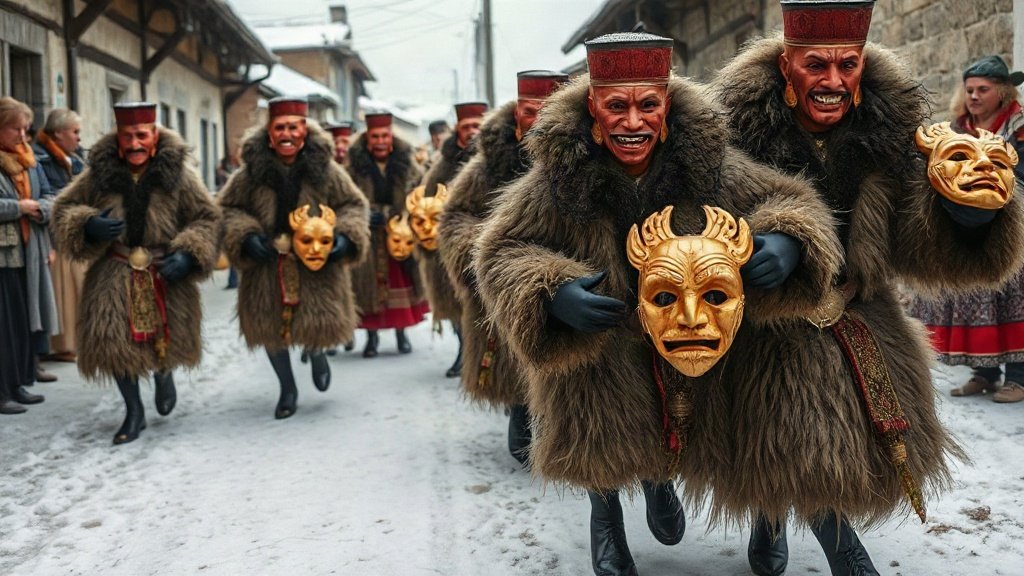
Illustration: AI-generated image
On a cold winter morning in Bulgaria, the silence is broken by a deep, rhythmic clanging. It grows louder until a troupe of towering, masked figures bursts into view, their costumes bristling with fur and ribbons, their belts hung with heavy bronze bells. They leap, spin and stamp in unison, driving away unseen forces. These are the kukeri — Bulgaria's ancient masked mummers — and their ritual is one of the country's most spectacular living traditions.
What are kukeri?
The kukeri are men who dress in elaborate costumes and perform ritual dances to scare away evil spirits and ensure a good harvest. The tradition dates back to pagan times, long before Christianity arrived in the Balkans. Though the practice has evolved, the core purpose remains: to banish the darkness of winter and welcome the renewal of spring. The word 'kuker' likely derives from an old Slavic term for a masked person, though every region of Bulgaria has its own local name and variation of the custom.
The costume and the dance
Traditional kukeri costumes are made from goat or sheep fur, often turned inside out so the long hair stands on end. The masks are equally striking: carved from wood and painted with fierce expressions, they feature gaping jaws, protruding teeth and sometimes horns. Many are passed down through families and repaired each year. The most important element, however, is the sound. Each kuker wears several large cowbells or bronze bells around his waist, which together can weigh over 20 kilogrammes. When the dancers move, the bells create a deafening, otherworldly noise that is believed to drive away malevolent spirits.
The dance itself is vigorous and acrobatic. The kukeri form a line or circle, then leap, crouch and spin with surprising agility. They often carry wooden swords or sticks, and some troupes perform skits that parody daily life or tell folk stories. The performance is accompanied by drums, bagpipes or flutes, and spectators are encouraged to cheer loudly — the more noise, the better.
Where to experience kukeri
Kukeri festivals take place across Bulgaria, usually between New Year and the start of Lent, with the most famous gatherings in the region of Pernik, near Sofia. The town of Pernik hosts an international festival of masquerade games every two years, drawing troupes from across the Balkans. Smaller villages hold their own celebrations on a specific day, often linked to the local church calendar. Because dates vary from year to year, it is best to check local cultural calendars or ask at regional tourist information centres when planning a visit.
A living tradition
Today, kukeri is more than a folk custom — it is a source of pride and community identity. Young men train for months to join a troupe, learning the steps and helping to maintain the costumes. In 2015, UNESCO added the tradition to its Representative List of the Intangible Cultural Heritage of Humanity, recognising its importance for Bulgaria and the wider region. For visitors, witnessing a kukeri performance is a chance to see a tradition that has survived for centuries and still carries the raw energy of its pagan roots. It is loud, joyful and unforgettable — a true embrace of the Bulgarian spirit.





