Koleduvane: Bulgaria's Christmas Eve Caroling Tradition
Every Christmas Eve, groups of young men in Bulgaria keep an ancient custom alive by singing carols from door to door, wearing traditional dress and carrying decorated sticks. Here's what koleduvane involves and where you can still witness it.
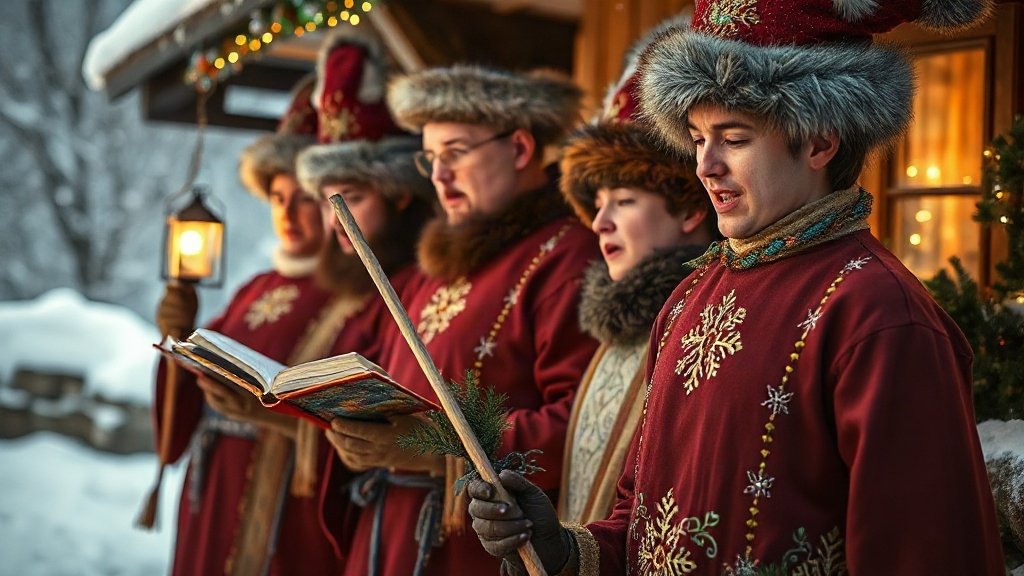
Illustration: AI-generated image
On the evening of 24 December, as darkness falls across Bulgarian villages and towns, the sound of young male voices rises in harmony. Dressed in festive folk costumes and carrying decorated wooden sticks, groups known as koledari walk from house to house, singing ancient carols that bless the home, the family, and the coming year. This is koleduvane, one of Bulgaria's most beloved winter rituals, rooted in pre-Christian beliefs and still practised in many regions today.
An Ancient Winter Blessing
Koleduvane has deep pagan origins, originally linked to the winter solstice and the hope for fertility, health, and prosperity in the new year. After Bulgaria adopted Christianity, the custom became associated with Christmas Eve, though many of its symbols and lyrics retain older meanings. The word koleda itself may come from the Latin calendae, referring to the first day of the month, but in Bulgaria it now signifies the Christmas season and the carolling ritual.
The koledari are usually young unmarried men, sometimes led by an older, married man who acts as the group's leader or stanenik. They prepare for weeks in advance, learning songs and rehearsing harmonies. On the evening itself, they gather at a predetermined spot, often the village square or a churchyard, and then set off in a clockwise direction around the settlement, visiting every home.
The Koledari and Their Songs
Each koledar wears a traditional festive costume from his region: embroidered shirts, woollen trousers, fur caps, and sometimes a heavy cloak. They carry decorated sticks called koledarki or krivatsi, often made of cornel wood and adorned with ribbons, red wool, or carved patterns. The sticks are both a symbol of authority and a practical tool for tapping on gates or keeping rhythm.
At each house, the group stands outside the door or in the yard and sings a series of carols. The songs follow a specific order: first a blessing for the home, then for the oldest member of the family, then for each child, and finally for the animals and the fields. Lyrics vary by region but often include lines like "God bless this house, from roof to floor, with health, with joy, and plenty more." The melody is usually in a slow, ceremonial style, with the singers often holding a drone note beneath the lead voice.
After the singing, the family invites the carollers inside or offers them gifts: round breads, dried fruit, nuts, and sometimes money. The koledari accept these offerings and give the family a sprig of cornel or a piece of the ritual bread in return, believed to bring luck. Refusing to welcome the koledari is traditionally considered bad fortune, so every household expects and welcomes the visit.
Regional Variations and Modern Practice
While the core of the ritual is the same across Bulgaria, details vary. In the Rhodope Mountains, the songs are particularly slow and mournful, while in the north-west they may include more playful teasing verses. In some areas, the koledari perform a short dance after singing, while in others they simply move on. The number of carollers is usually odd—typically seven or nine—a number believed to have magical significance.
Today, koleduvane is kept alive not only in villages but also on urban stages, where folk ensembles re-enact the ritual for audiences. However, the authentic door-to-door practice still survives in many rural communities, especially in western and southern Bulgaria. For visitors wishing to experience it, spending Christmas Eve in a small village or attending a local folk festival in December offers a chance to hear these ancient carols in their original setting. No ticket is needed—just an open door and a willingness to listen.