How Bulgarians Celebrate Christmas: From Badni Vecher to Koleduvane
A guide to the traditions, foods and customs that make a Bulgarian Christmas special, from the meatless Christmas Eve dinner to the carol singers on Christmas morning.
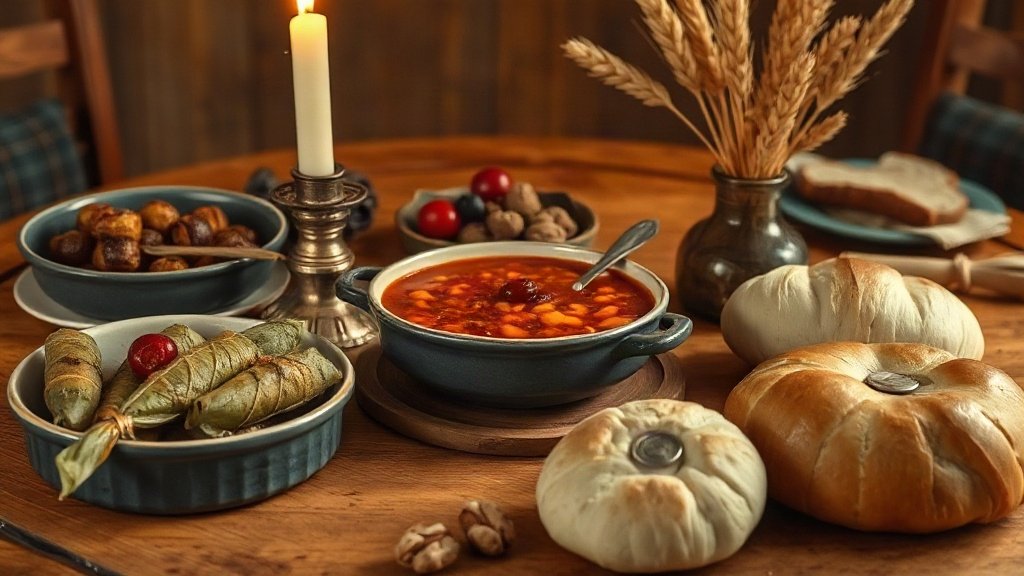
Illustration: AI-generated image
Christmas in Bulgaria is a deeply rooted celebration that blends Orthodox Christian customs with older folk traditions. While the date is the same as in much of the Western world, many Bulgarians observe the holiday with distinctive rituals that have been passed down for generations.
Christmas Eve: Badni Vecher
The main celebration takes place on Christmas Eve, known as Badni Vecher. This evening marks the end of the 40-day Nativity fast, so the meal is strictly meatless and often vegan, consisting of an odd number of dishes—usually 7, 9 or 11. The odd number symbolises the hope for a full and abundant year ahead.
Common dishes include stuffed cabbage leaves (sarmi) made with rice and vegetables, boiled wheat with walnuts and sugar, bean soup, dried fruit compote, and tikvenik (a pumpkin pastry). A central element is the round bread called pita or kolach, into which a silver coin is baked. Whoever finds the coin in their piece is said to enjoy good luck and prosperity in the coming year.
Before the meal, the head of the household traditionally breaks the bread and distributes a piece to everyone present, including a symbolic portion for the house itself and for any absent family members. The table is often left uncleared overnight, as it is believed that deceased ancestors may come to share in the feast.
Decorations and Symbolism
Instead of a Christmas tree, many Bulgarian homes traditionally feature a badnik—a thick oak or pear log that is placed in the fireplace on Christmas Eve and allowed to burn through the night. This log is seen as a bringer of warmth and light for the household. Wheat stalks, dried fruits and walnuts are also common decorative elements, symbolising fertility and abundance.
Koleduvane: Carol Singing
From midnight on Christmas Eve until dawn on Christmas Day, groups of young men called koledari go from house to house singing carols and offering blessings for health, wealth and a good harvest. They are often dressed in traditional costumes and carry decorated sticks. In return, householders give them small gifts, usually food, money or freshly baked bread. The songs are believed to have protective power, and being visited by koledari is considered a good omen for the year ahead.
Christmas Day and Beyond
On Christmas Day itself, the fast is broken, and families enjoy a rich meal that often includes roast pork or stuffed chicken. The day is spent visiting relatives and friends, exchanging gifts and continuing the festive atmosphere. The celebrations often extend into the following days, with many Bulgarians taking time off until after New Year.
What to Expect as a Guest
If you are invited to a Bulgarian home for Christmas, it is customary to bring a small gift such as sweets, wine or a decorative item. Be prepared for a generous spread of food and drink, and do not be surprised if you are encouraged to eat more than you thought possible. Sharing in the breaking of the bread is a special moment—if you find the coin, you are expected to keep it as a token of good luck for the coming year.
Whether you are a long-time resident or simply curious about Bulgarian culture, experiencing these traditions firsthand offers a warm and memorable glimpse into the country's rich heritage.





