Chiprovtsi Carpets: Bulgaria's Living Weaving Heritage
In the foothills of the Balkan Mountains, a centuries-old craft produces some of Europe's most distinctive textiles. This is the story of Chiprovtsi carpets and why they still matter today.
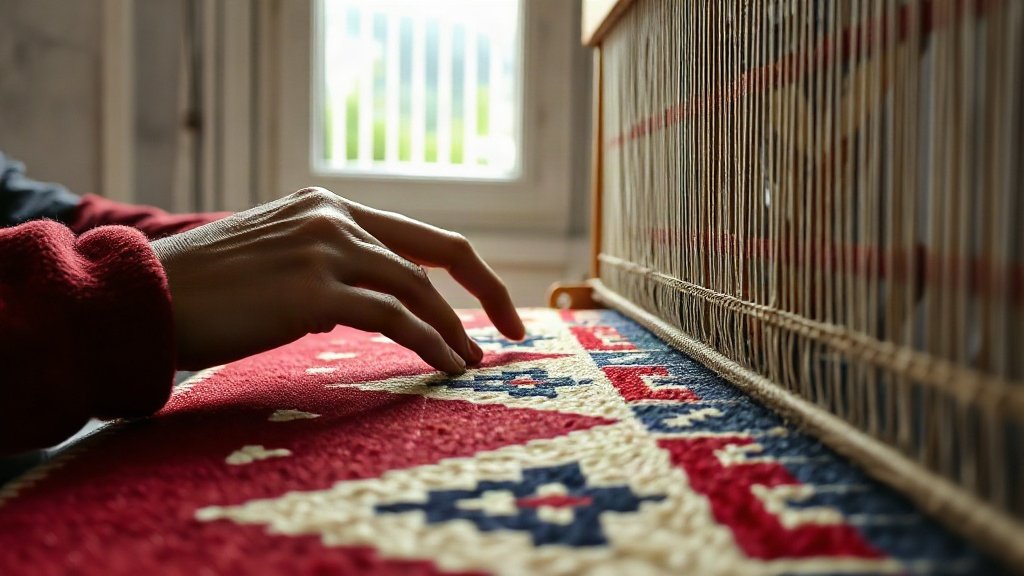
Illustration: AI-generated image
In the small town of Chiprovtsi, tucked into the northwestern folds of the Balkan Mountains, a loom still clicks with the rhythm of generations. The carpets woven here are among Bulgaria's most recognisable cultural treasures — bold, geometric and alive with colour. This craft, which has survived war, migration and industrial change, was inscribed on UNESCO's Representative List of the Intangible Cultural Heritage of Humanity in 2014. It is both a link to the past and a living practice today.
A Living Craft from the Balkan Foothills
Chiprovtsi carpet weaving emerged as a distinct tradition by the 17th century, though its roots likely stretch further back. The town became a centre of production, with families weaving for home use, for dowries and for trade. The carpets were prized not only across the Ottoman Empire but also in central Europe, where they appeared in the homes of the wealthy. What sets them apart is a language of symbols: stylised plants, birds, animals and geometric forms arranged in complex repeating patterns. The most iconic motifs include the 'kanatitsa' (a stylised wing or gate), the 'makaz' (scissors) and the 'elbetitsa' (a hooked diamond). Colours are typically deep reds, blues, greens and black, often on a natural cream or brown wool background.
From Sheep to Loom
Making a Chiprovtsi carpet is labour-intensive and begins long before the weaving. Wool is sheared from local sheep, washed, carded and spun by hand. Traditionally, dyes were extracted from plants, roots and insects — walnut husks for brown, madder for red, indigo for blue. Today many weavers use synthetic dyes for consistency, but the principles remain. The loom is vertical, and the weaver works from the back, tying symmetrical knots row by row. A single carpet can take months to complete, depending on size and pattern density. The result is dense, durable and reversible — qualities that made these carpets practical as well as beautiful.
Symbols in Wool
Every motif has a meaning, though interpretations vary by family and region. The 'kanatitsa' is often linked to protection and flight, the 'elbetitsa' to fertility or the cycle of life, while repeated crosses and stars may reflect both pre-Christian and Christian influences. The patterns are not random; they are passed down through generations, often from mother to daughter. This oral transmission is part of what UNESCO recognised — not just the carpets themselves, but the knowledge, skills and social practices that sustain them.
A Heritage Worth Preserving
The craft faced near extinction in the 20th century as industrial production and emigration emptied the town's workshops. Since the 1990s, however, a quiet revival has taken root. Local schools teach weaving to children, community groups organise exhibitions, and young people are rediscovering the looms of their grandmothers. Today, Chiprovtsi carpets are sold as works of art, used in modern interiors and commissioned for public spaces. They are a reminder that heritage is not frozen in time but can adapt and thrive. For visitors, seeing a carpet take shape on a traditional loom is a chance to witness centuries of skill in a single thread.





