A Visitor's Guide to Bulgarian Wedding Traditions
Bulgarian weddings are vibrant, multi-day celebrations that blend Orthodox rites with age-old folk customs. Here is what to expect if you are invited to one.
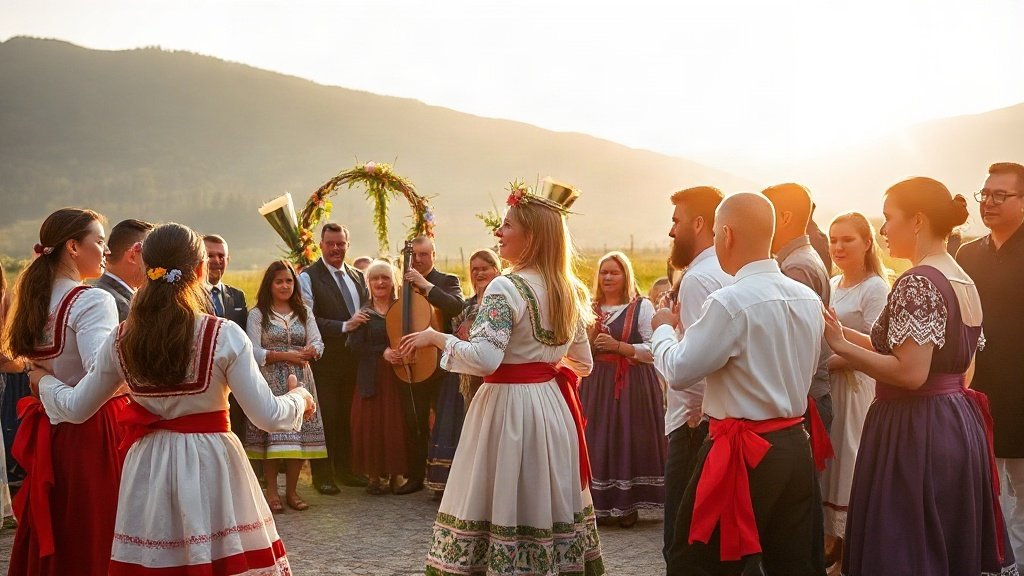
Illustration: AI-generated image
Bulgarian weddings are far more than a single ceremony. They are lively, multi-day events that unite families, honour deep-rooted Orthodox Christian traditions and keep centuries-old folk customs alive. If you are lucky enough to be invited, prepare for a joyful, immersive experience filled with music, dance, ritual and abundant food.
Before the Wedding
In many Bulgarian communities, the path to marriage begins with an engagement and a formal meeting of the families known as glavezh. The groom's family traditionally visits the bride's home with gifts, often including rakia, sweets and sometimes a ring. A key figure is the kum (best man or godfather), who acts as a sponsor and witness, holding an honoured place throughout the celebrations. The kum is usually a married couple who are close friends or respected members of the community.
The Wedding Day and Church Ceremony
The main wedding day typically starts with the groom and his party arriving at the bride's home. A playful custom involves the bride's family barring the door until the groom 'pays' with money or sweets. Once inside, the couple may take part in a bread-breaking ritual: a round loaf is held above their heads and broken, and whoever gets the larger piece is said to be the head of the household.
If the couple chooses a religious ceremony, it takes place in an Orthodox church. The service includes the crowning, where ornate crowns are placed on the couple's heads and exchanged three times, symbolising their union as king and queen of a new family. They also drink from a common cup of wine and walk three times around a central table, guided by the priest.
Key Rituals During the Celebration
After the ceremony, the festivities move to a restaurant or outdoor venue. Several traditions are common, though they vary by region:
- The money dance – Guests pin paper money onto the bride's dress or throw it into a basket as they dance with the couple. This is a practical way to help the newlyweds start their life together.
- The bride's shoe – At some point, the groom removes the bride's shoe and fills it with money, often after guests have 'paid' for a dance with the bride.
- The 'kidnapping' of the bride – In a lighthearted custom, friends or relatives whisk the bride away, and the groom must negotiate her return with gifts or promises.
- The horo – The wedding culminates in a large circle dance, the horo, led by the kum and the newlyweds. Everyone is welcome to join.
Music and Food
No Bulgarian wedding is complete without live music. Traditional folk bands featuring the gaida (bagpipe), kaval (flute), gadulka (bowed string instrument) and tupan (drum) play throughout the night, often alternating with modern pop and chalga hits. Guests sing and dance for hours, and the atmosphere is one of shared joy.
Food is served in generous quantities. Expect dishes such as banitsa (cheese-filled pastry), shopska salad, roasted meats, stuffed peppers and endless toasts with rakia. The meal is as much about community as nourishment, with tables full of laughter and conversation.
What to Expect as a Guest
If you are invited to a Bulgarian wedding, be ready to participate. Dress smartly but comfortably for dancing. Bring a cash gift, as this is the most common and practical present. Do not be shy about joining the horo; even first-timers can follow the simple steps. Respect the religious elements of the ceremony, and above all, come with an open heart and a good appetite.
Bulgarian weddings are a remarkable display of cultural continuity. They remind everyone present that marriage is not only a union of two people but a weaving together of families, communities and traditions that have endured for generations.